An ancient Suffolk farmhouse, known as Church Cottage, has received a new extension designed by James Grayley Architecture. The London-based studio used a blend of red bricks, oak shingles, and terracotta floors to create a rustic feel for the addition. This design approach aims to integrate the new structure with the historic character of the Grade II-listed building, which is located near the town of Eye in the United Kingdom.
The original dwelling was constructed in the 18th century as two separate laborers' cottages. These were later joined in the 1990s. The recent project by James Grayley Architecture sought to address issues of "tiny cellular rooms and eccentric circulation" that resulted from previous modifications, including an extension added by the clients in 2011.
Key Takeaways
- James Grayley Architecture completed an extension for Church Cottage in Suffolk.
- The design uses traditional materials like red bricks, oak shingles, and terracotta.
- The extension features a unique "hairy shingle exterior" complementing the thatched roof.
- It provides a large open-plan living, dining, and kitchen area.
- A wildflower roof garden integrates the structure with the natural landscape.
Integrating New Design with Historic Character
The core strategy behind the extension was to unify the existing parts of the cottage. The studio added a new wing at the northwestern end of the home. This addition sits on a plinth made of Suffolk red bricks. The exterior of this new wing features what the architects described as a "hairy shingle exterior." This design choice is a direct nod to the cottage's original thatched roof, helping the new structure blend with the old.
James Grayley, director of James Grayley Architecture, explained the project's goals. He noted that a previous extension by the clients provided essential facilities like a new bathroom, a small entrance hall, and a utility room. However, the cottage still lacked a space large enough for a dining table or for groups of friends and family to gather comfortably.
"The primary strategy was to carefully repurpose and extend these spaces and to better connect the interior with the wider landscape for the gardener, landscape painter and printmaker clients," Grayley stated in an interview with Dezeen.
Project Details
- Location: Near Eye, Suffolk, UK
- Original Structure: Two 18th-century laborers' dwellings, conjoined in the 1990s.
- Listing: Grade II-listed building.
- Key Material: Suffolk red bricks, oak shingles, terracotta.
- Primary Function: Open-plan living, dining, and kitchen.
Creating Expansive Living Spaces
The main purpose of the new extension is to offer a more spacious area for dining and social gatherings. It includes a single, open-plan living, dining, and kitchen area. A brick hearth is a central feature in one corner of this space. The ceiling is sloped and white, with skylights that allow natural light to enter the room. This design contrasts with the smaller, more enclosed rooms of the original cottage.
Where the new extension meets the previous one, rooms have been reorganized. This reorganization created a new kitchen pantry. The original dining and living areas within the historic cottage have been converted into a study and a snug. This repurposing helps to optimize the use of space throughout the entire home.
Material Choices and Local Context
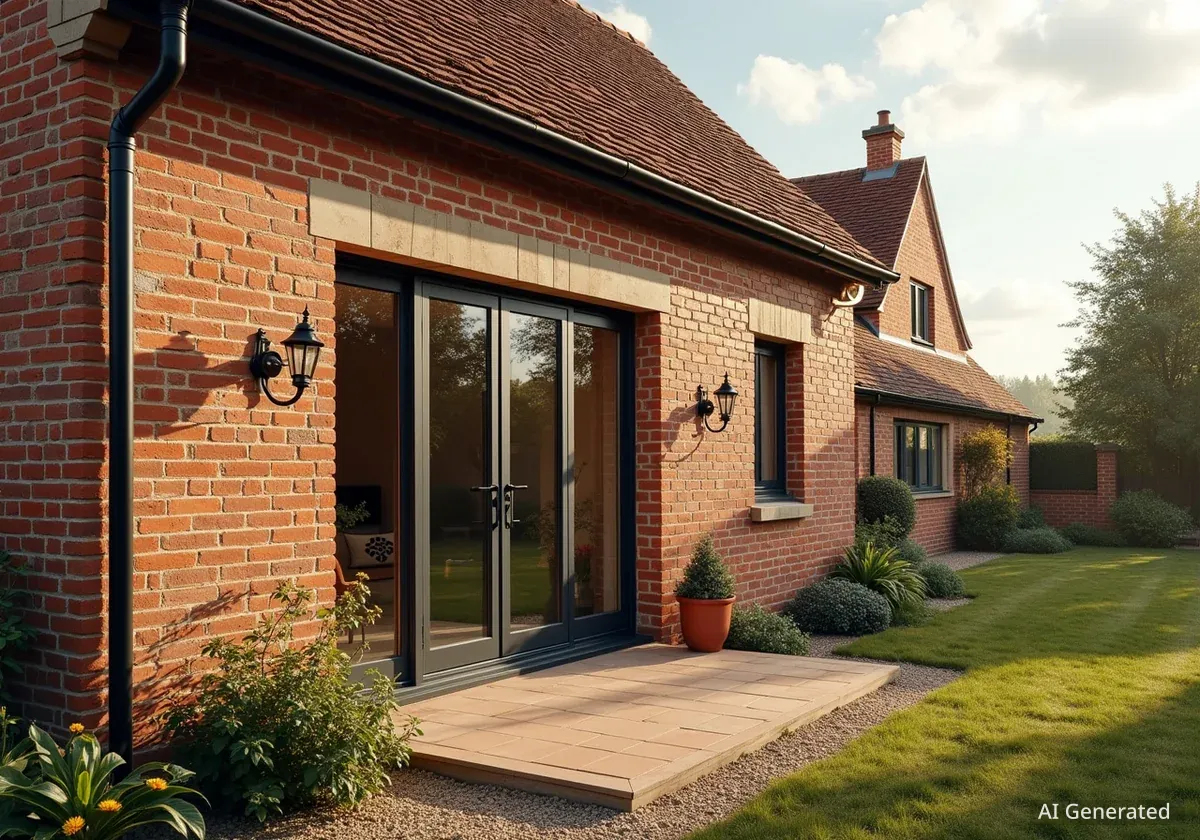
Despite its more modern shape, the materials used for the extension are inspired by traditional local architecture. This approach was crucial in gaining planning permission for the project. The Suffolk red brick used on the exterior extends into the interior, forming the fireplace. The floor features herringbone quarry tiles, which are a direct reference to the traditional pamment floors commonly found in the region.
Oak wood frames the deep-set windows in the dining area. It also frames a glazed sliding door that opens onto a garden patio. These natural materials contribute to the rustic aesthetic and connect the interior with the outdoor environment.
Historical Context of Church Cottage
Church Cottage began as two separate homes for agricultural workers in the 1700s. These modest buildings served the local community for generations. Their eventual joining and subsequent extensions reflect changing needs and lifestyles over centuries. The Grade II listing protects its historical significance, making new architectural interventions subject to strict guidelines.
A Living Roof and Natural Integration
One of the most distinctive features of the extension is its roof. It hosts a wildflower garden. This living roof is designed to appear as a natural continuation of the meadow that runs alongside the house. This element enhances biodiversity and helps the building blend seamlessly into its rural surroundings.
Grayley highlighted the careful material selection: "Below its oak shake jacket, the distinctively contemporary extension reveals myriad references to traditional local materials and detailing, allowing the building to bed into its location and drawing on the extensive experience of the local contractors."
He further added, "The roof is now an array of swaying grasses and tiny flowers, and is growing into a wild part of the local Suffolk landscape." This integration of nature is a key aspect of the design, reflecting the clients' interests as a gardener and landscape artist.
The project showcases how contemporary architecture can respect and enhance historic structures. By using materials and forms that resonate with local traditions, James Grayley Architecture has created an extension that feels both new and deeply rooted in its Suffolk setting. This approach ensures the cottage retains its charm while offering modern living comforts.
- Client Interests: Gardener, landscape painter, printmaker.
- Sustainability Feature: Wildflower roof garden.
- Contractor Involvement: Extensive experience of local contractors was utilized.
Similar architectural projects in Suffolk demonstrate a trend towards sensitive extensions of existing homes. For instance, Mole Architects recently updated a 1960s coastal bungalow with a timber-framed extension. Studio Bark also completed a rural home in the area, featuring an "origami-like" timber roof. These examples underscore a regional focus on integrating new designs with natural and historical environments.
The photography for the Church Cottage project was done by James Retief, capturing the blend of old and new elements.