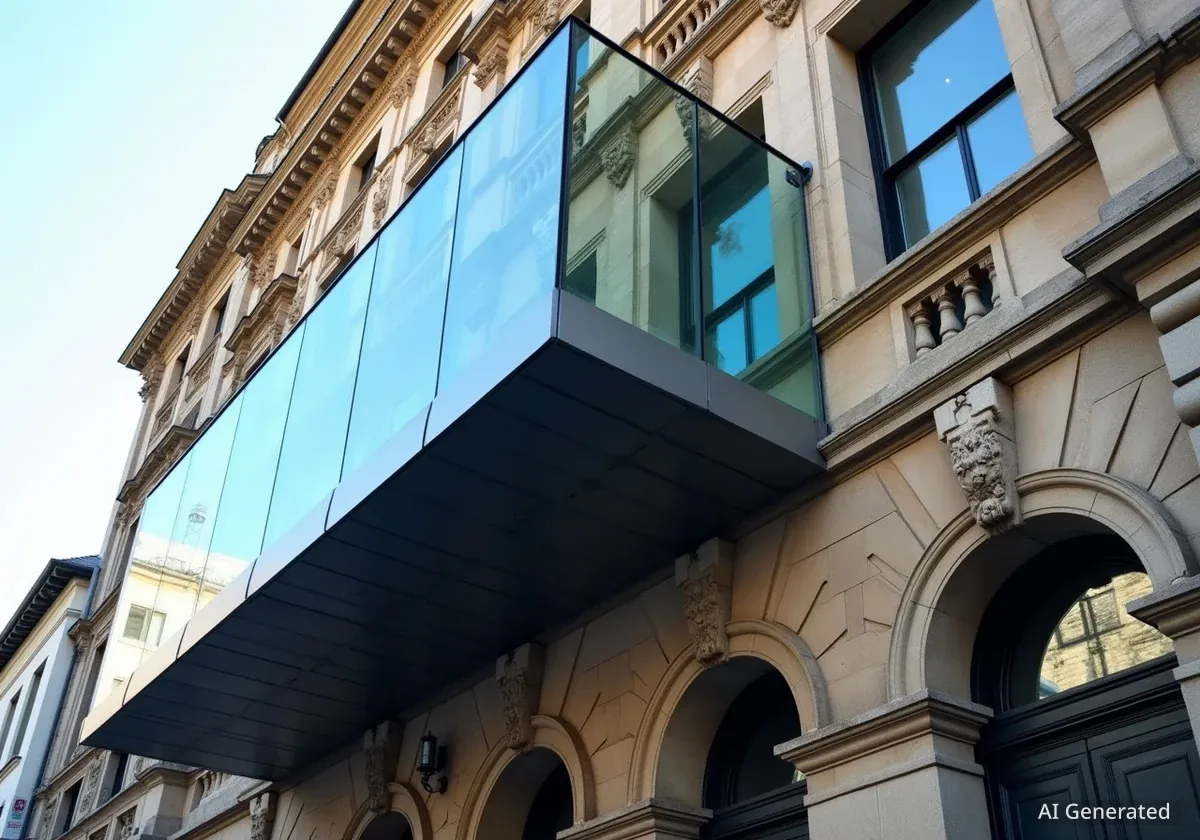
Studio Yione, led by architect Yi Wang, has unveiled a new proposal called Fluxwork. This design aims to add a modern office structure above the historic Columbia Building in downtown St. Louis. The project introduces a lightweight, cantilevered volume that will sit above the remaining two stories of the 1892 landmark. It seeks to blend historical preservation with a vision for future workplaces.
The Fluxwork design is supported by three slender columns and an elevator shaft. The lower portion of the building, which currently stands as a two-story fragment, will be repurposed for public use. This includes a new lobby, an auditorium, and a rooftop garden. The new structure above will house a flexible, data-driven office environment.
Key Takeaways
- Studio Yione proposes Fluxwork, a new office addition for St. Louis's historic Columbia Building.
- The design features a cantilevered, lightweight volume above the existing two-story structure.
- The historic base will become a public hub with a lobby, auditorium, and rooftop garden.
- The new upper floors will offer flexible, data-driven workspaces.
- The project combines historical preservation with modern workplace design.
Columbia Building's History and Modern Plans
The Columbia Building holds significant historical value for St. Louis. It was originally completed in 1892. Architect Isaac Taylor designed it as a nine-story Romanesque structure. It was located at 8th and Locust Streets. The building's name honored the 400th anniversary of Christopher Columbus's arrival in North America. It symbolized the economic growth and optimism prevalent in St. Louis during the late 19th century.
However, the building faced challenges in the mid-20th century. Economic decline led to widespread demolitions in the area. In 1976, the Columbia Building was significantly altered. It was truncated, leaving only a two-story section of its original form.
Historic Context
The Columbia Building's truncation in 1976 reflected a broader trend in many American cities. Urban renewal projects often led to the demolition or severe alteration of historic structures. This was done to make way for new developments, often resulting in a loss of architectural heritage.
Fluxwork aims to address this architectural history. It seeks to integrate the preserved fragment with a contemporary addition. The design creates a visual contrast between the solid, historic base and the open, floating new volume. This approach honors the past while looking towards the future of urban architecture and work environments.
Design Philosophy and Material Choices
Studio Yione's architectural team focused on contrast and performance in their material strategies. The new structure will use a hybrid steel-and-concrete system. High-strength steel columns and a reinforced elevator shaft will support the cantilevered floors. This ensures structural integrity while maintaining a light aesthetic.
The exterior will feature perforated metal panels. These panels are designed to filter daylight and views. This creates a sense of lightness for the upper volume. Inside, the design balances exposed structural elements with warmer finishes. Wood ceilings and retractable curtains will allow for spatial adaptability. This enables spaces to shift between open and enclosed configurations as needed.
"The design creates a visual dialogue between the solidity of the historic base and the openness of the new cantilevered addition," stated a representative from Studio Yione. "We wanted to acknowledge the building's past while creating a forward-looking workplace."
Project Details
- Project Name: Fluxwork Office – Columbia Building Addition Proposal
- Architect: Studio Yione
- Lead Architect: Yi Wang
- Location: St. Louis, Missouri, US
- Original Building Completion: 1892
- Building Truncation: 1976
Workplace Innovation and Environmental Integration
Fluxwork integrates landscape and environmental design elements. A rooftop garden and terraces will extend workspaces into outdoor areas. These features will contribute to thermal comfort and encourage social interaction. They also reconnect the urban site with nature. This aligns with modern trends in office design that prioritize employee well-being and access to green spaces.
The proposal includes a performance-responsive office model. This model uses behavioral simulations and network analysis. These tools study how people interact in the workplace. The insights gained will inform real-time spatial adjustments. This means layouts can change as organizational structures evolve. This creates a highly adaptable and efficient work environment.
Flexible Workspace Layouts
The interior programming of Fluxwork is highly flexible. The lower four floors are designed for individual, focus-oriented work. These areas provide private workstations and dedicated team zones. The goal is to minimize distractions and promote deep work.
The upper three levels feature open layouts. These spaces are intended to encourage collaboration and interaction. Intermediate mezzanine areas, located next to a scissor stair, offer informal gathering points. They also provide flexible circulation paths throughout the new addition. This layered approach supports diverse work styles within a single structure.
Data-Driven Design
Fluxwork's performance-responsive model uses advanced analytics. Behavioral simulations help predict how employees will use the space. Network analysis studies communication patterns. This data then guides real-time adjustments to furniture layouts and spatial configurations, making the office truly adaptive.
This approach positions Fluxwork as a significant project. It serves as both a memorial to St. Louis’s architectural heritage and a prototype for adaptive workplaces. By combining preserved history with experimental office design, Fluxwork proposes a new relationship. This relationship connects cultural memory, urban context, and the changing conditions of modern work. It represents a forward-thinking solution for urban development.
The Future of Urban Office Spaces
The Fluxwork proposal highlights a growing trend in urban development. Many cities are looking for ways to revitalize historic buildings. They also need to create modern, flexible workspaces. This project provides a model for how these two goals can be achieved simultaneously. It shows that new construction can respect and enhance existing structures.
The emphasis on data-driven design is also noteworthy. As workplaces evolve, understanding human behavior becomes crucial. Designing spaces that can adapt to these behaviors can lead to more productive and comfortable environments. This project illustrates how technology can inform architectural decisions in a practical way.
Ultimately, Studio Yione's Fluxwork offers a compelling vision for St. Louis. It imagines a future where historical landmarks are not just preserved but are actively re-engaged. They become dynamic parts of the urban fabric. This project could inspire similar developments in other cities facing similar challenges. It shows a path forward for integrating past and present in a meaningful way.