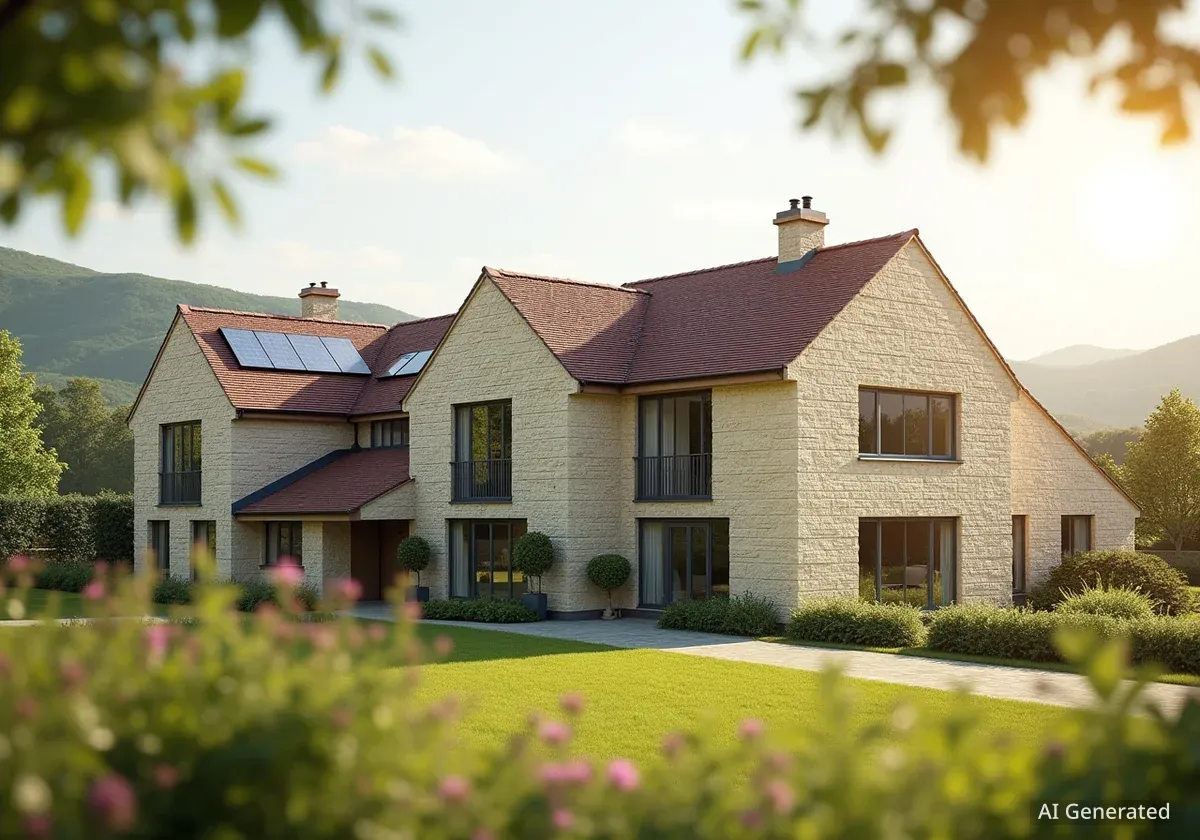
Selencky Parsons, a London-based architecture studio, has completed Bulls Barn, a large family residence in England's South Downs National Park. The 540-square-meter property is designed to appear as a cluster of three smaller cottages, blending into the rural landscape. This approach helps the substantial home feel intimate and practical for its owners, a couple with adult children, while also accommodating frequent visits from extended family.
Key Takeaways
- Bulls Barn is a 540-square-meter family home in South Downs National Park.
- It is designed to look like three smaller cottages, blending with the landscape.
- The home uses local materials like flint and terracotta-toned clay tiles.
- It features eight bedrooms and communal living spaces.
- The design focuses on carbon neutrality and incorporates sustainable technologies.
Integrated Design and Landscape Harmony
The architects aimed for the house to sit comfortably within its natural surroundings. By breaking down the overall volume, Selencky Parsons ensured the structure would not appear imposing. The design allows the house to nestle among existing mature trees on the site.
David Parsons, architect and co-founder of the studio, explained the intent.
"The broken-down massing is also designed to allow the house to nestle comfortably into its landscape setting amongst the existing mature trees on the site,"he stated. He added that from nearby fields, the house looks more like a collection of smaller buildings with varied roof orientations, rather than one large structure.
Project Scale
- Size: 540 square meters (approximately 5,813 square feet)
- Bedrooms: 8, including a self-contained two-bedroom flat
- Location: South Downs National Park, England
Material Choices Reflect Rural Heritage
The property's exterior walls combine terracotta-toned clay tiles with raw flint. This material selection helps define the different levels and blocks of the three-storey building. The upper volumes, clad in clay tiles, are clearly separated into three distinct blocks, each topped with a gabled roof. One of these upper blocks functions as a self-contained two-bedroom apartment, while the other two contain six additional bedrooms.
The ground floor features flint walls interspersed with large glazed sections. This creates a more open and flexible arrangement of communal family rooms. The architects chose flint because it is a readily available local material with historical significance in the region.
Flint: A Local Material
Flint has been a traditional building material in the South Downs for centuries. Farmers often remove flint from surrounding fields, making it an accessible and sustainable resource. Its textured appearance also provides a natural backdrop for the surrounding landscape.
Flint Features Inside the Home
Flint is prominently used for two chimney breasts inside Bulls Barn. These extend upwards alongside two of the gabled blocks. One fireplace serves the living room, and another is positioned between the dining room and a snug area. Using flint in these interior features brings a rustic texture indoors.
"Chimneys are traditionally made from stone, but using flint for the fireplaces gave the opportunity to bring that beautiful rural texture into the interior in a controlled way,"Parsons noted. He described it as a bold statement that helps define living spaces and adds character.
Interior Design and Views
The interior design maintains a neutral palette. Stone floors connect the ground-floor rooms with the outdoor patio terraces. Timber flooring and joinery add warmth throughout the home. The design ensures occupants are consistently aware of the surrounding landscape. Views of the South Downs are integrated into various parts of the house.
These views range from the expansive glazed entrance atrium to a long landscape window seat in the kitchen. Even simple window openings in guest bedrooms frame specific outdoor scenes. "These views are drawn into the interior and provide a continual presence throughout the house," Parsons explained.
Sustainable Features and Modern Living
Bulls Barn replaces a 1960s house that was considered unsuitable for renovation. The new structure was designed with a focus on carbon neutrality in its operation. This includes several sustainable technologies:
- Solar panels for renewable energy generation.
- Rainwater harvesting systems to conserve water.
- Triple glazing for enhanced thermal insulation.
- A ground source heat pump for efficient heating and cooling.
Parsons views this project as an example of how homes can be designed for diverse family needs and long-term occupancy. He highlighted that despite its considerable size, the house feels homely and appropriately scaled as one moves through its interior spaces. This design approach allows for both private and communal living within a single, cohesive structure.
The photography for Bulls Barn was completed by French + Tye. The project reflects a growing trend in residential architecture towards integrating large homes more subtly into natural environments, using local materials and sustainable practices.