Rotterdam has given its approval for the construction of Schieblocks, a new 47,000-square-meter office building. Designed by MVRDV and SYNRG for developer LSI, this project, marketed as The Bluezone Offices, will stand 61 meters tall and stretch nearly 150 meters along the railway line in the Netherlands.
The building is set to become a distinctive feature in the Schiekadeblok district, known for its post-war reconstruction architecture and vibrant cultural scene. Schieblocks aims to blend modern design with references to Rotterdam's unique architectural heritage.
Key Takeaways
- Rotterdam's Schieblocks project receives construction approval.
- The 47,000-square-meter building will feature offices, commercial spaces, and public amenities.
- Its design incorporates colorful, distinct blocks referencing Rotterdam's architectural history.
- The project integrates a protected car-parking ramp into a new bar.
- Sustainable features include recycled brick and Building Integrated Photovoltaic panels.
A '3D Neighborhood' Rises in Schiekadeblok
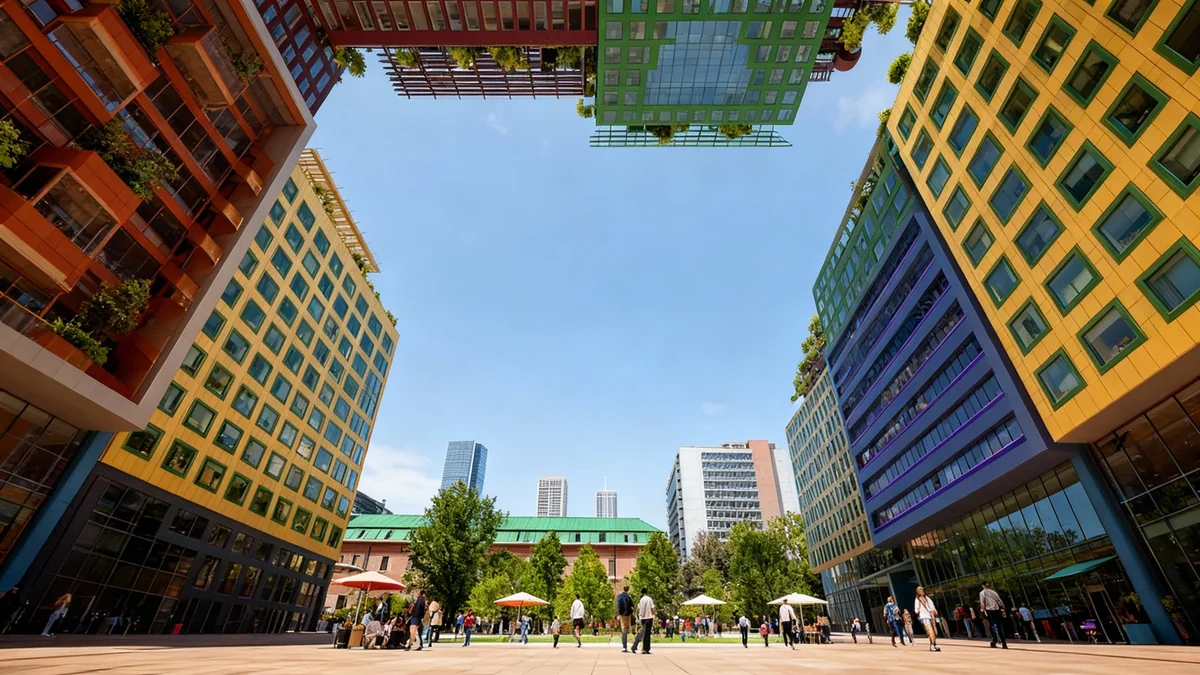
The Schieblocks project is described as a "3D neighborhood," breaking down its large volume into several colorful, individual blocks. This design approach aims to reflect the architectural character of Rotterdam, particularly within the Schiekadeblok area.
This district, originally built after World War II, has transformed into a cultural hub. It hosts creative workplaces, bars, and clubs. The city plans to increase density here while keeping its unique identity. Schieblocks respects this context and seeks to extend it.
Project Facts
- Total Area: 47,000 square meters
- Height: 61 meters
- Length: Nearly 150 meters
- Parking: Three-story underground garage with 230 spaces
- New "Schieblocks": 11 distinct volumes
The ground level is designed for maximum openness. It will include public amenities such as a concept store, a bakery, and a bike café. An underground parking garage will provide 230 spaces across three levels.
Integrating Historic Elements
One notable design feature is the integration of a protected car-parking ramp. This ramp belongs to the nearby Central Post building. It will become the centerpiece of a new glass-enclosed bar, the Wokkelbar, adding a distinct element to the local nightlife.
"Squeezing a building in this narrow space next to the railway was a tough challenge, not to mention the complexity of building around a National Monument with the Wokkelbar. But the Schieblocks will be a colorful addition to the city."
Design Echoes Rotterdam's Past and Future
The building's massing responds to the scale of the surrounding post-war structures. It mirrors the Schiekadeblok's façade along Delftsestraat. The structure is divided horizontally into four sections, each with a defined base and one or two volumes above. This creates 11 new "Schieblocks" in the area.
This composition evokes the nearby post-war blocks, stacked vertically in what architects call a "second reconstruction." Some upper blocks are shaped according to sun angles. This helps avoid casting shadows on homes across the railway.
Rotterdam's Architectural Legacy
Rotterdam is known for its modern architecture, largely due to extensive reconstruction after World War II. The city has embraced innovative designs, often blending new structures with historical preservation efforts. This project continues that tradition, celebrating both the past and future of the city's urban landscape.
Public Spaces and Green Roofs
The top of the building will also feature public amenities. These include a restaurant and a two-story cultural and social event space. This space is arranged around a tribune offering city views. An accessible green roof, designed by Juurlink & Geluk, will provide water-retaining landscapes, a continuous promenade, and a pergola supporting solar panels.
Sustainable Design and Local References
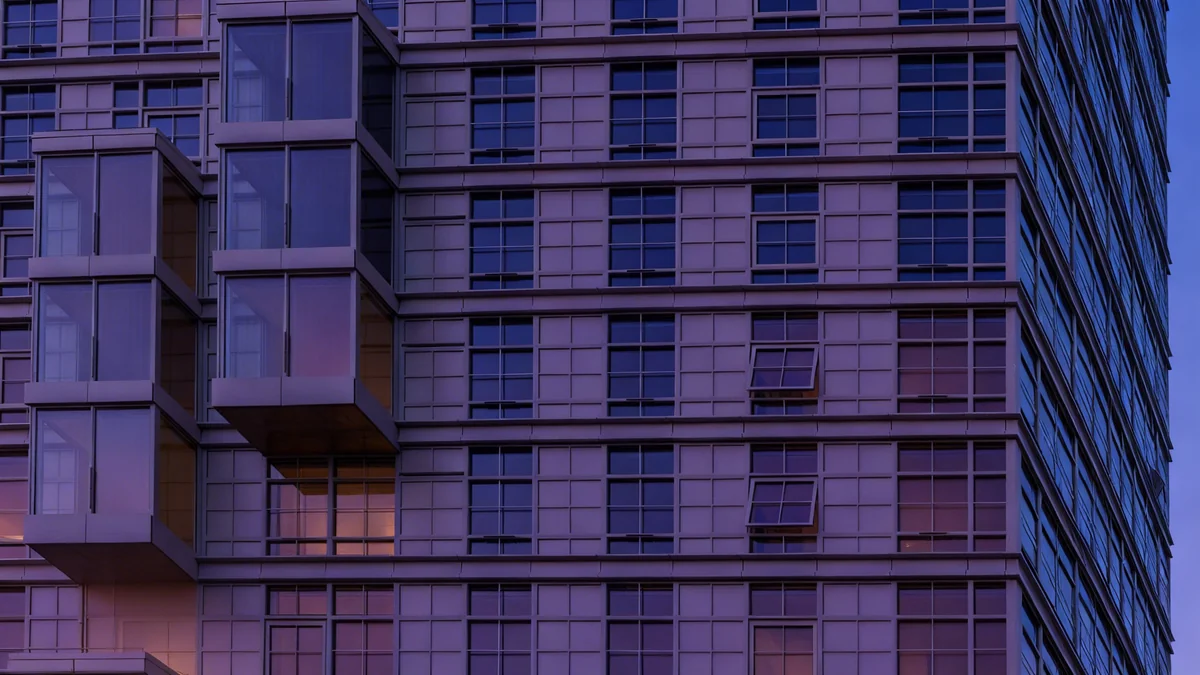
The façade design draws inspiration from Rotterdam's rich architectural history. Each block combines a specific color with a fenestration pattern. These patterns directly reference local buildings. For example, one block uses projecting bay windows from the Huig Maaskant-designed Citrusveiling building, paired with the bright yellow of the former Luchtsingel bridge.
Another block adopts the sandstone tone of Rotterdam's city hall. Its windows form "010," the city's dialing code, within octagonal frames that reference nearby Hofplein 19. These details create a strong connection to the city's identity.
- Color Inspiration: Donald Judd's colorful furniture series
- Fenestration References: Huig Maaskant's Citrusveiling building, Hofplein 19
- City Code Integration: "010" formed in windows
Eco-Friendly Materials
Materials for the building follow a contemporary and sustainable approach. Two blocks incorporate recycled brick, which helps reduce embodied carbon. Three other blocks use Building Integrated Photovoltaic (BIPV) panels on their south-facing façades. These panels contribute to on-site energy generation, making the building more energy-efficient.
"This is how people will see Rotterdam when arriving by train: diverse, bright, and bold. And in its boldness, it is a call to action for the future of Rotterdam – from the 'wederopbouw', the reconstruction, we must shift to the 'tweederopbouw', the second reconstruction."
The Schieblocks project represents a forward-thinking approach to urban development. It combines functional office spaces with public amenities and sustainable features. Its design pays homage to Rotterdam's past while looking towards a future of innovative and integrated urban living.