A new architectural marvel, the Pujiang Platform, has officially opened, offering visitors a unique blend of natural beauty and sustainable design in the hills south of Chengdu, China. This innovative viewpoint and event space, conceived by MVRDV, aims to integrate seamlessly into the landscape while providing breathtaking panoramas of the Qionglai Mountain range.
Key Takeaways
- The Pujiang Platform features an earth-covered timber pavilion designed to blend into the natural hillside.
- It serves as both a tourist destination and a versatile event space for various gatherings.
- The project emphasizes sustainability through its timber structure, green roof, and energy-efficient systems.
- Its design encourages the wider adoption of wood in the Chinese construction industry.
- A secondary viewing platform and improved pathways enhance the visitor experience.
A Vision for Sustainable Development in Pujiang
The Pujiang Platform is more than just a viewing deck; it is a cornerstone of the broader Pujiang new town development. This burgeoning area southwest of Chengdu focuses on creating a high-quality, sustainable lifestyle for its residents. The Pujiang County Planning and Resources Bureau commissioned MVRDV to transform an existing, basic viewpoint into a prominent destination.
The original site, a flattened hilltop, provided impressive views but lacked significant infrastructure. The new design not only upgrades the visitor experience but also remediates the landscape, creating an architectural echo of the original hill. The project covers an area of 414 square meters and was completed in 2024.
Project Facts
- Architects: MVRDV
- Area: 414 m²
- Completion Year: 2024
- Client: Pujiang County Planning and Resources Bureau
- Sustainability Certification: China Green Building Label: 2 Stars
Innovative Design Blends with Nature
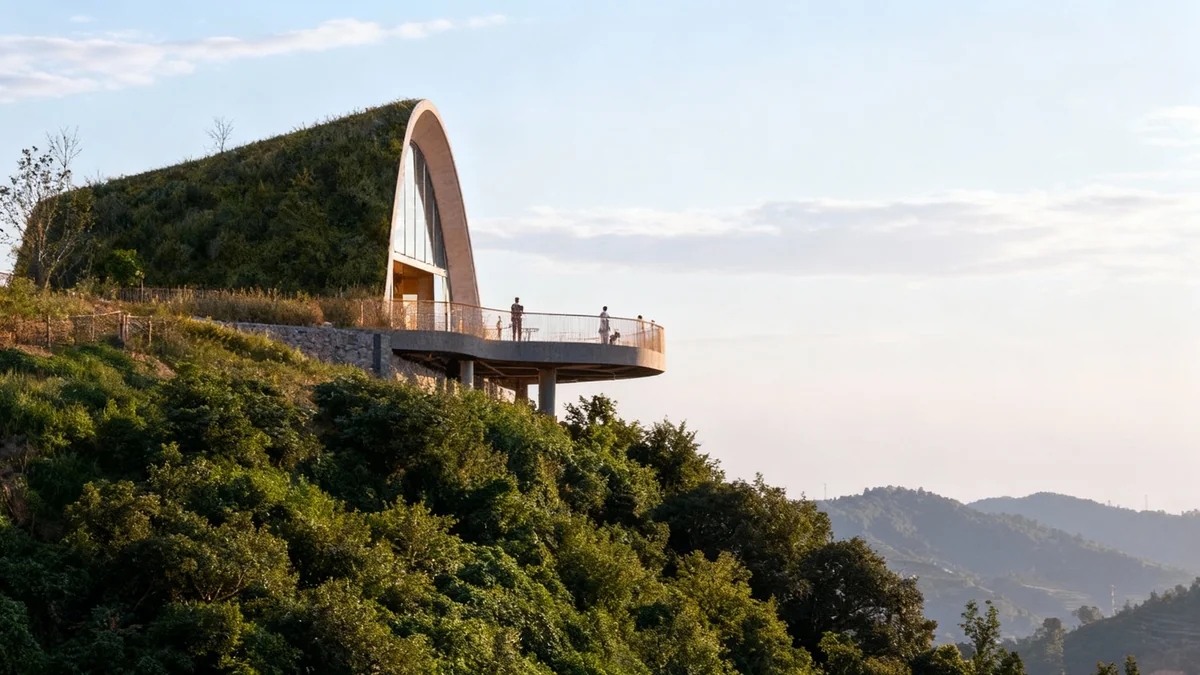
MVRDV's design approach centered on minimizing environmental impact while maximizing the stunning views. The platform features an arched, earth-covered timber pavilion. This structure is strategically placed among the hills, designed to appear as a natural extension of the terrain.
The pavilion takes a telescopic shape, guiding visitors towards a large viewing window and balcony that extends over the slope. This design creates a strong connection between the interior spaces and the expansive outdoor landscape. The building's green roof, with a soil depth of 10 centimeters, supports a variety of local grasses, flowers, and small bushes, further enhancing its integration with the surrounding ecosystem.
"The hills of this region are truly a spectacular sight, so one of the challenges we faced was to make the most of those views while reducing the impact on the landscape," stated MVRDV founding partner Jacob van Rijs. "By adding a hill-shaped pavilion with a green roof we not only minimise our own impact, but we recreated the hill that was there before. This act of preserving and respecting nature is the essence of the design, which is continued in the construction approach, using bio-based materials such as wood that are more sustainable and thus have less impact on natural environments such as this one."
The Role of Timber in Construction
A significant aspect of the Pujiang Platform is its timber structure. This choice serves as a practical demonstration to promote the use of wood in the Chinese construction industry. Despite the environmental benefits of timber, such as reduced carbon emissions, its widespread adoption in China faces regulatory and industrial hesitation.
The project showcases timber as a viable and sustainable building material. The use of wood significantly contributes to keeping the embodied carbon emissions of the structure low, aligning with the broader goals of sustainable development.
Enhanced Visitor Experience and Functionality
The Pujiang Platform is designed to be a versatile space. It functions as a visitor destination, attracting tourists to the region, and also as an event space. It can host a range of activities, from weddings to government meetings, thanks to its adaptable interior and stunning backdrop.
Visitors enter the pavilion through a glass façade on its south-east side. Inside, the floor gently slopes downwards while the roof slopes upwards, mirroring the natural incline of the hill. This creates a tribune-like seating arrangement, ideal for presentations or simply enjoying the panoramic views through the 10-meter-tall glass façade at the far end.
Connecting Inside and Out
The large glass façade incorporates oversized sliding doors. These doors open to connect the interior space with the outdoor viewing balcony. This design allows the balcony to become an extension of the indoor area, maximizing the connection between the building and its natural surroundings.
Improved Accessibility and Additional Viewing Points
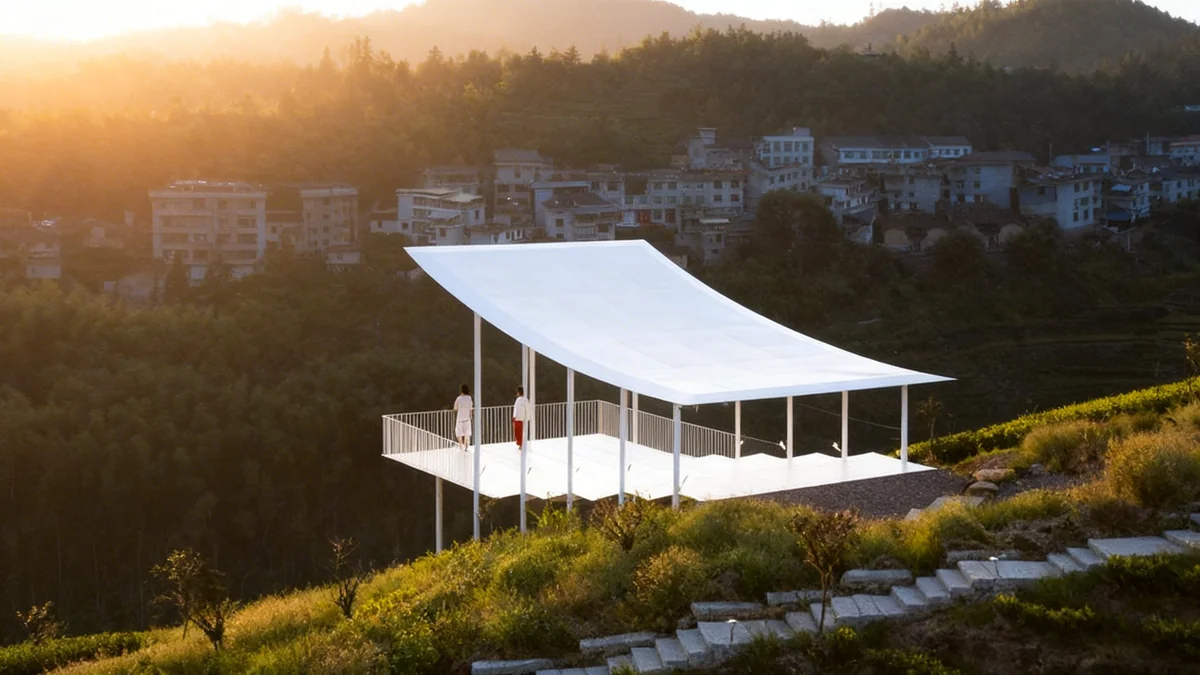
The project also includes improvements to the site's existing pathway network. Multiple routes now lead to the main viewpoint. A secondary viewing platform, integrated into a twisting staircase, offers 360-degree views. This circular platform provides perspectives of both the distant mountains and the immediate natural environment.
The landscape design enhances the site's existing biodiversity. Rainwater collection systems utilize existing waterways for irrigation, further demonstrating the project's commitment to ecological responsibility.
Commitment to Energy Efficiency
Beyond its timber structure, the Pujiang Platform incorporates several strategies to reduce its operational energy consumption. The earth berm and green roof provide substantial insulation and thermal mass, which helps to mitigate the effects of temperature fluctuations.
The ceiling's layered design facilitates natural ventilation, keeping the interior cool. Solar gain is minimized due to the north-facing orientation of the large window. A roof overhang and surrounding trees also protect the smaller entrance wall from direct sunlight. Furthermore, a geothermal heat pump supplies a portion of the pavilion's energy requirements.
These sustainable features help the Pujiang Platform embody the identity of the emerging sustainable town below. By day, it serves as an example of integrated, eco-conscious architecture. By night, light from its window transforms it into a visible beacon in the hills, clearly seen from the plains.