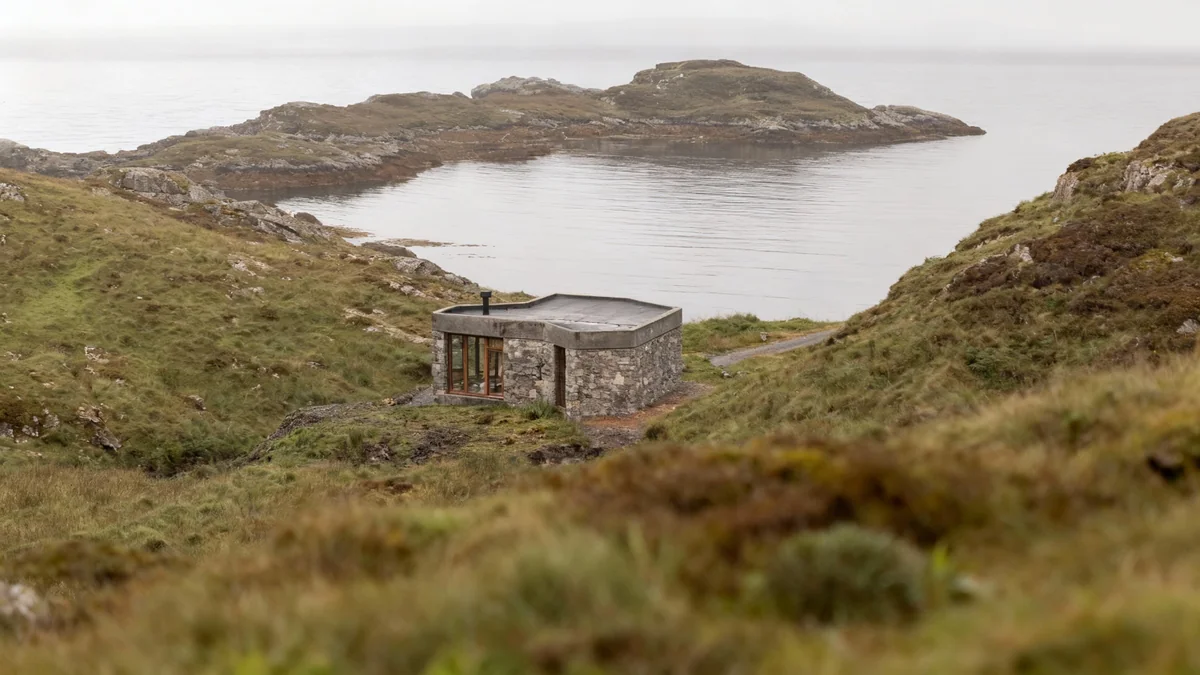

A stone-clad residence nestled in Scotland's remote Outer Hebrides has been named the UK's best new house by the Royal Institute of British Architects (RIBA). This prestigious award, RIBA House of the Year 2025, recognizes Caochan na Creige, a design by local practice Izat Arundell, for its remarkable integration into the rugged landscape and resilience against harsh weather conditions.
Key Takeaways
- Caochan na Creige, located in the Outer Hebrides, won RIBA House of the Year 2025.
- The house features local Lewisian Gneiss stone cladding, blending with its environment.
- It was praised for its material use, resilience, and sensitive design on a tight budget.
- The design navigates challenging site conditions, including hard rock formations.
A Design Rooted in Landscape
Caochan na Creige, meaning 'little quiet one by the rock,' stands as a testament to architecture that respects its surroundings. The home's exterior features blocks of local Lewisian Gneiss stone. This material choice allows the structure to almost disappear into the dramatic coastal scenery of the Bay of Harris.
The design team, Izat Arundell, specifically focused on creating a building that could withstand the unpredictable climate of the Outer Hebrides. This region is known for its strong winds and challenging weather patterns. The house demonstrates a deep understanding of local vernacular architecture while offering modern living spaces.
Interesting Fact
The Lewisian Gneiss stone used for Caochan na Creige is some of the oldest rock in Europe, dating back billions of years. Its use directly connects the house to the ancient geology of the Outer Hebrides.
Unanimous Decision by the Jury
The RIBA House of the Year 2025 winner was revealed during the final episode of the Grand Designs House of the Year series. The selection of Caochan na Creige from a shortlist of seven homes was a unanimous decision by the awards jury.
"The choice of the winner, Caochan na Creige, was unanimous," stated David Kohn, award jury chair and founder of London studio David Kohn Architects. "It addressed every issue – challenging climatic conditions, the relationship to vernacular architecture and a tight budget – with a rare mixture of sensitivity and boldness."
Kohn further emphasized the home's modest size yet luxurious connection to the landscape. He highlighted its self-built nature from hyper-local stone. This approach suits the material's inherent qualities, demonstrating a sustainable and thoughtful construction process.
Overcoming Site Challenges with Innovative Design
The house's irregular, angled plan is not merely an aesthetic choice. It is a practical solution to the site's unique challenges. The foundations were carefully designed to avoid areas of extremely hard rock formations present on the property. This demonstrates a clever response to natural obstacles.
Inside, the home contrasts its rugged exterior with warm wood panelling. Full-height windows frame panoramic views of the stunning Outer Hebridean landscape. This design choice brings the dramatic outdoors inside, creating a constant connection to the natural environment.
Background on RIBA House of the Year
The RIBA House of the Year award celebrates the best examples of new residential architecture in the UK. It highlights homes that push boundaries in design, sustainability, and liveability. The award aims to inspire homeowners and architects alike.
Recognition Beyond RIBA
This is not the first time Caochan na Creige has received critical acclaim. The house was previously named rural house of the year in last year's Dezeen Awards. This dual recognition underscores its significant impact on contemporary architectural discourse.
The RIBA House of the Year shortlist included other notable projects. A coastal house in Hastings by Hugh Strange Architects, also recognized on this year's RIBA Stirling Prize shortlist, was among the contenders. A low-energy home in Suffolk by Sanei Hopkins Architects also made the cut. These diverse projects showcase the breadth of innovation in UK residential design.
- Material Innovation: The use of local Lewisian Gneiss stone is a defining feature, ensuring durability and aesthetic harmony.
- Climate Resilience: The design actively addresses the severe weather conditions of the Outer Hebrides, making it a robust dwelling.
- Budget-Conscious Construction: The project successfully integrated high-quality design within a tight budget, proving that exceptional architecture does not always require limitless funds.
- Integration with Nature: The home's form and material choices allow it to blend seamlessly into its dramatic coastal setting, enhancing the natural beauty rather than detracting from it.
The success of Caochan na Creige offers important lessons for future residential architecture, particularly in sensitive rural contexts. Its blend of local materials, thoughtful design, and resilience sets a high standard for sustainable and context-aware building practices.