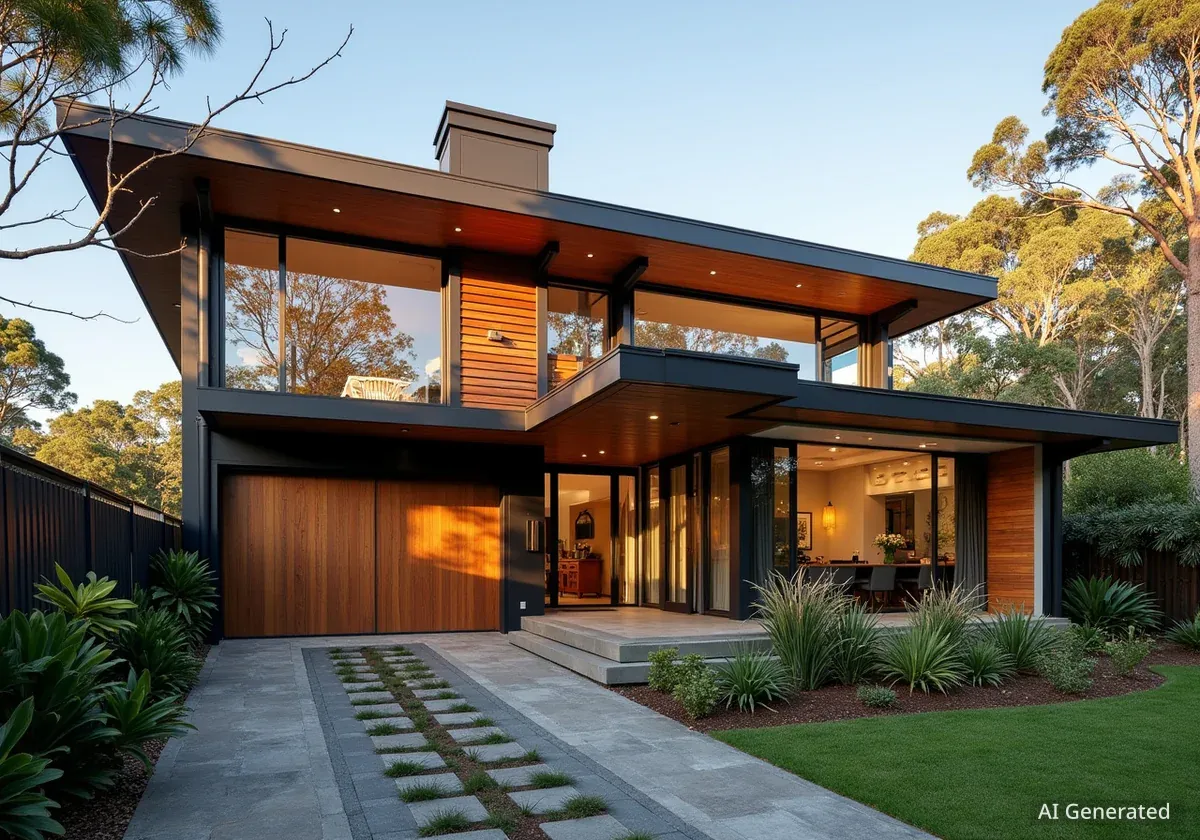
A significant mid-century home in Northern Sydney, originally designed by Pettit & Sevitt, has undergone a thoughtful renovation and expansion. The project, led by Studio Prineas, transforms a client's childhood home into a contemporary residence for a young family, while preserving its architectural legacy and connection to the natural bushland.
Key Takeaways
- A 1960s Pettit & Sevitt 'Lowline' house in East Ryde has been updated by Studio Prineas.
- The renovation expands the home to two levels, adding four bedrooms and a cinema room.
- Design elements pay homage to the original mid-century aesthetic, using a nostalgic material palette.
- Integrated landscaping helps blend the new addition with the existing structure and natural environment.
- The project focuses on creating a functional family home while honoring its historical context.
Reviving a Mid-Century Icon
The original structure is a well-preserved example of Pettit & Sevitt's 'Lowline' model. These homes, developed in collaboration with architects Ken Woolley and Michael Dysart in the 1960s, aimed to provide functional, affordable housing that respected the Australian landscape. The client, who grew up in this particular East Ryde house, sought to transform it for their own young family.
Studio Prineas understood the importance of this architectural heritage. Their approach focused on integrating modern needs without erasing the home's original character. The design team initially considered a single-level expansion but ultimately added a second story to better accommodate the family's desire for connected living spaces.
Pettit & Sevitt's Legacy
Pettit & Sevitt were influential Australian home builders in the 1960s. They collaborated with leading architects like Ken Woolley to offer well-designed, mass-produced homes that were both affordable and environmentally responsive. Their designs often featured flat roofs, open-plan layouts, and a strong connection to the outdoors, becoming iconic examples of Australian modernism.
Thoughtful Expansion and Redesign
One of the most significant changes involved relocating the main entry. The new entrance now offers a more intuitive path from the street, leading visitors through a stepped garden to an intimate courtyard with a tiled seat. This new sequence sets a welcoming tone for the interior.
The home's front section now houses a lounge room and a study, both offering elevated views of the leafy street. The original spiral staircase was replaced with a more open-tread stair, becoming a playful focal point along the central corridor. Behind this, a laundry room, walk-in pantry, and powder room are discreetly tucked away.
Key Additions and Features
- Second level with four new bedrooms and a sitting room.
- Lower ground level includes an additional bedroom, bathroom, storage, wine cellar, and cinema room.
- New entry sequence with a stepped garden and intimate courtyard.
- Modernized kitchen with a tiled island bench and stainless-steel inset.
- Repurposed original curtains as window seat upholstery.
The northern elevation of the house was freed up to create expansive kitchen, dining, and sitting areas. These spaces now enjoy direct views of the garden and pool, which are set against a striking natural rock outcrop. This design emphasizes the connection to the natural surroundings, a hallmark of the original Pettit & Sevitt philosophy.
A New Upper Level and Lower Ground Amenities
The newly added second level accommodates four bedrooms and a smaller sitting room. This arrangement comfortably houses the young family and provides space for guests. A large bathroom on this level features a separated vanity, designed to allow multiple users simultaneously, enhancing functionality for a busy family.
On the lower ground level, an additional bedroom and bathroom are available for a nanny, located beside the garage. Further excavation beneath the property created a dedicated storage wall, a wine cellar, and a private cinema room. These additions significantly expand the home's utility and leisure options.
"The existing architecture preserved the site’s natural slope, comprising a flat-roofed single level perched above a steep driveway and garage. While Studio Prineas’ initial response preserved the single-level layout with a rear pavilion and glazed link, the client was interested in adding a second level for bedrooms, ensuring their young family felt connected."
Harmonizing Old and New Aesthetics
From the street, the new architectural elements appear as a natural continuation of the original Pettit & Sevitt vernacular. Studio Prineas carefully aligned the upper level with the home’s original brick piers and echoed its horizontal roof band. Integrated landscaping helps to soften the visual transition between the older and newer sections of the house.
The original volume of the home is now distinguished by horizontal cladding, while the addition uses prefinished fiber cement sheet. This robust, low-maintenance material features fine vertical ribbing, offering a subtle contrast that highlights the new work without clashing with the existing structure.
Material Palette and Design Choices
The design team selected a nostalgic palette of materials that resonate with the home's mid-century origins. This includes walnut veneer, laminate, colored carpet, mosaic tiling, and crazy paving. These choices, in tones that harmonize with the natural landscape, help to create a cohesive and authentic feel throughout the expanded residence.
Nostalgic Touches and Modern Interpretations
Studio Prineas focused on preserving the authentic and timeless appeal of the house. The kitchen's tiled island bench, for example, features a functional stainless-steel inset, offering a contemporary take on modernist tiled counters. Bedroom wardrobes draw inspiration from freestanding mid-century pieces, raised on timber legs with expressed laminate carcasses.
A particularly touching detail involves the repurposing of the home's original curtains. These textiles, which captivated the design team with their retro charm, were ingeniously transformed into upholstery for window seats. This detail serves as a tender reference to the house's history and the client's cherished childhood memories of her mother.
The visual language is further enhanced by a selection of iconic light fittings and furniture. These include Louis Poulson PH5 pendants, Lampe DeMarseille Mini Nemo wall lights by Le Corbusier, and Australian modernist furniture pieces like a R160 Contour chair and a Scape armchair and footstool designed by Grant Featherston. These elements reinforce the home's blend of historical appreciation and contemporary living.