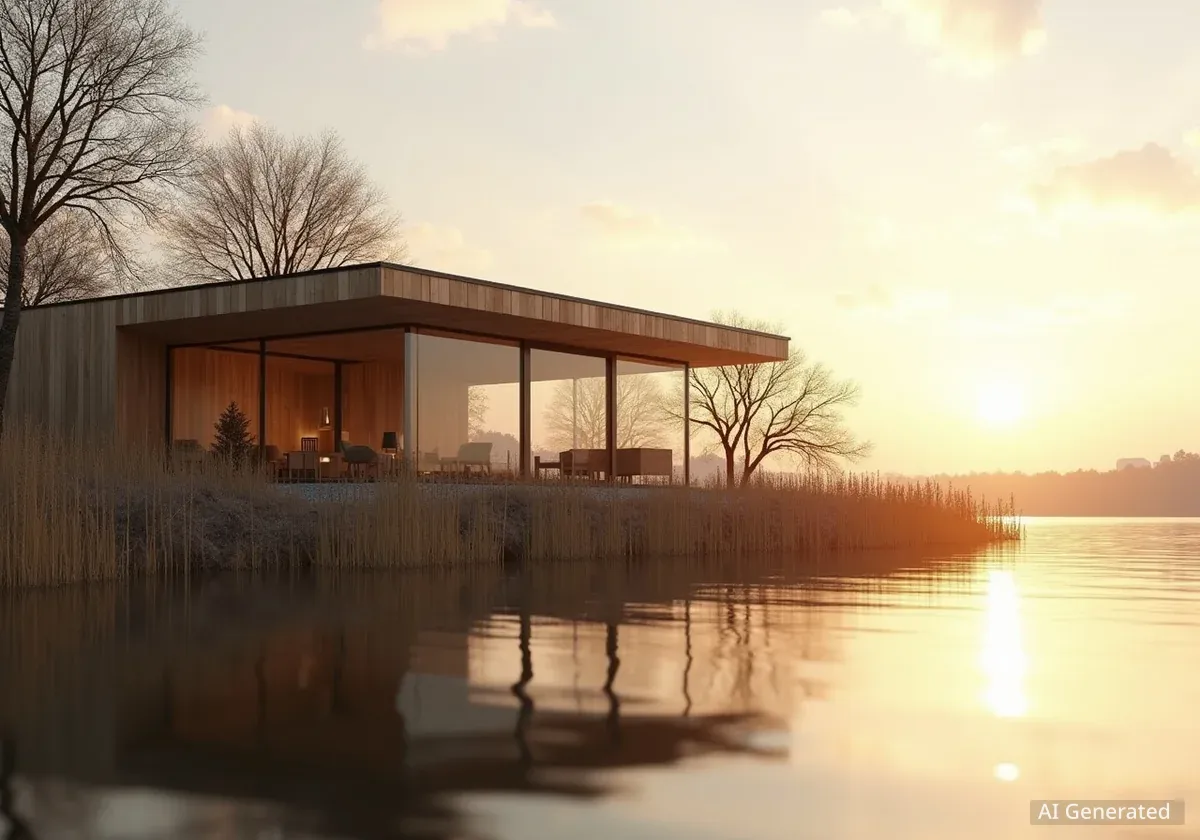
The Marhûs lake house, located in Boornzwaag, The Netherlands, represents a significant example of residential architecture designed to integrate seamlessly with its natural surroundings. Completed in 2025 by Lichtstad Architecten, the 450-square-meter dwelling emphasizes a deep connection between structure, landscape, and sustainability. Its design reflects traditional craftsmanship while incorporating modern, energy-neutral building practices.
Key Takeaways
- Marhûs, meaning 'lake house' in Frisian, is designed by Lichtstad Architecten in Boornzwaag, Netherlands.
- The 450 m² residence, completed in 2025, integrates deeply with its lakeside environment.
- Its architecture features five elongated volumes and curved roofs inspired by traditional shipbuilding.
- The entire structure uses cross-laminated timber (CLT), emphasizing biobased and circular materials.
- Marhûs is energy-neutral, utilizing solar panels, a ground-source heat pump, and green roofs.
Architecture Inspired by Nature and Craft
The design of Marhûs draws directly from its unique location on the edge of a lake. The name itself, 'Marhûs,' is Frisian for 'lake house,' highlighting this core connection. Architects aimed to create a constant dialogue between the building, the expansive water views, and the surrounding landscape. The property is bordered by two small harbors, a garden with mature trees, a reed-lined quay, and a long jetty.
From the street, Marhûs presents a modest appearance, respecting the scale of the nearby village. However, facing the lake, the house becomes more prominent, responding to the open Frisian landscape. This dual character allows the building to fit into different contexts.
Context: The Frisian Landscape
The Frisian region in the Netherlands is known for its extensive lakes, waterways, and flat, open landscapes. This environment often influences local architecture, which frequently incorporates elements that connect structures with water and vast views. Traditional Frisian houses often feature strong, simple forms that withstand the elements.
Design Reflects Seasonal Changes
The architectural plan for Marhûs is rooted in experiencing the landscape throughout all its seasons. The house offers both shelter and openness, creating spaces for intimacy and for vast views. It features five slender, elongated volumes. Each volume has a distinct spatial character and orientation, creating a play of light and shadow.
These varied volumes generate constantly shifting perspectives. Visitors move through the house and are guided towards the landscape. The central kitchen and living area serve as the social core. This area provides panoramic views of the garden, harbors, and lake. It connects directly to an elevated living room, a covered waterside terrace, a fitness area, and guest accommodations.
"Through their varied lengths, fluid rooflines, and finely articulated façades, the volumes generate layered and constantly changing perspectives—both from within and in the reflections cast by the façades themselves."
Traditional Craftsmanship Meets Modern Construction
A significant influence on Marhûs is the traditional craft of wooden shipbuilding. This connection is evident in the construction process, particularly in the precision of the timber joinery and the careful assembly of each structural element. The curved roofs of the house are shaped to resemble a ship's hull, giving the ends of the building an organic and flowing quality. This design choice merges architecture, craftsmanship, and the natural landscape into a cohesive whole.
The entire structure is built using cross-laminated timber (CLT). This material offers both strong structural performance and the natural warmth of wood. The sweeping rooflines emphasize the unity between the building's form and its function. This makes Marhûs more than just a home; it becomes a spatial journey where construction, craft, and context come together.
Fact: Cross-Laminated Timber (CLT)
- CLT is an engineered wood product made by gluing layers of solid-sawn timber together.
- It offers high structural strength, similar to concrete, but is much lighter.
- CLT is considered a sustainable building material due to its renewable source and ability to sequester carbon.
- Its use can reduce construction time and waste on site.
Sustainable and Energy-Neutral Design
Marhûs is designed to be energy-neutral. It uses biobased and circular materials throughout its construction. Solar panels are integrated into the higher flat roofs, positioned for optimal energy efficiency while remaining out of sight. A ground-source heat pump provides both heating and cooling for the home. Cellulose insulation ensures a comfortable and breathable indoor climate, reducing energy consumption.
The exterior façades and roofs are clad in untreated timber and zinc. These materials are chosen for their ability to age well and blend naturally with the surrounding landscape. Slim incisions in the timber façades allow daylight to filter into the interiors, creating dynamic light and shadow patterns. A green roof further enhances biodiversity, improves water retention, and contributes to the building's thermal comfort.
Interior and Exterior Unity
The architectural and interior design of Marhûs are conceived as a single, unified concept. Materials, light, and spatial rhythm work together to create a restrained and timeless atmosphere. The layout is clear and functional, and the chosen materials result in a home where nature, architecture, and craftsmanship are in perfect balance.
The curved roofs define specific spatial zones inside the house. Softly curved interior walls create gentle transitions between rooms. In some areas, these walls open into subtle niches or visual connections. In other places, they define thresholds or create a welcoming feel in passageways. This results in a dynamic and organic architecture that maintains a constant connection with its surroundings, enhancing the experience of living there.
Integration with Landscape
The garden facing the lake flows seamlessly into the broader Frisian landscape. It features simple grasses and native plantings. A long jetty extends from the house directly to the water. In more private areas, a flower and kitchen garden are located near an east-facing breakfast terrace, which captures the morning sun. A shaded garden near the master bedroom offers a more peaceful atmosphere. Lightly elevated planting beds add a playful touch. The street-side garden reflects the modest scale of the village.