
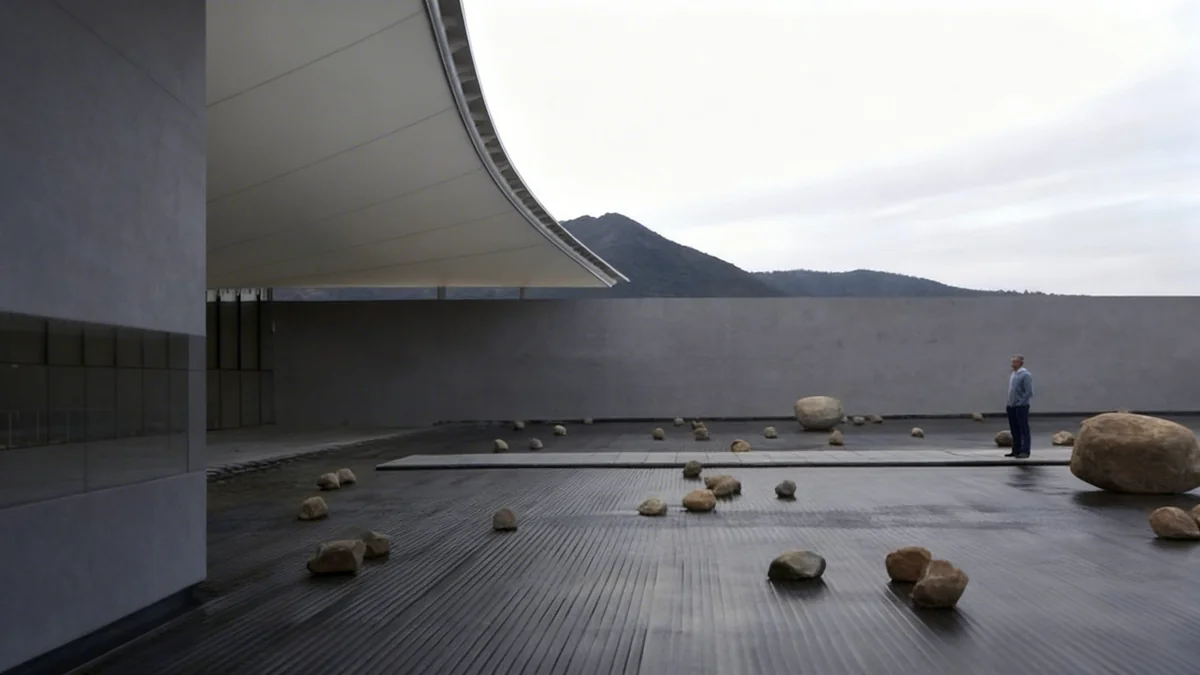

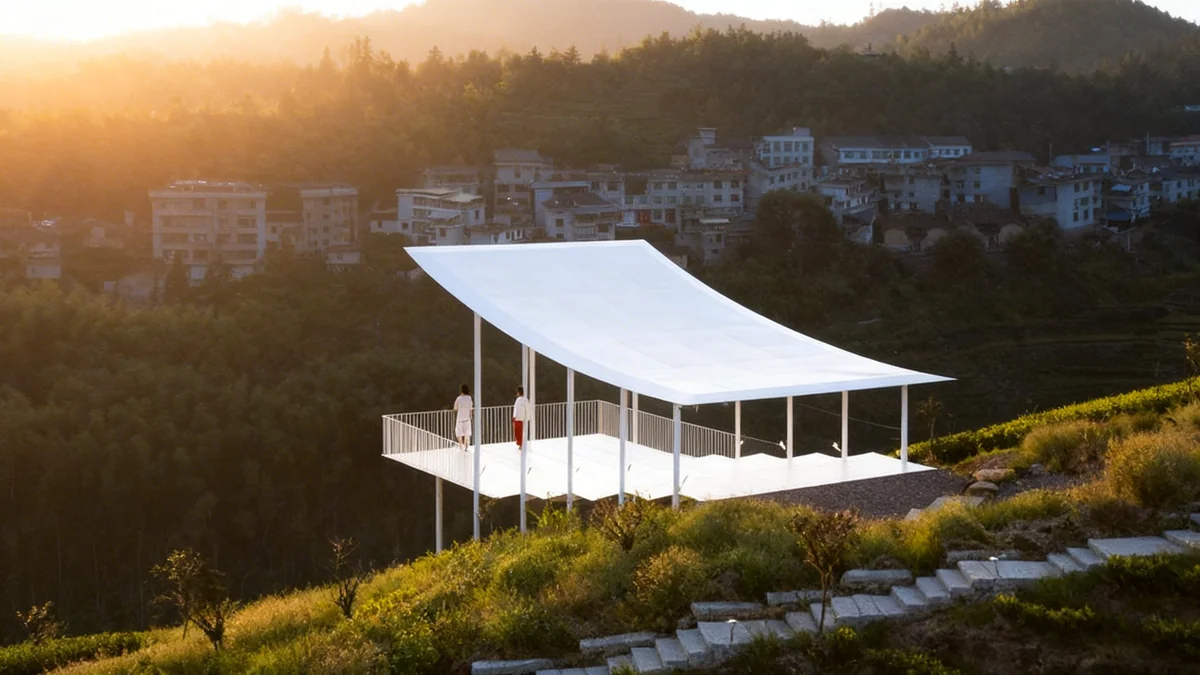
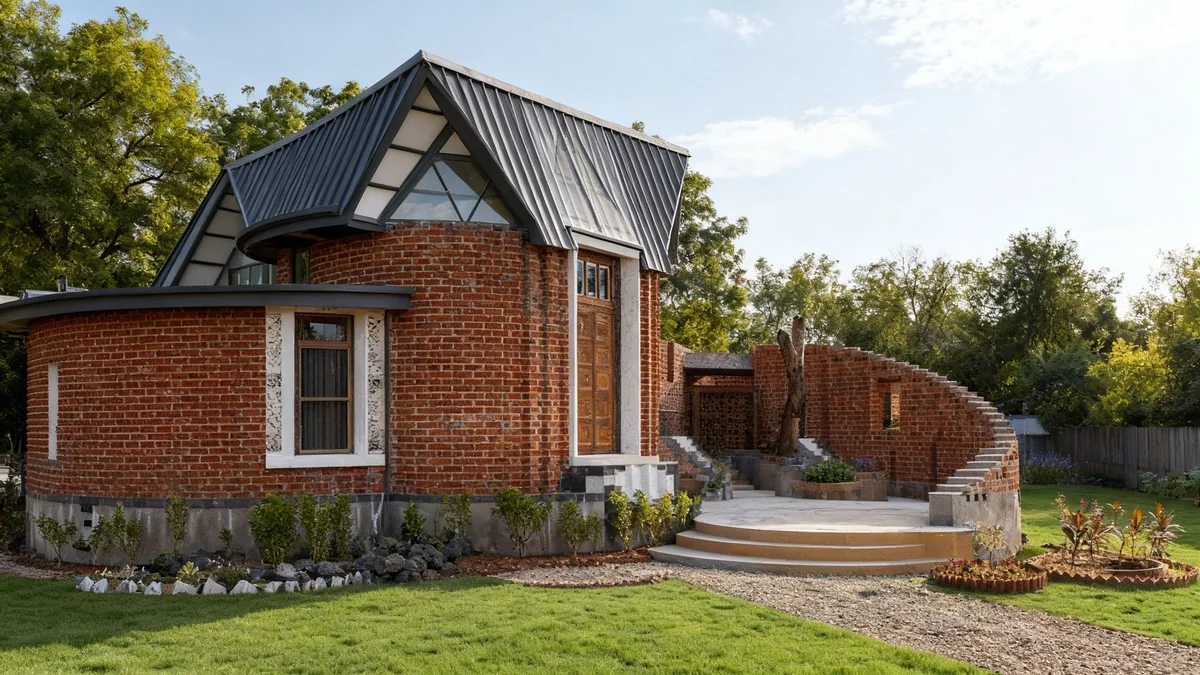
Lanza Atelier, a Mexico City-based architectural studio, has been selected to design the 25th annual Serpentine Pavilion. Founders Isabel Abascal and Alessandro Arienzo describe this commission as an overwhelming surprise, highlighting their studio's commitment to experimentation and a 'new Mexican architecture' movement.
Key Takeaways
- Lanza Atelier will design the 2026 Serpentine Pavilion, marking a significant international recognition for the Mexico City studio.
- The pavilion design draws inspiration from the traditional crinkle-crankle wall, emphasizing material efficiency and vernacular construction.
- Founders Isabel Abascal and Alessandro Arienzo advocate for an experimental approach, pushing architectural boundaries in every project.
- The studio's work spans diverse scales, from public bathrooms and furniture to houses and art exhibitions.
- Lanza Atelier aims to integrate the pavilion with its garden surroundings, moving beyond the 'centerpiece' model of past designs.
A New Wave of Mexican Architecture
Isabel Abascal and Alessandro Arienzo established Lanza Atelier in Mexico City in 2015. They see their work as part of a vibrant new era in Mexican architecture, characterized by a willingness to experiment and challenge conventional design. This approach, they believe, contributed to their selection for the prestigious Serpentine Pavilion.
The duo emphasizes the dynamic architectural scene in Mexico City. According to Abascal, "Mexico is at a great moment, architecturally speaking. We have this feeling that we are part of a new generation." Arienzo adds, "It's time to test new stuff and bring new Mexican architecture to the table. I think that's very thrilling."
Studio Origins
Lanza Atelier was founded in 2015 after Abascal and Arienzo collaborated on a public bathroom design for a seven-kilometer bike path in Mexico City. This early project allowed them to push boundaries by advocating for all-gender restrooms, a progressive stance at the time.
From Local Projects to Global Recognition
The Serpentine Pavilion commission came as a significant surprise to the founders. Most of Lanza Atelier's permanent projects are located within Mexico, making the international invitation unexpected. Waking up to an email from the Serpentine Gallery team, Abascal described it as a "very overwhelming" moment.
Their diverse portfolio, which includes everything from exhibition designs and furniture to houses and numerous smaller pavilions, likely played a role in their selection. Arienzo notes their dedication to every task, regardless of scale. "We try to put the same energy into drawing a table as drawing a Serpentine Pavilion," he states.
This commitment to every project, no matter how small, exemplifies their experimental ethos. They view each commission as an opportunity to learn and innovate.
"Every commission, it's an opportunity to do something interesting, to experiment, to push the boundaries of what architecture means," explains Isabel Abascal.
Conceptual Process and Material Focus
A core element of Lanza Atelier's methodology is a rigorous conceptual process and intense research. Arienzo highlights the time investment in the early stages. "We put a lot of attention to the conceptual process, we test a lot of stuff at the beginning, and that's very time-consuming," he shares.
This research-driven approach allows them to delve deeply into the context of each project. Abascal describes their studio as a "workshop," where the outcome is not always predetermined. "We were never sure of what's going to come out and that's part of the beauty of doing architecture, that you're going in a certain way, but you are surprised by where architecture takes you every time," she says.
A notable aspect of their design philosophy involves focusing on a single material per project. They aim to explore the full potential of that material, researching its historical uses while also reimagining its contemporary applications.
Crinkle-Crankle Walls
A crinkle-crankle wall is a serpentine or undulating brick wall that can be built using fewer bricks than a straight wall of the same length because its curves provide inherent stability. These walls originated in ancient Egypt and were introduced to England by Dutch engineers, often found in traditional English gardens.
The Serpentine Pavilion Design
Lanza Atelier's design for the Serpentine Pavilion draws inspiration from the crinkle-crankle wall. This undulating, one-brick-wide structure is known for its stability and material efficiency. The design will use brick, echoing traditional English gardens and the facade of the Serpentine South Gallery.
The choice of the crinkle-crankle form is intentional, not only for its historical connection to English landscapes but also for its inherent efficiency. Abascal emphasizes the goal to "somehow highlight vernacular construction wisdom." The form is also a playful nod to the nearby Serpentine lake, named for its snake-like shape.
The pavilion will feature both an indoor habitable space and an external gathering area, framed by a bench. This approach aims to integrate the structure with its garden setting, creating a more interactive experience for visitors.
"By highlighting it, we are somehow referring to the necessity of actually being preoccupied at a global scale with how we employ our resources," says Isabel Abascal, connecting the design to broader environmental concerns.
Rethinking the Pavilion's Role
Alessandro Arienzo suggests that past Serpentine Pavilions have often functioned as isolated "centerpieces," sometimes overlooking their surroundings. Lanza Atelier's design challenges this notion by giving equal importance to the outdoor space.
"We believe that most of the pavilions they have made, it's always like a centrepiece where you just enter and that's it, and the garden around is just like a residual space," Arienzo observes. "It was important to also put attention to the outside space. The other half of the pavilion is actually outside, so you can perform other activities outside."
This holistic approach aims to create a more integrated and engaging experience within London's Kensington Gardens. The studio, currently a six-person team, frequently collaborates with external practitioners, fostering a dynamic and collaborative environment. This open approach, combined with their international backgrounds, contributes to a "very nice, vibrant energy" within the Mexican architectural scene.
The name Lanza Atelier itself, chosen quickly in 2015, holds a deeper meaning for the founders. Arienzo notes that "lanza" in Spanish signifies both a noun and an action, implying movement and purpose. Abascal connects it to the idea of "flying towards somewhere, but you don't really know where" – a fitting metaphor for a studio defined by its exploratory spirit and commitment to pushing architectural boundaries.