
A former tobacco warehouse in Hudson, New York, has been completely redesigned to create The Spark of Hudson, a new community education and arts center. The project, led by architecture firm GLO and design studio Present Forms, transformed the 10,000-square-foot industrial building into a versatile hub for local programming and events.
The renovation involved a comprehensive overhaul of the structure's interior and exterior, including the addition of a 1,000-square-foot rooftop extension. The goal was to create an open and welcoming space that could adapt to the diverse needs of the Hudson community.
Key Takeaways
- A former tobacco warehouse in Hudson, NY, has been converted into The Spark of Hudson, a community arts and education center.
- The project involved a gut renovation of the 10,000-square-foot building and added a 1,000-square-foot rooftop Solarium.
- New York-based studios GLO and Present Forms collaborated on the design, focusing on flexibility and community engagement.
- The interior features distinct zones, including a ground-floor Learning Lab, a residential-style second floor, and a light-filled rooftop event space.
A New Vision for an Industrial Landmark
The building, located at 502 Union Street, has a history of transformation. Originally constructed as a tobacco warehouse, it was converted into office space during the 1980s. In 2020, the property was acquired by philanthropists Albert Wenger and Susan Danziger, who envisioned a new kind of community resource for the city.
Their objective was to establish a physical home for their new organization, one that could host a wide array of activities, from lectures and workshops to social gatherings. To realize this vision, they brought together architecture firm GLO, founded by Joanie Tom, and design studio Present Forms, led by Stephanie Lin.
Hudson's Creative Renaissance
The city of Hudson, located in Upstate New York, has experienced a significant influx of creative professionals and new residents over the last decade. This trend accelerated during the pandemic, as more people moved from New York City. The opening of The Spark of Hudson aligns with this growth, providing a much-needed public space for a dynamic and expanding community.
Designing an Open and Inviting Space
The core challenge for the design team was to convert an insular, industrial structure into a building that felt connected to its neighborhood. The original brick facade was imposing and had few openings, creating a closed-off appearance.
Joanie Tom, founder of GLO, explained the strategy to change this. "Making this introverted building more extroverted involved a dramatic re-structuring of its facades and thoughtful subdivision of its interior spaces," she said. The team introduced several new windows and enlarged existing ones to bring more natural light into the building and create visual connections with the street.
"It was clear from the start that new perforations to the envelope were necessary – not just to bring in light and air, but to draw the neighborhood into the life of the building."
To honor the building's history, the designers preserved key industrial elements. The original steel framing, concrete floors, and exposed ductwork were retained and integrated into the new design, creating a blend of historic character and modern functionality.
A Multi-Level Hub for Learning and Connection
The interior of The Spark of Hudson is organized across three levels, each with a distinct purpose and atmosphere. The design emphasizes flexibility, allowing spaces to be adapted for different events and activities.
Ground Floor: Community and Education
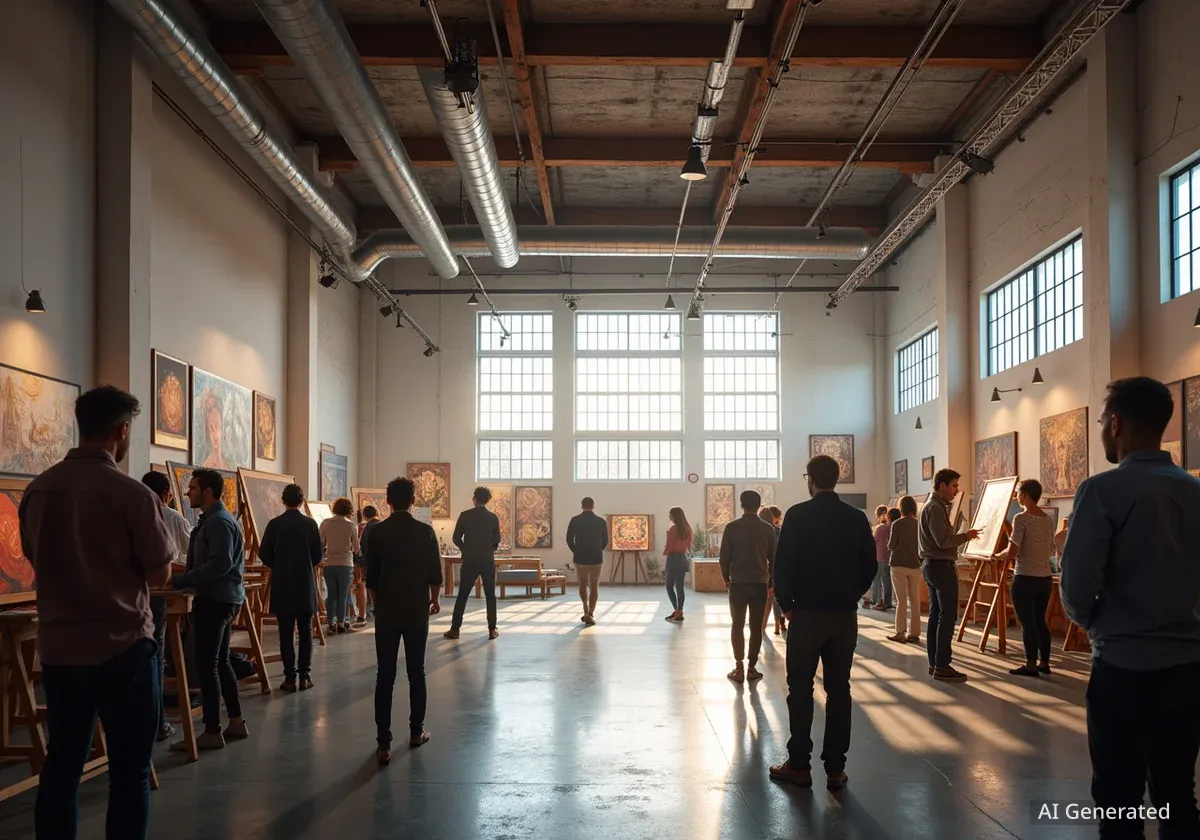
Upon entering, visitors are greeted by a casual cafe area with an eclectic mix of furniture. This space flows directly into the main programmatic areas, including classrooms and a dedicated Learning Lab. This lab is designed for talks, presentations, and group events. The use of plywood walls and large glass panels creates a bright, open feel that encourages interaction.
Second Floor: A Residential Atmosphere
The second floor was intentionally designed to feel like a spacious, open-plan apartment. This level offers comfortable living and dining areas for more informal gatherings. A standout feature is a cozy reading nook anchored by a large stone fireplace, providing a quiet space for relaxation and study.
Rooftop Solarium: An Indoor-Outdoor Experience
The most significant addition is the 1,000-square-foot rooftop structure, named the Solarium. This light-filled, multipurpose room is surrounded by glass doors that can be folded away, seamlessly connecting the interior to a wrap-around terrace and garden. A narrow mezzanine, accessible by a spiral staircase, offers additional seating with views of the exposed wood ceiling and clerestory windows.
Project at a Glance
- Total Area: 11,000 sq ft (1,023 sq m)
- Original Structure: 10,000 sq ft (930 sq m)
- Rooftop Addition: 1,000 sq ft (93 sq m)
- Location: Hudson, New York
- Primary Use: Community education and arts center
A Flexible Future for Hudson
The ultimate goal for The Spark of Hudson is to serve as a highly adaptable resource for the city. The design choices reflect a desire to create a building that can evolve with the community's needs over time.
The project represents a successful example of adaptive reuse, where an aging industrial building is given new life and purpose. By preserving its structural bones while radically altering its relationship with the public, the design team has created a valuable asset for Hudson.
As Joanie Tom stated, the ambition is for the center to be a versatile tool for the community. "Our hope is that the Spark can serve as a Swiss-Army-knife building for the community," she explained. "A building with enough inherent flexibility that it can become whatever the neighborhood needs it to be."