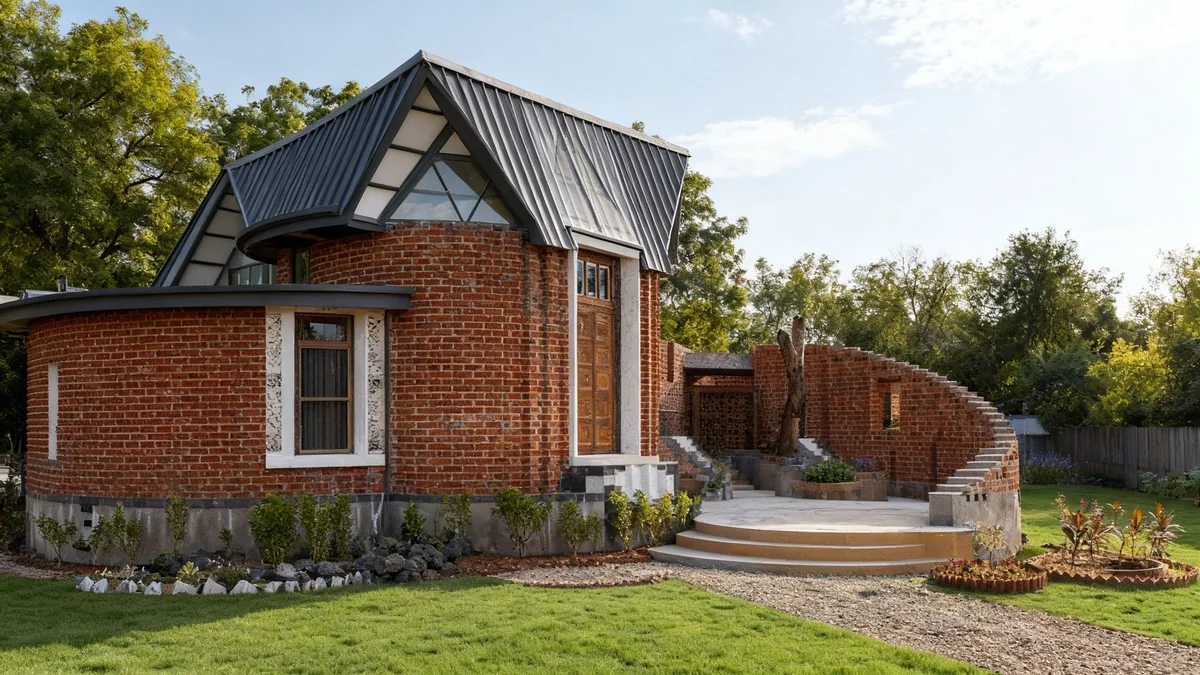
Frank Gehry, an architect celebrated for his bold, sculptural designs, left behind a legacy of iconic buildings across the globe. While many remember his grander projects like the Guggenheim Museum Bilbao or the Walt Disney Concert Hall, one of his most personal and significant works often receives less attention: his own residence in Santa Monica, California. This house, transformed in the late 1970s, stands as a pivotal early example of Deconstructivist architecture.
Gehry, who passed away recently at the age of 96, was a pioneer in a style characterized by its fragmented forms and unexpected material juxtapositions. His inspiration often came from unconventional sources, including the fluid shapes of fish and the dynamic folds of human anatomy. The Santa Monica home showcases these foundational principles on a more intimate scale, demonstrating how an architect can redefine a suburban dwelling.
Key Takeaways
- Frank Gehry's Santa Monica home is an early Deconstructivist masterpiece.
- The transformation began in 1977 with a budget of $50,000.
- Gehry used unconventional, everyday materials like chain-link fencing and plywood.
- The house challenged traditional architectural norms and neighborhood aesthetics.
- It remains a crucial example of Gehry's experimental approach to design.
Transforming a Humble Bungalow
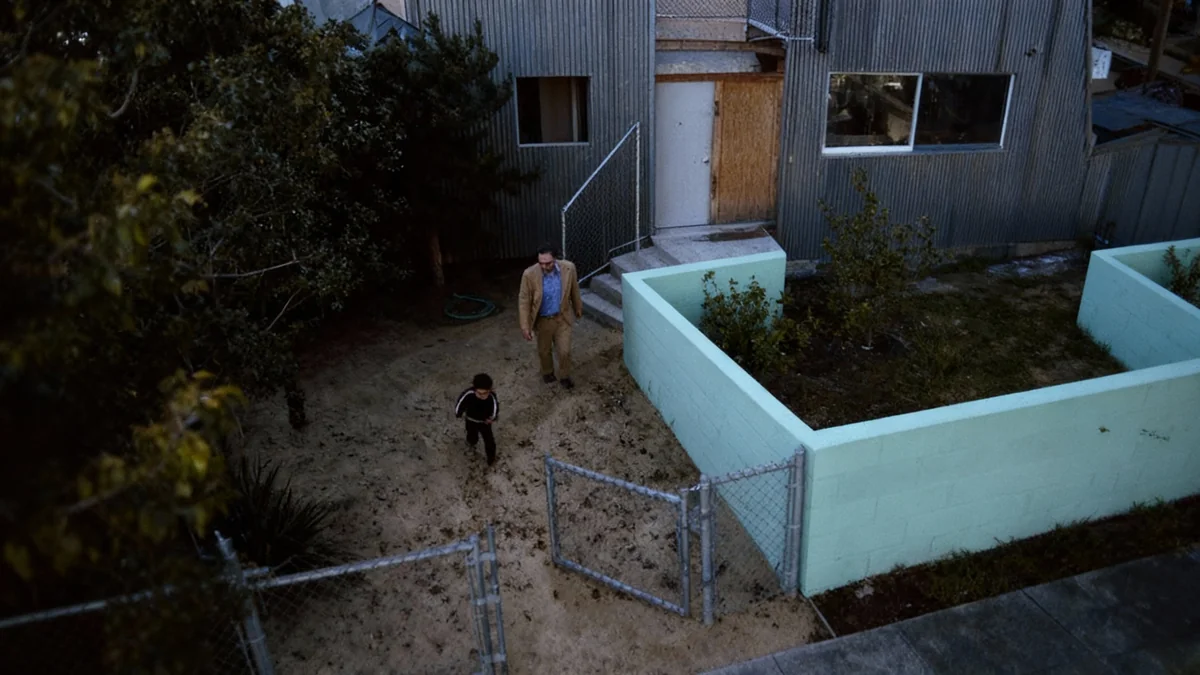
Gehry purchased the pink suburban bungalow in 1977. He envisioned a radical transformation, aiming to deconstruct and rebuild the existing structure. This project became a personal laboratory for his architectural ideas.
The initial budget for this ambitious renovation was approximately $50,000. This limited financial scope pushed Gehry to explore inexpensive, readily available materials. He drew inspiration from his childhood experiences, recalling his grandfather's hardware store in Toronto.
The original house, built in the 1920s, served as a core around which Gehry added new structures. He essentially built a new house around the old one, creating a complex interplay of spaces and forms.
Interesting Fact
Frank Gehry's Santa Monica house used materials often found in hardware stores. This included chain-link fencing, corrugated steel, and plywood. These choices were revolutionary for residential architecture at the time.
Materials and Methods: A Deconstructivist Approach
Gehry's material palette for the Santa Monica house was deliberately unconventional. He incorporated elements like chain-link fencing, plywood, and cinder blocks. These materials were typically associated with industrial or construction sites, not residential design.
The use of corrugated steel sheets helped to conceal parts of the original 1920s facade. This layering effect created a sense of unfinishedness and exposed construction, a hallmark of Deconstructivism.
The design challenged traditional notions of beauty and permanence in residential architecture. It embraced raw, exposed elements, blurring the lines between interior and exterior spaces.
"I love the idea of using everyday materials in unexpected ways. It’s about seeing the beauty in the ordinary," Gehry once said about his approach to design.
Neighborhood Reaction and Architectural Impact
The radical transformation of the bungalow did not go unnoticed by the neighbors. The house, with its unconventional materials and fragmented appearance, stood out starkly in the suburban landscape. Some residents expressed concern or even disapproval over its departure from traditional aesthetics.
Despite initial controversy, the house quickly gained recognition within architectural circles. It became an important early example of the Deconstructivist movement, influencing a generation of architects.
The project showcased Gehry's ability to create dynamic and visually complex structures using simple, often overlooked components. It cemented his reputation as an architect willing to push boundaries.
Understanding Deconstructivism
Deconstructivism is an architectural movement that emerged in the late 1980s, characterized by fragmentation, non-linear design processes, and a deliberate manipulation of a structure's surface. It often appears to 'deconstruct' the building, challenging traditional forms and elements.
A Lasting Legacy of Innovation
The Santa Monica house remains a powerful statement about architectural innovation and personal expression. It demonstrates Gehry's commitment to experimentation and his unique vision for how spaces can be conceived and built.
The residence served as a proving ground for techniques and ideas that Gehry would later apply to his larger, more celebrated public commissions. It provided him with the freedom to explore forms and materials without the constraints often found in commercial projects.
Even decades later, the house continues to be studied by architects and students. Its blend of domesticity with avant-garde design principles offers valuable insights into Gehry's creative process and the evolution of modern architecture.
The building stands as a testament to the power of architecture to challenge perceptions and redefine what a home can be. It is a reminder that some of the most profound architectural statements begin with personal, experimental projects.
- The house influenced future Gehry projects, including major museums and concert halls.
- It showcased the potential of inexpensive materials in high design.
- The design challenged societal norms regarding residential aesthetics.
- It continues to be a subject of study for architectural historians.
Gehry's Vision: Beyond the Conventional
Frank Gehry's career was defined by his relentless pursuit of new forms and structures. His Santa Monica home is a microcosm of this larger vision.
He often found inspiration in everyday objects and the imperfections of the natural world. This approach allowed him to create buildings that felt both organic and revolutionary.
The house's complex geometry and layered surfaces invite viewers to look closer, to question conventional ideas about what a building should look like. It is an architecture of discovery, designed to provoke thought and conversation.
His work consistently pushed the boundaries of what was technically possible, requiring new engineering solutions and construction methods. The Santa Monica house, though smaller in scale, was no exception to this innovative spirit. It represented a crucial step in his journey to becoming one of the world's most influential architects.