Architects around the world are increasingly turning to earth-toned plaster and render to create homes that blend seamlessly with their natural surroundings. This approach moves away from traditional finishes, using materials like lime, hemp, and pigmented renders to give structures a monolithic, sculptural quality while offering practical benefits such as weather protection and improved insulation.
From a fortress-like dwelling in Greece to a compact prototype for affordable housing in India, these eight examples showcase how natural, textured finishes are being used to define contemporary residential architecture. The projects highlight a global trend toward materials that are both visually striking and environmentally conscious.
Key Takeaways
- Architects are using earthy plaster and render to connect modern homes with their local landscapes.
- Projects in Greece, Spain, India, and Australia demonstrate this global architectural trend.
- Materials are often modified with local dust, pigments, or sustainable additions like hemp to achieve unique colors and textures.
- These finishes provide both aesthetic appeal and functional benefits, including durability and insulation.
European Designs Rooted in Local Terrains
In Europe, architects are leveraging pigmented renders and traditional plasters to create homes that respect and reflect their unique environments, from the sunny islands of the Mediterranean to the coastal regions of Portugal.
A Modern Fortress in Santorini, Greece
On the Greek island of Santorini, a location famous for its whitewashed buildings, Kapsimalis Architects designed a holiday home with a distinct, earth-toned render. The structure, named House in Pyrgos, is made of reinforced concrete and features an angular design that mimics the island's rocky terrain. The finish was chosen to evoke the appearance of historic fortifications, creating a building that feels both ancient and modern.
Terracotta Tones in Menorca, Spain
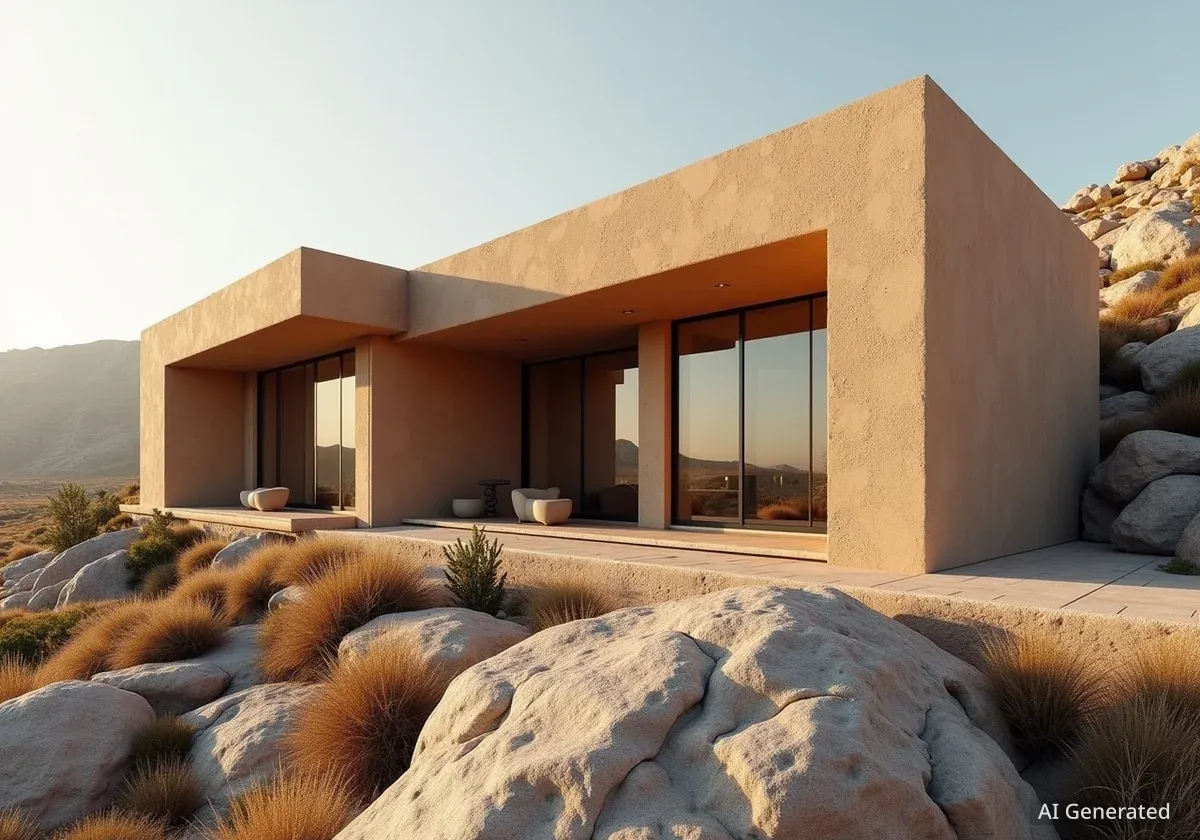
Spanish firm Nomo Studio designed Zenith House, a single-story holiday home in Menorca, to blend into the arid local landscape. The entire structure, including its walls and distinctive roofs, is covered in a terracotta-pigmented render. This uniform color highlights the home's unique geometry, which consists of eight interconnected square modules with a mix of flat green roofs and pyramid-like pitched roofs.
The Role of Plaster and Render in Architecture
Plaster and render are coating materials applied to walls to create a smooth, durable surface. While serving a protective function against weather, they also offer significant aesthetic possibilities. By adding pigments, aggregates like sand or dust, or fibers like hemp, architects can manipulate the color, texture, and even the thermal properties of a building's exterior.
Rough Lime Plaster in Coastal Portugal
Near a coastal village in Portugal, Extrastudio designed Casa Plaj with a simple, gabled form coated in a rough, earth-toned lime plaster. The home is elevated on four concrete walls, creating a platform that allows its terraces to extend out over the landscape. The textured finish gives the building a tactile quality that connects it to its rustic setting.
A Burnt Orange Home Near Barcelona
Raúl Sánchez Architects designed Casa Magarola on a steep slope overlooking a valley near Barcelona. The home's blocky concrete structure is finished with a striking burnt orange-toned render. The design creates a sense of progression; from the street, it appears as a minimal, single-story building, but it expands into a two-story structure on the side facing the valley.
Global Innovations in Material and Form
Beyond Europe, architects are experimenting with innovative and sustainable materials to create distinctive, earth-toned homes that respond to local needs and climates.
Affordable Housing Prototype in India
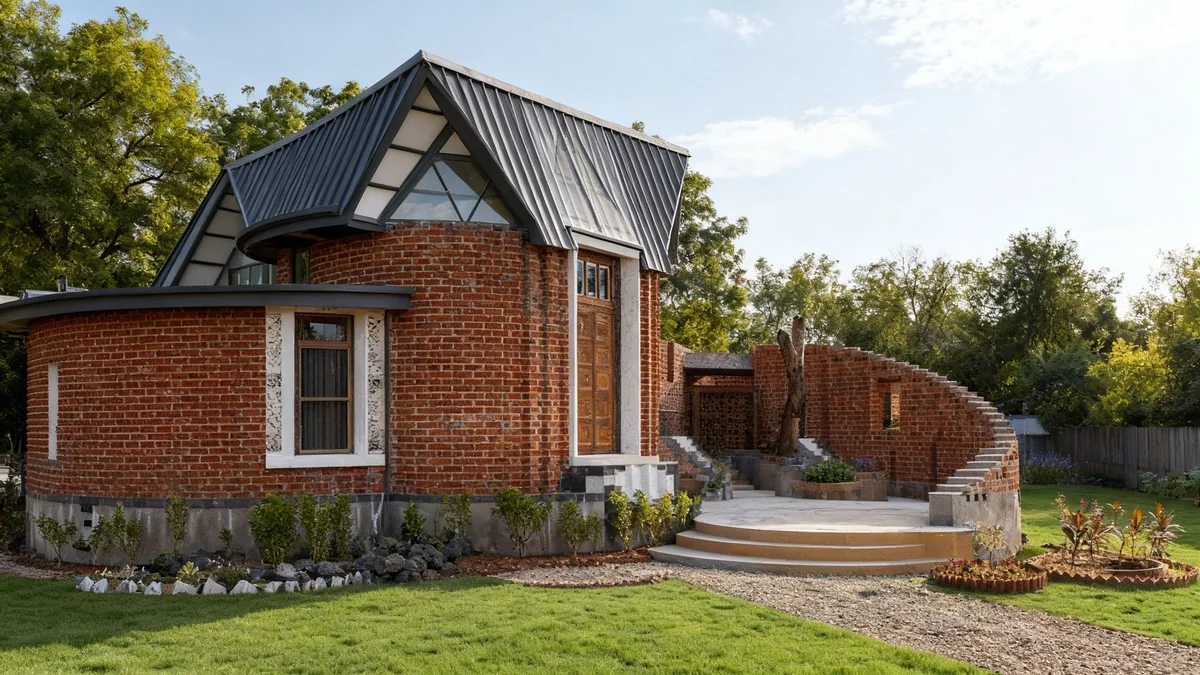
In Indore, India, architects Harshit Singh Kothari and Tanvi Jain developed a micro home prototype called Tiny House to address the country's need for affordable housing. The exterior brick walls are coated in a simple, earth-colored plaster. To give the compact home an aspirational quality, the interior features durable and refined materials like marble flooring, teak window frames, and granite countertops.
Sustainable Additives in Modern Finishes
Modern renders are increasingly incorporating sustainable materials. Hemp render, or 'hempcrete,' is a mixture of hemp shiv, lime, and water. It is a carbon-negative material that offers excellent insulation, regulating temperature and humidity inside a building. Similarly, using recycled dust from construction waste reduces landfill and adds unique local color to plaster finishes.
Pink-Hued Plaster in Kilifi, Kenya
In Kenya, Studio Mehta Architecture designed UA House using limestone blocks for its walls. The exterior is coated with a lime plaster mixed with quarry dust, which gives the home a unique pink hue chosen to complement the surrounding natural environment. To ensure comfort in the warm climate, rooms are designed to open onto landscaped courtyards, promoting constant natural ventilation.
Olive-Toned Hemp Render in Australia
Proclamation House in Western Australia, by State of Kin, is a sculptural concrete residence wrapped in an olive-toned hemp render. This innovative finish not only provides an earthy aesthetic but also significantly improves the building's insulation. The home was designed for a multi-generational family and includes a central landscaped courtyard with a small swimming pool.
The use of materials like hemp render and recycled dust reflects a growing movement in architecture to not only create beautiful spaces but also to build more sustainably and with a deeper connection to the project's specific location.
Recycled Materials in Hyderabad, India
For the renovation of a house named Mayalogili in Hyderabad, Indian studio Nowhere developed a custom red-brown plaster. This unique finish was made from brick and marble dust generated during the project itself, turning construction waste into a key design feature. The firm's goal was to give the once run-down home a new, tactile identity and strengthen its connection to nature through material reuse.