Dezeen, a leading architecture and design publication, has released its list of the most popular residential projects featured in September. This selection includes diverse homes, from a mass-timber holiday retreat designed by architects for their family to a renovated 1950s house updated by a studio principal for her mother. The featured residences showcase innovative design, sustainable practices, and thoughtful integration with their environments.
Key Takeaways
- Dezeen's September list features five notable residential projects.
- Designs range from new mass-timber builds to extensive renovations.
- Sustainability and context-sensitive design are common themes.
- Locations include the USA, Australia, and Spain.
CLT House in Hudson Valley, USA
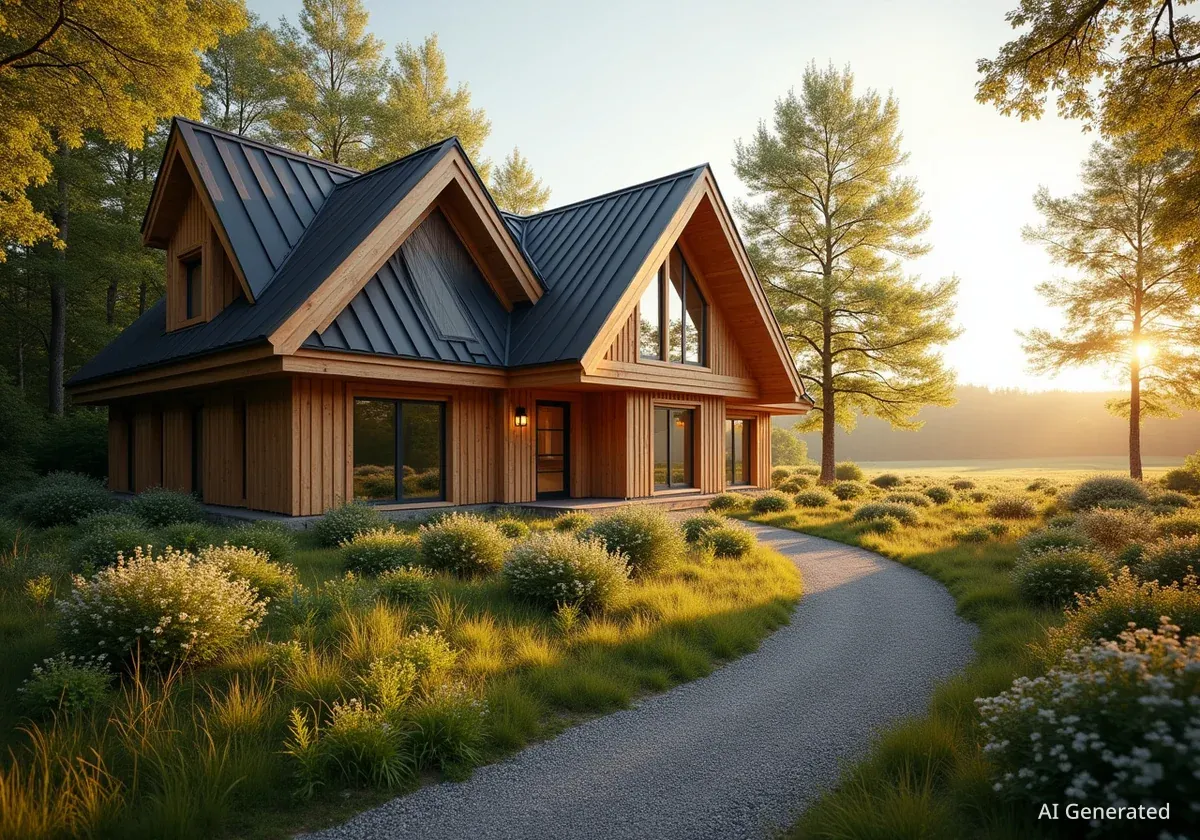
The CLT House, located on a wooded lakefront site in the Hudson Valley, United States, is a prominent feature on Dezeen's list. This unique home has an irregular, boxy shape. Its structure is made from mass timber, a sustainable building material. The exterior is covered in live-edge cedar siding, giving it a natural appearance.
nArchitects founders Eric Bunge and Mimi Hoang designed this lakehouse as their own family retreat. They created it as a sustainable escape for themselves and their two teenage children. The design emphasizes a connection with nature.
"Our goal was to create a harmonious blend of modern living and natural surroundings, providing a peaceful escape for our family," said Eric Bunge, co-founder of nArchitects.
Interesting Fact
Mass timber construction, used in CLT House, can significantly reduce a building's carbon footprint compared to traditional concrete and steel methods. This is due to timber's ability to sequester carbon.
Melville Residence in Melbourne, Australia
In Melbourne, Australia, the Melville residence stands out for its compact design and integration with its surroundings. Australian architect Jos Tan designed this home. Its rectangular form is wrapped in pale bricks. This choice helps the house blend seamlessly with the neighboring buildings, maintaining a cohesive streetscape.
The street-facing facade features tall, narrow openings. These windows provide privacy while still allowing natural light. At the rear of the property, a large sliding glass door connects the kitchen and dining area directly to a garden patio. This design element blurs the lines between indoor and outdoor living spaces.
Context on Australian Design
Australian residential architecture often prioritizes natural light, outdoor connections, and materials that respond to the local climate. Many designs aim for a balance between urban living and a connection to nature.
Lil Shingle Renovation in Seattle, USA
The Lil Shingle project in Seattle, USA, involved the renovation of a 1950s house. A principal from Best Practice Architecture, a local studio, undertook this project for her mother. The renovation replaced the original wood framing and added a small extension. This extension created a new mudroom, adding functional space.
The exterior of the house was covered in scalloped cedar shingles. This material choice aimed to give the previously run-down home a more welcoming and friendly appearance. Touches of baby blue were added to the doors, providing a subtle splash of color and character.
- Original Structure: 1950s house with wood framing.
- Key Renovation: Replacement of framing, addition of a mudroom.
- Exterior Finish: Scalloped cedar shingles.
- Color Accent: Baby blue doors.
Hedge and Arbour House in Melbourne, Australia
Another Australian project making the list is the Hedge and Arbour House in Melbourne. Studio Bright, an Australian practice, designed this single-storey home. The design strategy focused on integrating the house into the surrounding bushland. Metal screens were installed on the exterior to support deciduous climbing plants.
These climbing plants grow on the screens, providing natural shading for the interior spaces during the summer months. Inside, solid-face blockwork walls were left exposed, adding a raw, textural quality to the aesthetic. This approach reduces energy consumption for cooling and connects the home to its natural environment.
Sustainability Highlight
Using deciduous climbing plants offers a smart passive cooling solution. They provide shade in summer when leaves are present and allow sunlight to warm the house in winter after leaves fall.
Barcelona House in Spain
The Barcelona House by UK studio Ström Architects completes Dezeen's top five. This residence draws inspiration from California's modernist Case Study Houses. A fully glazed corner of the home offers expansive views of the Balearic Sea, maximizing its coastal location.
The lower level of the house is partially buried into the sloping site. This strategic placement helps with temperature regulation and minimizes the visual impact on the landscape. Above this, the upper level features expansive living spaces. These areas open directly onto an infinity pool, creating a luxurious outdoor experience that merges with the horizon.
Influence of Case Study Houses
The Case Study House program (1945-1966) commissioned major architects to design and build affordable, modern homes in Southern California. These homes emphasized open plans, large glass walls, and innovative use of materials, profoundly influencing modern architecture worldwide.
These five homes represent a range of architectural approaches, from sustainable construction to sensitive renovations. They highlight how architects are responding to specific site conditions, client needs, and broader design trends. Each project offers insights into contemporary residential architecture across different continents.
The selection underscores the importance of thoughtful design in creating spaces that are both functional and aesthetically pleasing. Whether it's a new build or a renovation, these projects demonstrate how architecture can enhance daily life and connect inhabitants with their surroundings.