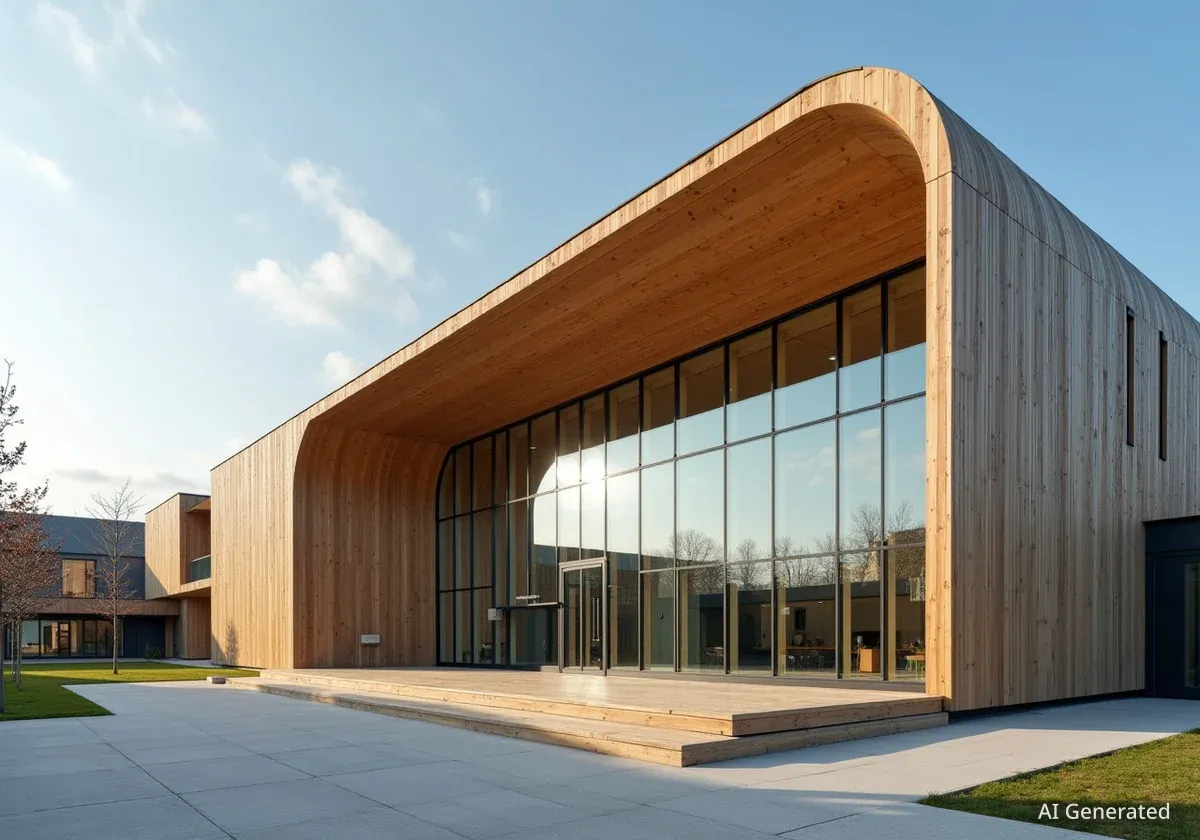
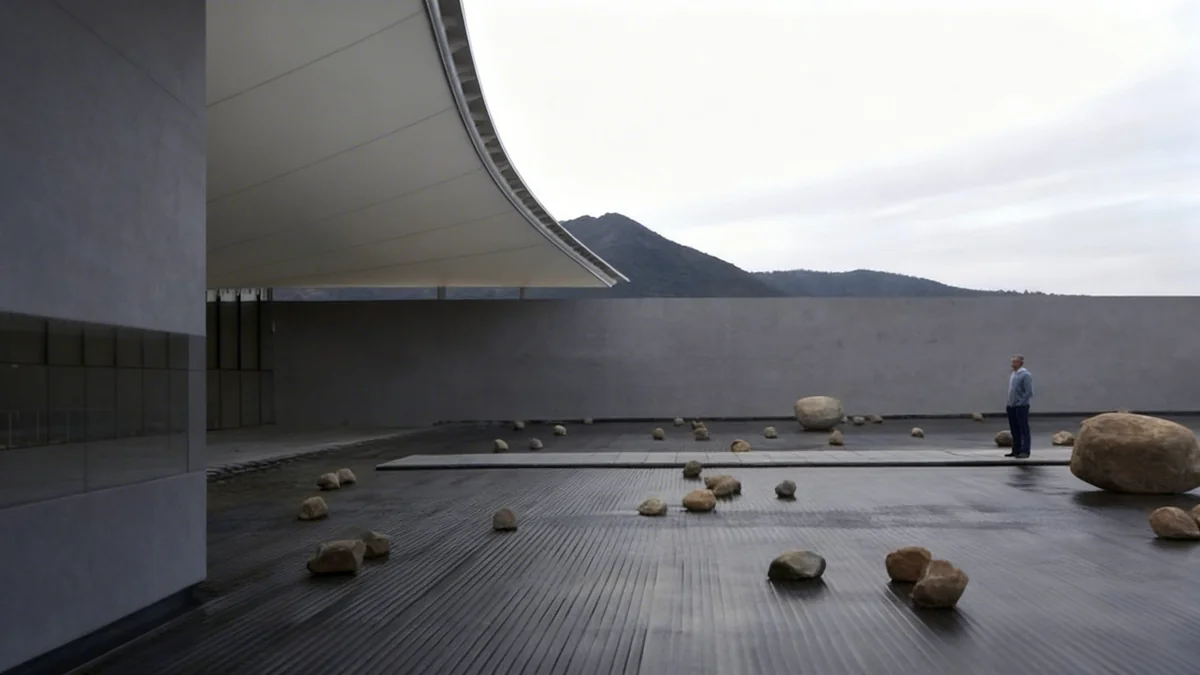
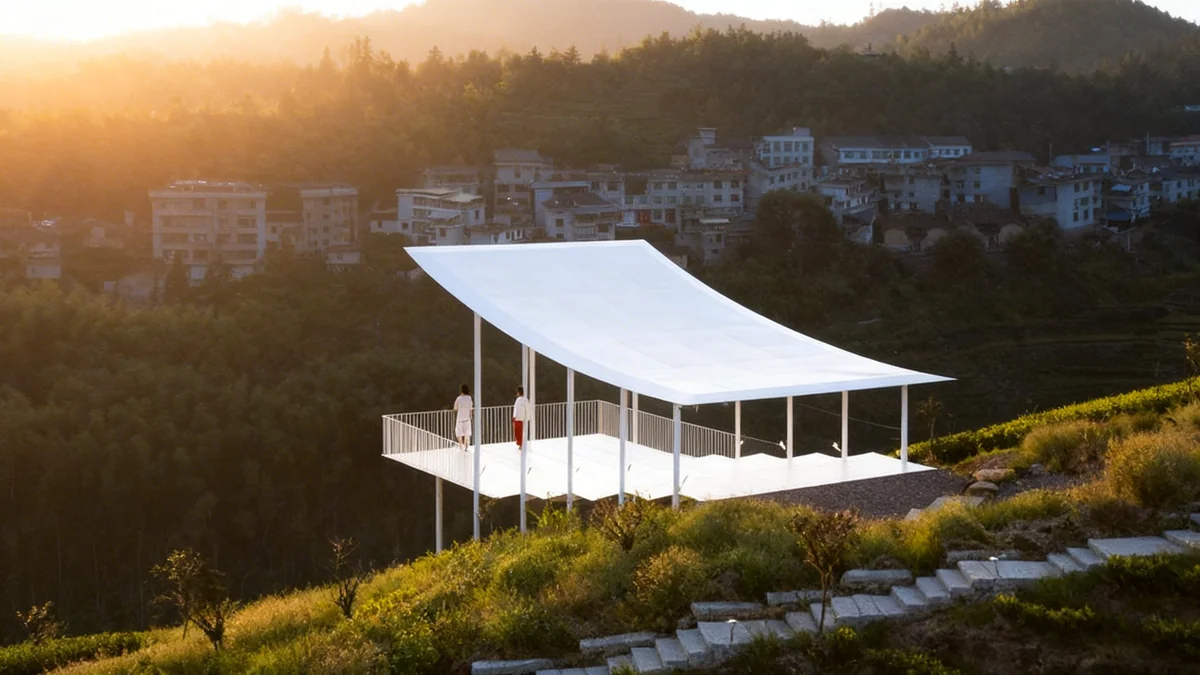
Bjarke Ingels Group (BIG) has revealed the design for a new congress center in Rouen, France. This building, known as "The Sail," features a distinctive, sweeping timber roof. It is located along the Seine riverfront and aims to reconnect the city with its water while offering new cultural and civic facilities. The project combines modern architecture with references to Rouen's maritime history.
The Rouen Normandy Metropolis commissioned the project. Its design emphasizes energy efficiency and environmental performance. The center will provide a flexible venue for cultural events, economic activities, and public gatherings throughout the year.
Key Takeaways
- BIG designed a new congress center in Rouen, France, named "The Sail."
- The building features a distinctive timber roof and aims for Passivhaus certification.
- It includes two auditoriums, exhibition spaces, a restaurant, and meeting rooms.
- The design draws inspiration from Rouen's maritime heritage and traditional architecture.
- Photovoltaic panels on the roof contribute to on-site energy production.
Connecting Rouen with the Seine Riverfront
The new congress center is strategically placed along the Seine river. This location is central to its purpose: to serve as a public hub. The design reflects Rouen's long history with the water, aiming to strengthen this connection for residents and visitors.
The building provides various amenities. These include two auditoriums, exhibition areas, a restaurant, and multiple meeting rooms. These spaces are designed to be adaptable. They can host a range of events, from cultural performances to business conferences. This flexibility ensures the venue remains active and valuable year-round.
"The Sail is envisioned as a public gathering place that reconnects the city with its waterfront while offering new cultural and civic amenities," a project statement indicated.
Project Facts
- Location: Rouen, France
- Architect: Bjarke Ingels Group (BIG)
- Nickname: "The Sail"
- Key Feature: Sweeping timber roof
- Environmental Goal: Passivhaus certification
Sustainable Design and Energy Efficiency
A core aspect of "The Sail's" design is its commitment to sustainability. The building aims to achieve Passivhaus certification. This standard requires very high levels of energy efficiency, reducing its environmental impact.
The architectural concept integrates various green features. The roof, shaped like ship sails, is covered with photovoltaic panels. These panels generate electricity on-site, contributing to the building's energy needs. This approach minimizes reliance on external power sources.
Rainwater collection is another sustainable element. Water gathered from the roof will be used to irrigate the surrounding planted areas. This system supports efficient water management and reduces potable water consumption for landscaping.
Architectural Inspiration and Materials
The design draws inspiration from Rouen's traditional half-timbered houses. This heritage is visible in the choice of materials, primarily timber and glass. These materials create a warm and transparent aesthetic for the structure.
The use of timber columns along the river-facing facade supports the curving roof. This design creates a strong visual presence from the waterfront and main road. The timber elements also provide a natural and inviting look.
On the city side, the roof descends into six scalloped waves. These waves extend outwards, forming canopies. These canopies define an outdoor public space, offering shelter for people gathering and moving around the building.
About Passivhaus Certification
Passivhaus is a leading international standard for energy efficiency in buildings. It focuses on reducing energy consumption for heating and cooling through superior insulation, airtight construction, high-performance windows, and heat recovery ventilation. Buildings aiming for Passivhaus certification typically consume up to 90% less energy than conventional buildings.
Integrated Landscape and Public Spaces
The area surrounding "The Sail" is designed to extend the urban environment towards the river. It features open plazas paved with local stone, blending seamlessly with the city's existing fabric. Planted areas with trees and vegetation create green buffers.
These green spaces provide shaded gathering areas around the building. They help integrate the structure with its natural surroundings. A network of pedestrian paths ensures easy access, connecting the site to adjacent streets and waterfront areas. These paths guide visitors directly to the building's entrances.
Interior Layout and Flow
Inside, a large foyer serves as the main circulation and gathering space. This area is filled with natural light, creating an open and welcoming atmosphere. A central staircase connects the foyer to the main auditorium, facilitating easy movement.
Overlapping levels within the building create visual connections between different programmatic zones. This design promotes a sense of openness and helps visitors navigate the space efficiently. The layout ensures clear relationships between interior and exterior spaces, enhancing the overall experience.
The spatial organization aims to support efficient movement throughout the building. It also seeks to create clear relationships between interior and exterior spaces. This thoughtful design contributes to a welcoming and functional environment for all users.
BIG's Recent Architectural Endeavors
Bjarke Ingels Group has been involved in several other significant projects recently. The firm recently completed the Robert Day Sciences Center at Claremont McKenna College in California. This project further demonstrates BIG's diverse architectural capabilities.
In Copenhagen, BIG, in collaboration with Doug Aitken Workshop, NIRAS, Volcano, and RWDI, won a competition to redesign three public spaces. These spaces are located around major music venues in Ørestad. This win highlights their expertise in urban planning and public realm design.
Additionally, BIG has broken ground on its first Major League Baseball stadium. This stadium is located in Las Vegas and is a collaboration with HNTB. This project marks a significant milestone for the firm in sports architecture.