A new residence in Manhattan Beach, California, is challenging conventional architectural design in the area. The Alma Switch House, designed by Brooks + Scarpa, introduces an innovative approach to coastal living, prioritizing views and indoor-outdoor connections while breaking away from typical local housing forms.
Key Takeaways
- Alma Switch House offers a unique design in Manhattan Beach, moving away from common blocky structures.
- The home features a central open-air courtyard, enhancing natural light and ventilation.
- It boasts significant energy efficiency, being 40 percent more efficient than similar conventional homes.
- Oversized glazed doors and an anodized-aluminum screen integrate indoor and outdoor spaces while providing privacy.
Breaking from Local Architectural Norms
The Alma Switch House stands on a narrow, gently sloping lot just a few blocks from the Pacific Ocean. Its design by Los Angeles-based firm Brooks + Scarpa aims to redefine residential architecture in Manhattan Beach. The local area often sees houses with solid, block-like forms and attached balconies, largely due to strict building codes.
Many existing buildings in Manhattan Beach feature large balconies pushed to the extreme edges to meet open space requirements. This often results in bulky structures. The Alma Switch House takes a different path.
Project Overview
- Location: Manhattan Beach, Southern California
- Architect: Brooks + Scarpa
- Size: 3,965 square feet (368 square meters)
- Lot Dimensions: 30 by 90 feet (9 by 27 meters)
- Efficiency: 40% more efficient than conventional homes
Innovative Courtyard Design
For the 30-by-90-foot site, the architects conceived a three-story rectangular structure. They carved out the central portion to create an open-air courtyard. This design choice helps break the overall mass of the building into smaller, more proportionate forms.
The central courtyard also allows more rooms to be positioned along the property's edges. This maximizes access to ocean and sunset views, a key desire for coastal properties.
"Most buildings include large balconies pushed to the extreme exterior edges of the buildings to meet the code-required open space," the design team explained. "Then, the remaining interior lot area is filled solid with building mass, resulting in bulky, block-like structures full of perimeter balconies."
The Alma Switch House actively avoids this common pattern. Instead, it offers a fresh perspective on how to integrate outdoor living within a constrained urban lot.
Seamless Indoor-Outdoor Living
The residence spans 3,965 square feet across three levels, connected by stairs and an elevator. The top floor houses the main public areas, including spaces for cooking, dining, and lounging. Oversized glazed doors on this level create a fluid transition between inside and outside, opening onto walkways and inset balconies.
Glass walls throughout the home further blur the lines between internal and external spaces. This design brings abundant daylight into the interiors and offers expansive views.
Manhattan Beach Building Challenges
Manhattan Beach has strict building ordinances and codes. These regulations often lead to similar housing styles, characterized by solid, blocky forms. Architects frequently face challenges in balancing code compliance with innovative design. The Alma Switch House demonstrates how creative solutions can overcome these constraints.
The middle floor contains the primary bedroom and three additional bedrooms. The ground floor includes another bedroom, a communal area with a kitchen and den, and a three-car garage. This layout ensures functionality and comfort across all levels.
Privacy and Energy Efficiency
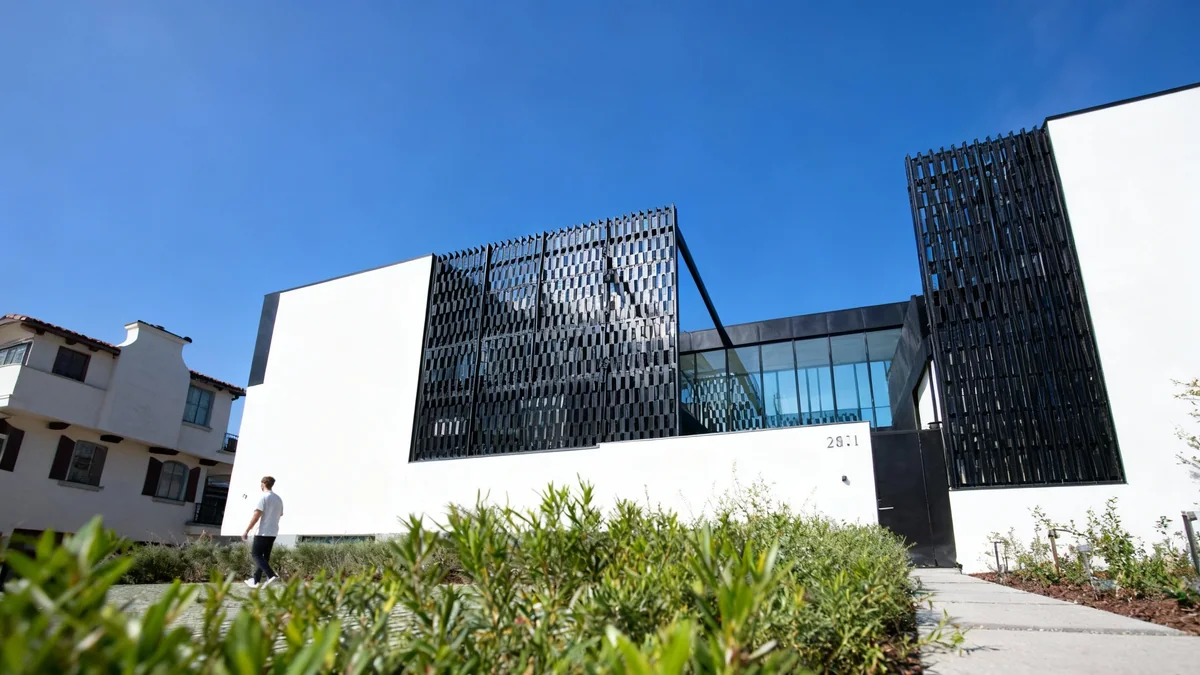
While glass is a dominant material, privacy remains a priority. An anodized-aluminum screen covers the eastern elevation, which faces a busy street. This screen provides visual interest, shimmering and casting dynamic shadows throughout the day.
The screen also plays a crucial role in mitigating solar heat gain, contributing to the home's impressive energy efficiency. Operable windows facilitate natural ventilation, allowing residents to capture refreshing ocean breezes.
The design team reports that the Alma Switch House is 40 percent more efficient than a comparable structure built using traditional methods. This highlights a commitment to sustainable living without compromising on aesthetics or comfort.
Architectural Vision and Future Trends
Brooks + Scarpa, led by Angela Brooks and Lawrence Scarpa, are known for their distinctive projects. They received the prestigious AIA Gold Medal Award in 2022. Their work often explores innovative ways to integrate design with environmental considerations.
This project reflects a growing trend in residential architecture to maximize natural light, embrace indoor-outdoor living, and prioritize energy efficiency. The Alma Switch House serves as a model for future developments, showing how thoughtful design can transform challenging sites into remarkable homes.
The use of materials like white stucco and extensive glazing, combined with the strategic placement of the courtyard and privacy screen, makes the Alma Switch House a notable addition to Southern California's architectural landscape. It offers a sophisticated and sustainable alternative to conventional coastal homes.