

Rajanish Kakade, an Associated Press photographer whose work defined the visual narrative of Mumbai for nearly two decades, has died at the age of 55. His family confirmed he passed away at his home in the city on Monday following an illness.
For 16 years, Kakade's lens captured the multifaceted life of India's financial capital, from its political upheavals and cultural celebrations to the quiet, everyday moments that revealed its true character. His death marks the loss of a significant voice in Indian photojournalism.
Key Takeaways
- Associated Press photojournalist Rajanish Kakade died in Mumbai at age 55 after an illness.
- He was a third-generation photographer with a career spanning nearly two decades, joining the AP in 2008.
- Kakade was renowned for his documentation of Mumbai, covering everything from major news events to the intimate details of daily life.
- Colleagues and press organizations remember him for his integrity, quiet grace, and dedication to mentorship.
A Career Chronicling a Nation
Rajanish Kakade joined The Associated Press in 2008, quickly becoming an essential part of the agency's coverage in South Asia. Based in Mumbai, he was tasked with documenting one of the world's most dynamic and complex urban environments. Before his tenure with the AP, he honed his skills with the Sakal Group media conglomerate and the Hindustan Times newspaper.
His portfolio was remarkably diverse. Kakade was on the front lines for major political events and national elections, providing images that informed a global audience. He also covered the tragic 2008 Mumbai militant attacks, capturing the city's shock and resilience with profound sensitivity.
A Family Legacy
Photography was more than a profession for Kakade; it was a family tradition. He was a third-generation photographer, following in the footsteps of his father and grandfather, both of whom were also photojournalists. This deep-rooted connection to the craft was evident in the care and commitment he brought to his work.
More recently, his work during the coronavirus pandemic documented the immense challenges faced by the people of Mumbai, telling a story of human struggle and endurance through his powerful visual reporting.
The Soul of Mumbai Through a Lens
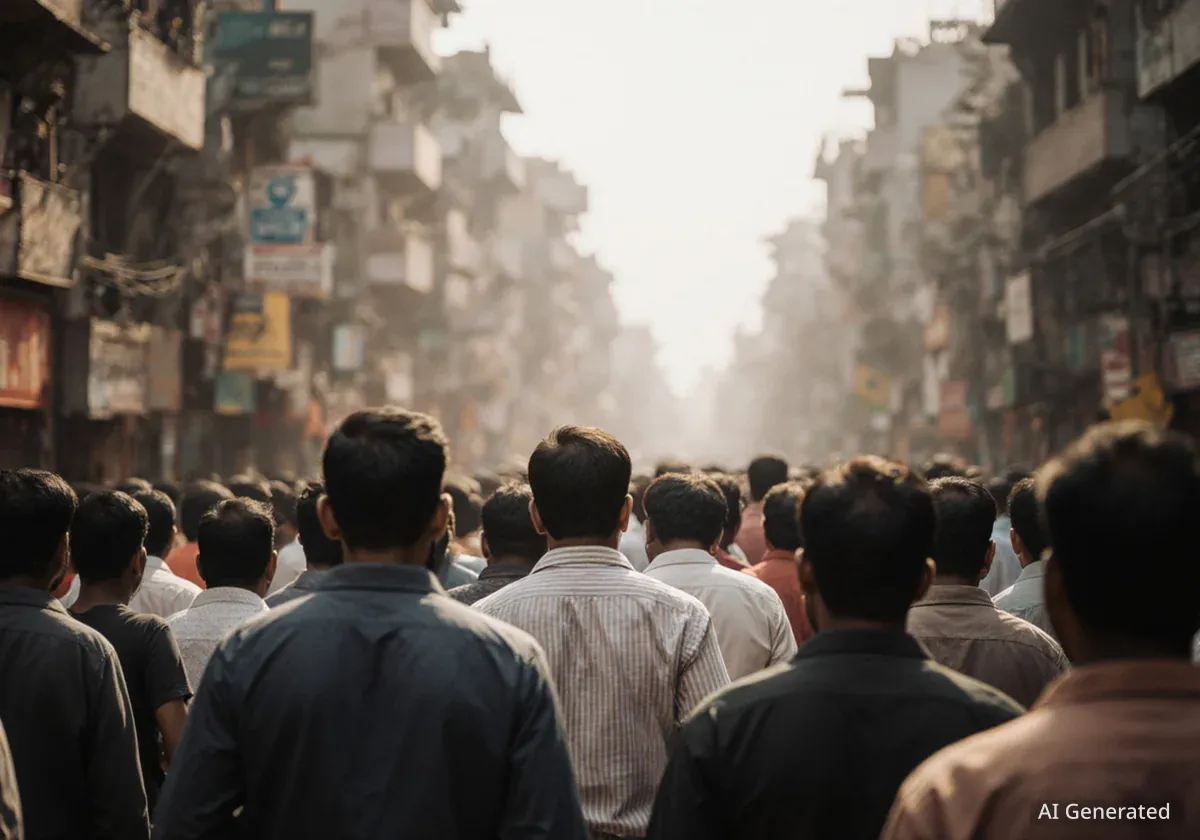
While Kakade covered major news assignments across India, his most defining work was his portrayal of his home city. He possessed a unique ability to translate the rhythm and energy of Mumbai into still images. His photographs explored the city's stark contrasts, showing its immense wealth and deep poverty with equal honesty.
Yirmiyan Arthur, who oversees photos and storytelling for the AP in the Asia Pacific region, highlighted Kakade's unique connection to the city. Arthur noted that Kakade “helped us understand everyday Mumbai, a city of contradictions, with utter honesty.”
“He was a son of Mumbai and made sure he told its story the right way,” Arthur said.
His work often focused on the details of daily existence. He chronicled the joys and heartbreaks of the annual monsoon seasons and captured the perpetual motion inside the city's bustling local trains. Through his lens, the vast, sprawling metropolis became intimate and understandable.
A Mentor and Friend Remembered
Beyond his technical skill, colleagues remember Kakade as a soft-spoken professional who was deeply committed to his craft and generous with his knowledge. The Mumbai Press Club issued a statement praising his impact on the next generation of journalists.
“Through his work, he captured defining moments with integrity and sensitivity. Through his mentorship, he shaped countless careers, always encouraging young photographers to pursue the truth with courage and compassion,” the organization stated.
A Quiet Observer
Manish Swarup, AP’s chief photographer for South Asia, described Kakade as possessing a “rare, quiet grace of a true observer.” This quality allowed him to build a unique connection with his subjects, resulting in images that felt authentic and deeply human.
Swarup, who worked closely with Kakade for many years, emphasized the trust he earned from those he photographed. This, Swarup explained, is why his pictures carry a special weight.
“He didn’t just take pictures; he earned the trust of those in his frame. That is why his photographs always stand out — they carry an intimacy and a truth that only a person of his character could capture,” Swarup reflected.
The loss is felt not just professionally but personally among his peers. Swarup described him as “a steadfast friend and a cherished colleague.”
“We haven’t just lost a great photojournalist; we have lost a beautiful soul, whose kindness was as luminous as his work,” he added.
An Irreplaceable Visual Record
Rajanish Kakade's contributions created a vital visual record of a pivotal period in India's history. His work was not merely about documenting events but about capturing the human experience within them. He showed the world the spirit of Mumbai—its struggles, its triumphs, and its unyielding energy.
His legacy lives on through the thousands of images that tell the story of a city and a nation in constant motion. It also continues in the countless young photographers he inspired with his dedication, integrity, and quiet passion for telling the truth through his camera.