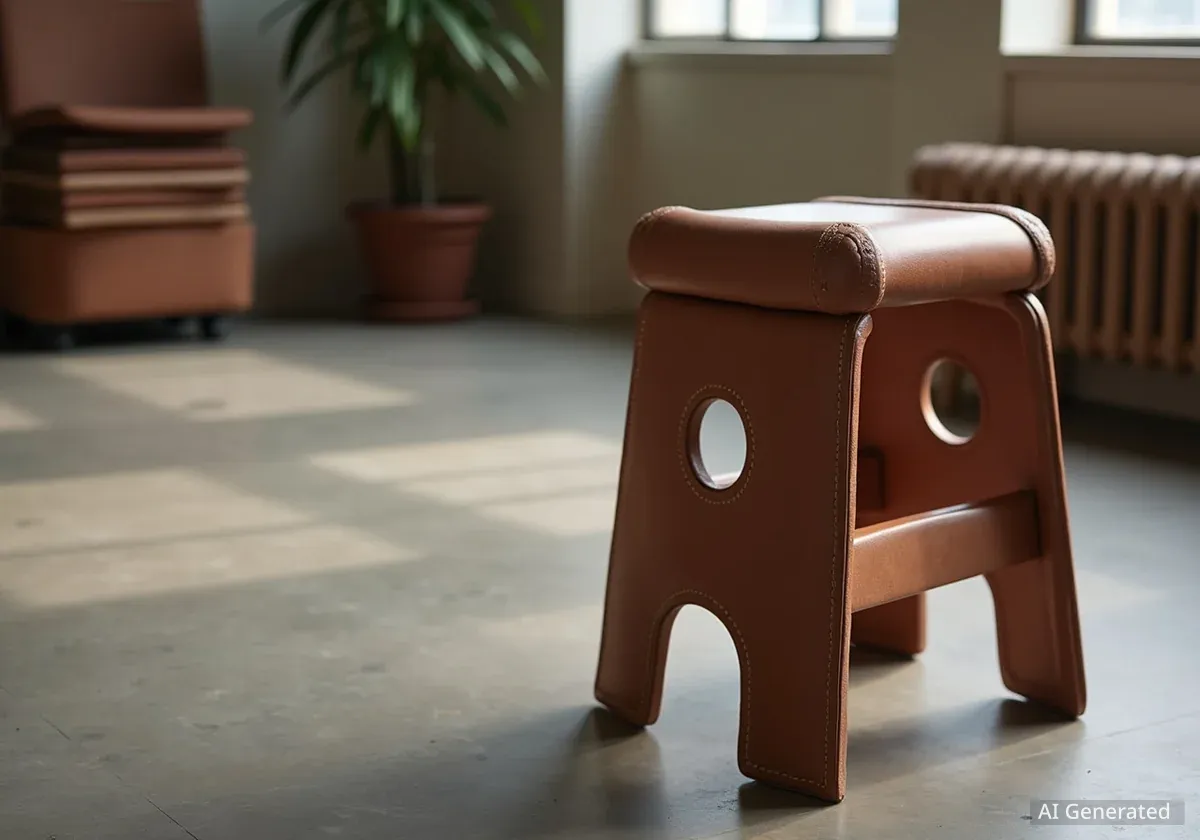


A new stool design, the Lecrase Stool by German industrial designer Friedrich Gerlach, redefines material use. This innovative piece appears to be made from plywood. However, it is crafted from leather offcuts, typically discarded by the automotive and fashion industries. The design features carefully chosen folds, which not only provide a distinctive aesthetic but also enable the stool to be self-supporting, demonstrating a blend of form and function.
Key Takeaways
- The Lecrase Stool is designed by Friedrich Gerlach.
- It is made from leather offcuts from automotive and fashion industries.
- The stool's unique folds give it structural integrity.
- This design promotes sustainable material use.
Innovative Design with Repurposed Materials
Friedrich Gerlach's Lecrase Stool stands out for its use of repurposed materials. The design challenges traditional perceptions of what constitutes a finished product. Instead of new resources, it utilizes leather scraps. These scraps are often left over from manufacturing processes in large industries.
The choice of material is central to the stool's concept. Leather offcuts are a significant waste product. By using them, Gerlach addresses an environmental concern. This approach aligns with a growing global trend towards sustainable design practices.
The Structure and Aesthetics of the Lecrase Stool
The stool's appearance suggests a light, layered material. This visual effect is achieved through the manipulation of leather. The material is folded with precision. These folds are not merely decorative; they are essential to the stool’s stability.
Each fold contributes to the overall strength of the structure. This careful engineering allows the stool to support weight without additional internal framing. It is a demonstration of how material properties can be exploited for structural purposes. The design is both elegant and highly functional.
"The Lecrase Stool exemplifies how industrial waste can be transformed into a functional and aesthetically pleasing object," stated a design expert familiar with Gerlach's work. "It pushes the boundaries of material application in furniture design."
Fact: Leather Waste
- The global leather industry produces millions of tons of waste annually.
- Automotive upholstery and fashion accessories are major contributors to leather offcuts.
- Repurposing these materials reduces landfill burden and demand for virgin resources.
The Broader Context of Sustainable Design
The Lecrase Stool fits into a larger movement within the design world. Many designers are now focusing on sustainability. They seek to minimize environmental impact. This includes reducing waste and using eco-friendly materials.
The concept of a circular economy is gaining traction. In this model, materials are kept in use for as long as possible. Products are designed for durability, reuse, and recycling. Gerlach's stool is a practical example of this philosophy.
Leading Firms in Product Design and Innovation
The industrial design sector is filled with firms dedicated to innovation. These companies often work with major brands to develop new products. Their work spans various disciplines, from engineering to aesthetics. Several notable firms contribute significantly to this field:
- HSD: This firm emphasizes interdisciplinary teamwork. They believe successful product development relies on collaboration across many specialized areas.
- Anvil Studios: Co-founded by Treasure Hinds and Greg Janky, Anvil Studios focuses on practical product design solutions for the real world.
- Fahrenheit: Based in Austin, Texas, Fahrenheit is an award-winning firm. Since 2002, they have focused on product design and innovation.
- RKS: An award-winning global firm, RKS specializes in industrial design and innovation consultancy.
- FLYNN: This agency offers a full spectrum of industrial design services. They aim to help businesses thrive through strategic thinking and design.
Background: Industrial Design
Industrial design is a process of design applied to products that are manufactured through mass production. It involves combining art, science, and technology to create functional, aesthetically pleasing, and user-friendly products. Designers consider form, usability, market appeal, and environmental impact.
Material Innovation and Future Possibilities
The use of leather offcuts in the Lecrase Stool highlights a broader trend: material innovation. Designers are constantly exploring new ways to use existing materials. They also look for novel materials that offer sustainable alternatives. This includes bio-based plastics, recycled metals, and composite materials.
The automotive and fashion industries generate significant amounts of waste. Finding creative uses for these byproducts is crucial. Gerlach's design offers a blueprint for other designers. It shows that valuable products can come from discarded resources.
The Role of Collaboration in Design
Many design firms, like HSD, stress the importance of collaboration. They work with engineers, manufacturers, and marketing teams. This multidisciplinary approach ensures that products are not only innovative but also feasible for production and market-ready. The Lecrase Stool likely benefited from such an integrated process, combining material science with aesthetic vision.
The integration of different expertises leads to more robust and successful designs. It also helps address complex challenges, such as sustainability and waste reduction. The future of product design will likely see more such collaborations, driving innovation across various sectors.
Overall, the Lecrase Stool is more than just a piece of furniture. It is a statement about sustainable production and thoughtful design. It demonstrates that creativity can turn industrial waste into valuable, functional, and beautiful objects. This approach holds significant promise for reducing environmental impact in manufacturing and design.