

A new furniture piece, the Himalaya Pelvis Chair, challenges traditional design by directly mirroring the human pelvic bone. Created by designers Mingyu Seo and Eojin Jeon, this chair combines biological structure with modern aesthetics. It aims to provide both functional support and a unique visual statement, making users reconsider how everyday objects relate to the human body.
Key Takeaways
- The Himalaya Pelvis Chair uses the human pelvis as its direct design inspiration.
- Designers Mingyu Seo and Eojin Jeon developed the chair as part of their 'Himalaya' project.
- The chair's form offers ergonomic support by replicating the pelvis's cradling function.
- Two distinct material variants are available: upholstered green and speckled blue molded polymer.
- The design emphasizes both intellectual concept and practical comfort.
Direct Anatomical Inspiration for Seating
The core concept of the Himalaya Pelvis Chair is its direct use of the human pelvis as a design blueprint. Instead of subtle nods to natural forms, designers Mingyu Seo and Eojin Jeon chose a literal translation. This approach provides a clear link between the chair's shape and its biological origin, making its functional purpose evident.
This design philosophy departs from abstract biomimicry often seen in furniture. For example, while Eames loungers feature gentle curves and Joris Laarman’s work explores algorithmic bone structures, the Pelvis Chair presents an explicit anatomical reference. It transforms a complex biological structure into a tangible piece of furniture.
Design Fact
The human pelvis is a basin-shaped structure that supports the spine and protects abdominal organs. Its natural curvature and strength are central to the chair's ergonomic design.
Material Choices and Construction Details
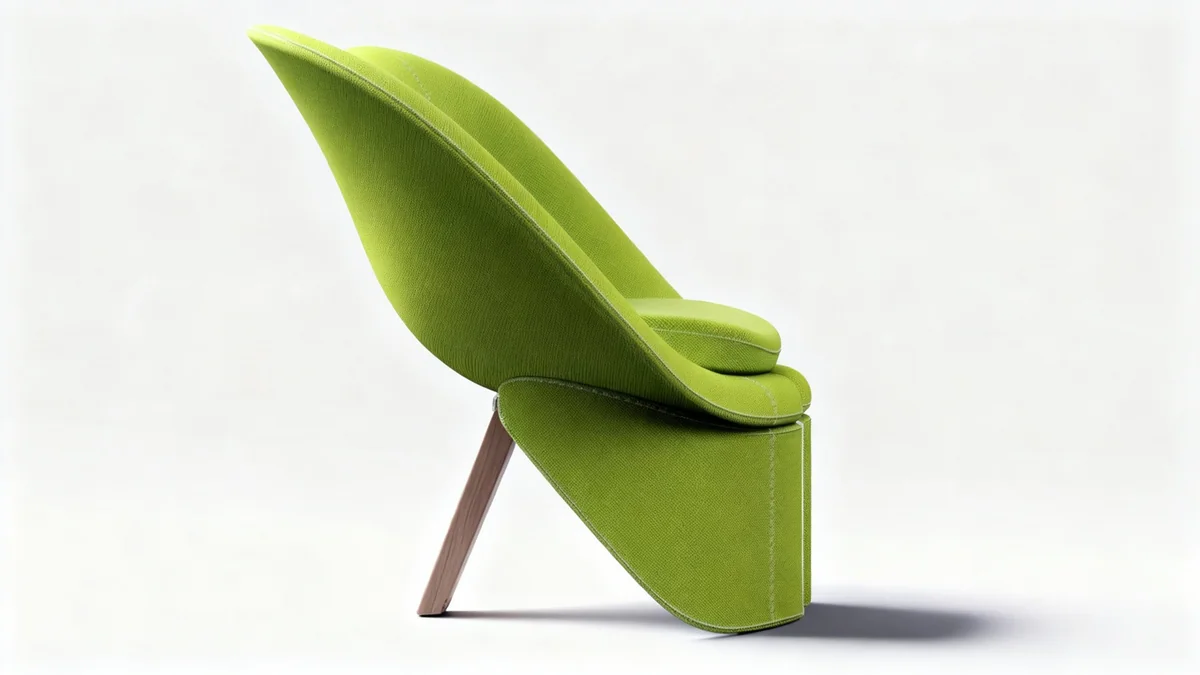
The Himalaya Pelvis Chair is presented in two main material configurations, each offering a distinct character. One variant features a vibrant green upholstery, made from a heavy-duty textile. This material choice suggests both durability and a soft, inviting appearance. The prominent stitching, including cross-stitch details, highlights the chair's curves and provides a handmade, custom feel.
The second variant is a speckled blue model, which appears to be constructed from a molded polymer or composite resin. This material gives the chair a more sculptural and robust quality. It is suitable for environments requiring greater durability, such as public spaces or minimalist interior designs.
Material Context
The selection of materials significantly influences how a piece of furniture is perceived and where it can be used. Upholstered options often convey comfort and warmth, ideal for residential settings. Molded polymers, on the other hand, are chosen for their resilience and modern aesthetic, fitting well in high-traffic or contemporary spaces.
Support Structure and Assembly
Both versions of the chair share a common support structure. This consists of a Y-shaped leg system, available in either brushed aluminum or light-finished wood, such as ash or oak. The legs are fastened with exposed hardware, which contributes to an honest, engineered aesthetic. This visible assembly emphasizes the chair's construction and adds to its modern industrial appeal.
"The designers have managed to make something intellectually rigorous without sacrificing aesthetic appeal or functional comfort."
Ergonomics Rooted in Anatomy
The design of the Pelvis Chair integrates comfort directly into its anatomical inspiration. The deep, contoured seat is shaped to mimic the human pelvis, specifically the iliac crest. The high, enveloping backrest draws inspiration from the sacrum. These elements are designed to cradle the sitter securely, providing natural support.
A notable feature is the keyhole-shaped opening at the base of the backrest. This detail references the sacral opening in the human anatomy. Beyond its symbolic value, this opening serves a practical purpose. It reduces the visual bulk of the chair and likely introduces a degree of flexibility, enhancing comfort during use.
Ergonomic Principle
Good ergonomic design aims to optimize the relationship between a user and a product, reducing discomfort and improving efficiency. By directly replicating a body part known for support, the Pelvis Chair leverages inherent biological advantages.
Innovation in Biomorphic Design
The Himalaya Pelvis Chair represents a significant development in biomorphic design, which involves using elements from nature in design. While biomimicry in furniture is not new, this chair's direct and unapologetic approach sets it apart. It moves beyond abstract representation to a functional replication of biological form.
According to design analysts, the chair succeeds where many conceptual pieces falter. It maintains a balance between being thought-provoking and practically usable. The refined execution prevents it from appearing merely like a medical prop, elevating it to an elegant and functional object. This blend of intellectual rigor, aesthetic appeal, and comfort makes it a noteworthy piece in contemporary furniture design.
The 'Himalaya' Project Context
The Pelvis Chair is part of a larger initiative called the 'Himalaya' project by Mingyu Seo and Eojin Jeon. This project likely explores how natural forms and structures can inform and enhance design in various contexts. The chair serves as a strong example of this design philosophy in practice, demonstrating how biological inspiration can lead to innovative and comfortable solutions.
- Conceptual Clarity: The design clearly communicates its inspiration.
- Ergonomic Advantage: Anatomical shape provides inherent support.
- Material Versatility: Different finishes suit various environments.
- Aesthetic Appeal: Despite its literal inspiration, the chair maintains elegance.
- Functional Innovation: The design serves both narrative and practical purposes.