
Leading interior designers are signaling a significant shift away from several widely popular home decor trends as 2025 draws to a close. Styles that once dominated social media feeds and modern homes are now being critiqued for lacking personality, practicality, and longevity. This move suggests a desire for more defined spaces and unique expressions in home interiors.
Key Takeaways
- Open-concept layouts are losing favor due to privacy and furnishing challenges.
- Monochromatic beige color palettes are seen as impersonal and dull.
- Bouclé furniture is criticized for poor wear and being overused.
- Minimalist kitchens with open shelving are deemed impractical.
- Matte black hardware is considered overdone, with a preference for softer tones.
The Retreat from Open Floor Plans
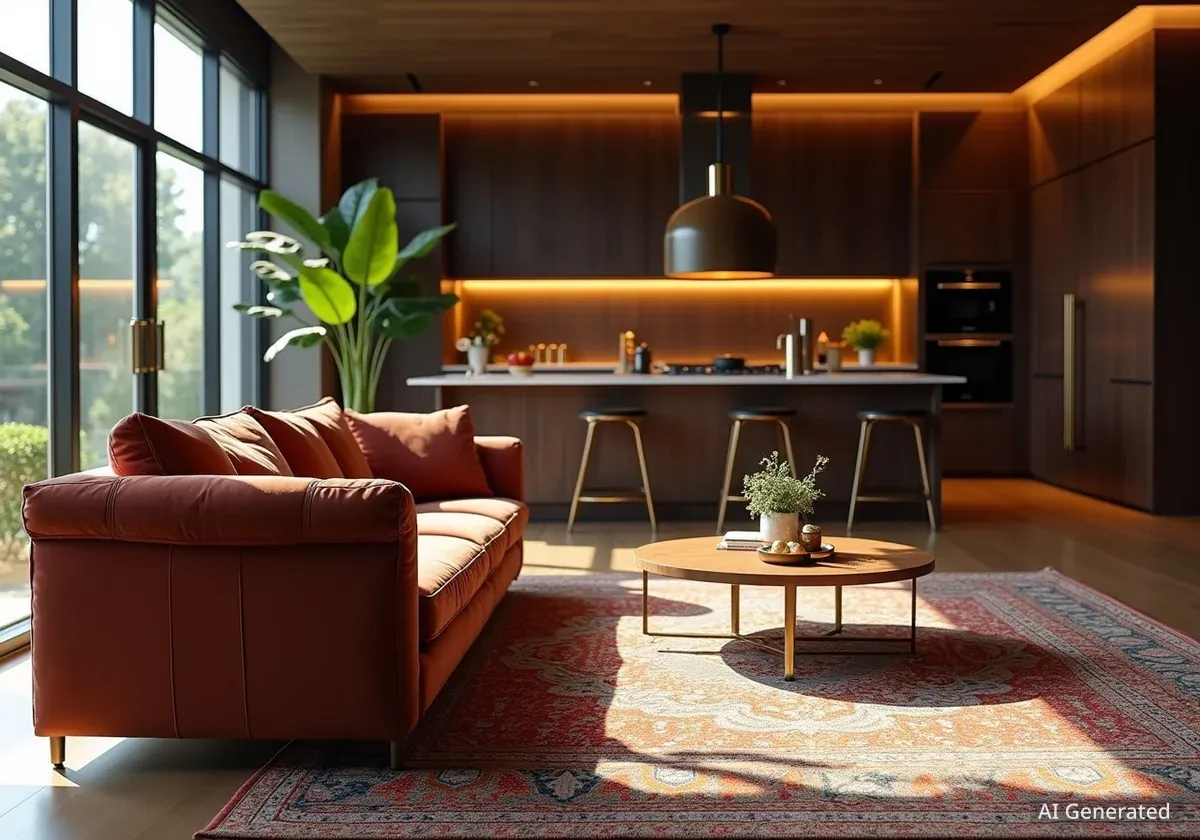
Open-concept living spaces, a hallmark of modern residential design for years, are facing increasing resistance from interior designers. This layout, which combines living, dining, and kitchen areas into one large room, is now viewed by many professionals as problematic.
Designers point to issues with noise, the difficulty in arranging furniture, and a lack of distinct character for individual zones. The need for every element to coordinate across a vast space often stifles creativity and prevents rooms from having their own unique identity.
"Homes with open-concept layouts are loud, hard to furnish, and leave little room for real design moments — every element has to coordinate instead of letting each room have its own personality," states Cathryn Erickson, interior designer and founder of Cathryn Lindsey Design.
Fact: Open-concept homes often mean less wall space.
Fewer walls reduce opportunities to hang artwork, install built-in storage, or feature statement furniture pieces, according to some design experts.
Erickson also highlights a common frustration: hosting guests in an open layout. She notes, "No one wants to pour a glass of wine with a pile of dirty dishes in full view." This sentiment underscores a growing preference for privacy and functional separation within homes.
Moving Beyond "Sad Beige" Palettes
The trend of using exclusively beige and neutral tones throughout a home, often referred to as "sad beige," is another style designers are ready to see disappear. While once praised for its soothing qualities, this monochromatic approach is now considered impersonal and devoid of warmth.
Experts argue that a home should reflect the personality of its inhabitants, embracing individuality and bold choices. The all-beige look often lacks the soul and character many homeowners desire.
Potter and designer Jonathan Adler expresses this view strongly: "Personally, I can’t wait for the end of all-beige-everything. I think your home should be an extension of your personality and reflect you at your most eccentric and glamorous self."
Context: Personal Expression in Design
The shift away from generic beige reflects a broader movement towards homes that tell a story, incorporating elements like personal photos, travel-inspired art, or unique graphic patterns. This allows for more dynamic and meaningful interiors.
Aashni Kumar, principal designer and founder at Aashni Kumar, echoes this sentiment. She explains, "I once loved a tone-on-tone color palette, but I’m now ready for some surprises and bold elements, which help create individuality and add personality to spaces." This signals a clear move towards more vibrant and character-filled interiors.
Farewell to Bouclé Furniture
Bouclé fabric, particularly in white, has been a dominant choice for sofas and accent pieces in recent years. However, designers are now growing tired of its ubiquity and its practical shortcomings. The textured fabric, while initially appealing, does not always wear well, especially in high-traffic areas or on frequently used seating.
The cofounders of Essentia Environments, Hardesh and Monica Chawla, anticipate a significant change in material preferences. They predict a shift towards textiles that demonstrate better durability and age more gracefully.
Upcoming Fabric Trends for 2026:
- Supple leather
- Raw silks
- Natural linens
These materials are expected to gain popularity for their ability to maintain their aesthetic appeal over time, offering both elegance and practicality. This change reflects a move towards more sustainable and long-lasting design choices.
The Decline of Minimalist Kitchens
Another surprising trend losing favor is the minimalist kitchen, particularly those featuring open shelving without upper cabinets. While this aesthetic can create a clean and spacious feel, designers are increasingly prioritizing function over form in this crucial area of the home.
Practical storage is essential for maintaining an organized and stylish kitchen. The lack of enclosed storage in minimalist designs often leads to clutter and inconvenience, making daily tasks more challenging.
Ethan Charles Greenfeld, founder and principal designer at Ethan Charles Design, points out the core issue: "The minimalist kitchen aesthetic featuring no upper cabinets with a single open shelf might seem stylish and create a clean, spacious feel, but it’s impractical. Where would you store your glasses and dishes?"
This critique highlights a return to more functional kitchen designs that balance aesthetics with the practical needs of everyday living. Homeowners are realizing that beautiful design should not come at the cost of utility.
Moving On from Matte Black Hardware
Finally, matte black hardware, which has been prevalent in both lighting fixtures and bathrooms, is another trend designers are ready to leave behind. This finish has saturated the market, leading to a desire for fresh, new options.
Interior designer Ashley Macuga, founder of Collected Interiors, expresses a clear preference for alternatives. She seeks finishes with softer, richer tones that can add more depth and character to a space.
Macuga states, "My eyes are desperate for finishes that have softer, richer tones, smoky pewters, and new hues of oil rubbed bronze."
While matte black still has its place in specific design contexts, such as dark and moody environments, its widespread application is seen as outdated. The industry is moving towards a broader palette of metallic finishes that offer more sophistication and visual interest.
Emerging Hardware Finishes:
- Smoky pewters
- Oil rubbed bronze (new hues)
- Softer, richer metallic tones
These shifts reflect a broader evolution in home design, moving away from mass-market trends towards more personalized, practical, and enduring styles. Homeowners can expect to see an emphasis on unique character, functional solutions, and a richer variety of materials and finishes in the coming years.