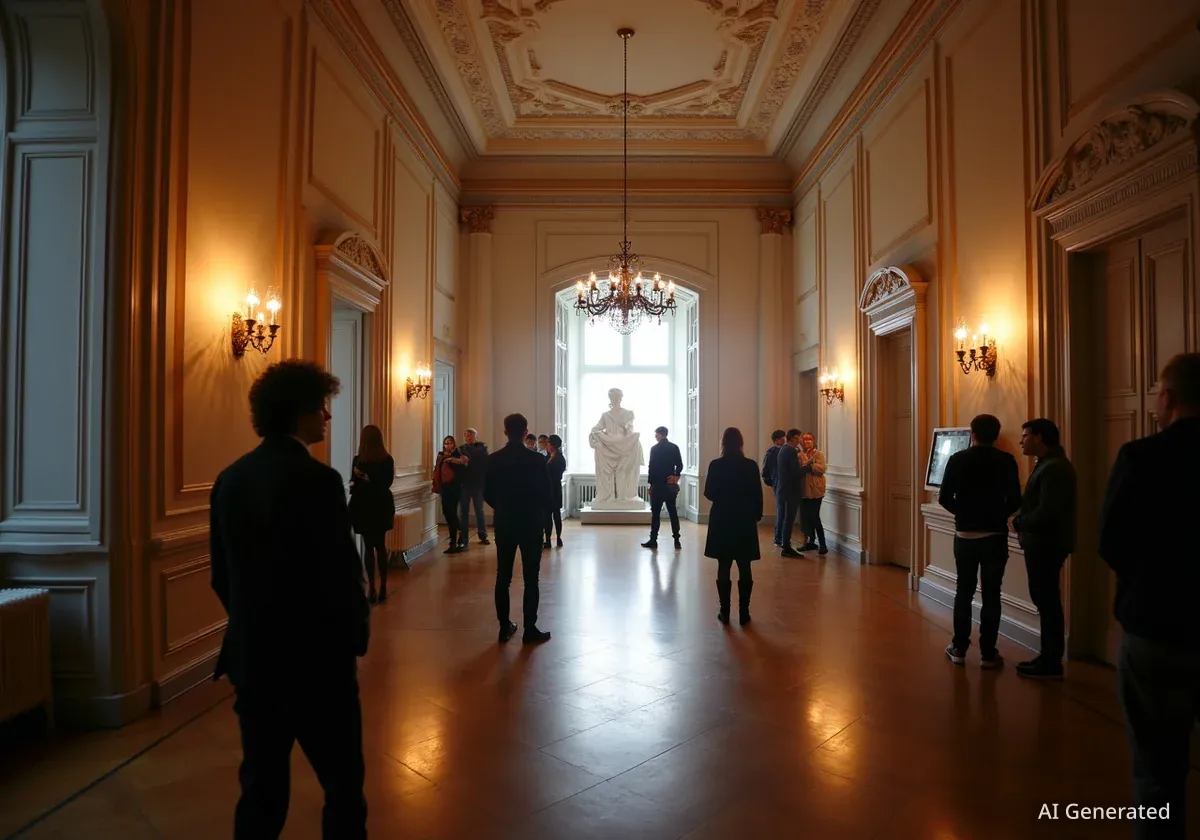



Design Miami.Paris 2025 has opened its third edition in the French capital, transforming the elegant L’Hôtel de Maisons into a showcase for contemporary and historical design. More than 25 galleries are participating in the fair, which offers a unique viewing experience within the luxurious rooms and expansive grounds of the 17th-century mansion.
Key Takeaways
- Design Miami.Paris 2025 features over 25 galleries at L’Hôtel de Maisons.
- The fair blends historical architecture with modern and antique design pieces.
- Collector interest remains strong, with a significant international presence.
- Highlights include interactive art, award-winning contemporary tables, and whimsical historical lamps.
- The event underscores a growing market for collectible design.
A Historic Setting for Modern Design
The L’Hôtel de Maisons, once the home of late fashion designer Karl Lagerfeld, provides an idyllic backdrop. Designed by the renowned architect François Mansart, the venue embodies early French classicism. Its high ceilings, parquet de Versailles flooring, and decorative wood paneling create a refined atmosphere.
This historic setting allows for a dynamic interplay between the exhibited design objects and the mansion's original ornamentation. Some pieces echo the room's grandeur, while others create a deliberate contrast, inviting viewers to see both the old and the new in fresh ways.
Venue History
L’Hôtel de Maisons is a 17th-century mansion in Paris. It was designed by François Mansart, a key figure in French Baroque architecture. The building's history, including its past ownership by Karl Lagerfeld, adds to its prestige and allure as a venue for high-end cultural events.
Strong Collector Interest and Early Sales
The fair’s VIP morning on Tuesday, October 21st, saw a significant turnout. Guests explored a diverse collection ranging from early 20th-century decorative arts to cutting-edge contemporary forms. The enthusiasm from collectors during these opening hours reflects a broader surge in interest within the design market.
Dealers reported a strong international collector presence. Sales began robustly, indicating a healthy market for collectible design. This trend suggests that unique, high-quality pieces continue to attract significant investment from global buyers.
"The energy from collectors in the opening hours truly reflected the current strength of the design market," one dealer noted, highlighting the renewed interest in unique pieces.
Interactive Art and Playful Creations
Among the standout pieces was American artist James de Wulf’s metallic ping-pong table. This piece transcended mere functionality, becoming an interactive sound installation. Six aluminum plates forming the table's surface are tuned to an A minor pentatonic scale, producing soothing tones when struck by ping-pong balls.
De Wulf shared his inspiration: "I just had a light bulb moment that I should tune the surface of the table." This led him to explore sound and materials, ultimately selecting aluminum for its resonant qualities. The table includes special racquets and even a foam ball for quieter play, blending art with playful engagement.
Acoustic Design
- James de Wulf's ping-pong table features six aluminum plates.
- Each plate is tuned to an A minor pentatonic scale.
- The table generates soothing musical tones during play.
Award-Winning Contemporary Works
American artist Adam Pendleton, known for his conceptually driven works, debuted his 'White Onyx Table, FF25-002-OX-01' (2025) in collaboration with Friedman Benda. This cylindrical marble table, despite its dense volume, appears to float gracefully. Its pure, cream-colored form is a testament to minimalist design.
Astrid Malingreau, director at Friedman Benda Paris, explained the piece's philosophy: "The piece is about a way of seeing the world, and seeing it in geometry." She pointed out the unique geometry of the table's feet, allowing a massive piece to rest on a very small surface, creating a beautiful balance.
The table received the fair’s Best Contemporary Work award, signaling an exciting new direction for Pendleton. His upcoming exhibition in New York, "Who Owns Geometry Anyway?", will further explore his design works.
Timeless Whimsy from the Lalannes
French design duo François-Xavier and Claude Lalanne had a strong presence, showcased by Paris gallery Mitterrand. Their display filled a large first-floor room with signature works, including alligator-backed bronze chairs and lilypad-shaped tables. Among these, François-Xavier Lalanne’s 'Lampe Pigeon' (1991) stood out.
This lamp, shaped like a pigeon, uses an opaline glass globe in its belly as the light source. It exemplifies the Lalannes' blend of whimsy and craftsmanship, radiating warmth and humor. The piece serves as a gentle reminder that art can illuminate daily life, both literally and figuratively.
Lalanne Design Elements
- Known for whimsical, animal-inspired furniture.
- Often uses bronze, glass, and other natural materials.
- Pieces like the 'Lampe Pigeon' combine sculpture with functional lighting.
Nature-Inspired Glass and Ceramics
Swedish artist Frida Fjellman presented a solo exhibition with Hostler Burrows, featuring blown glass and monumental ceramic works. Her pieces combine animal forms, organic shapes, and geometric abstraction. Fjellman drew inspiration from the Palace of Versailles, Sofia Coppola’s film Marie Antoinette, and early 18th-century Rococo aesthetics.
The display included a striking chandelier with geometric, jewel-like glass forms cascading from the ceiling. Flanking it were two sculptures of boars on light blue pedestals, appearing ready to pounce. A smaller piece, 'Viper with Treasure' (2025), particularly captivated visitors. It depicts a coiled ceramic snake guarding a large dark green glass orb, blending earthly and otherworldly tones with elegant craftsmanship.
Scandinavian Modernism's Enduring Appeal
Dutch gallery MORENTZ curated a living room-like display of 20th-century European and American furniture. A notable piece was Axel Einar Hjorth’s 'Lounge chair from the "typenko" series, model 36100' (1931). Hjorth, a chief designer for Stockholm’s Nordiska Kompaniet, was instrumental in Scandinavian design's rise to international recognition.
This chair showcases Hjorth’s transition from classical influences to early modernism. It combines high-quality craftsmanship with industrial materials, a hallmark of Scandinavian modern design. The chair bridges Swedish Grace—a decorative yet restrained Art Deco offshoot—and functionalism, emphasizing utility and simplicity. Its angled backrest and deep seat also highlight comfort, inviting a relaxed posture.
Axel Einar Hjorth's Legacy
Axel Einar Hjorth (1888–1959) was a pivotal figure in Swedish design. He served as chief designer for Nordiska Kompaniet, a leading department store in Stockholm. His work helped define the utilitarian and elegant aesthetic of early Scandinavian modernism.
The fair’s diverse offerings, from interactive sound sculptures to historical lighting and modernist seating, underscore the breadth and vitality of the global design market. The unique venue further enhances the experience, making Design Miami.Paris a significant event for collectors and enthusiasts alike.