
In the crowded rock scene of the 1970s, musical talent was common, but true stardom required something more. For Paul Frehley, a guitarist from the Bronx, the path to becoming a rock god involved not just mastering his instrument but also embracing a visual identity that would define a generation. As Ace Frehley, the Spaceman of Kiss, he became a key architect of one of the most recognizable brands in music history.
Frehley understood early on that in an era saturated with guitar heroes, musicianship alone was not enough to capture the world's attention. He leveraged his background in art to create a persona and a logo that transformed a rock band into a global phenomenon, proving that the spectacle was just as important as the sound.
Key Takeaways
- Ace Frehley, born Paul Frehley, was a founding member and the original lead guitarist of the rock band Kiss.
- He recognized that visual presentation was crucial for success in the competitive 1970s rock music landscape.
- Frehley personally designed the iconic Kiss logo, incorporating his signature lightning bolt design for the final two letters.
- His on-stage persona, "The Spaceman" or "Space Ace," was his own creation, contributing to the band's unique and theatrical identity.
From the Bronx to a New Frontier
Growing up in the Bronx, Paul Frehley was one of countless young musicians dreaming of rock and roll fame. He honed his guitar skills playing in a series of local bands that, like many others, struggled to gain traction. The musical landscape was fiercely competitive, filled with technically brilliant guitarists all vying for the spotlight.
It was this environment that shaped Frehley's perspective. He realized that technical proficiency was only part of the equation. To break through the noise, a band needed an undeniable hook—something that made them impossible to ignore. This realization would become the cornerstone of his approach when he answered an ad for a lead guitarist and joined a new group that would soon be known as Kiss.
The Rise of Glam Rock
During the early 1970s, glam rock acts like David Bowie and T. Rex were challenging the norms of rock performance. They demonstrated that theatricality, costumes, and elaborate stage personas could be powerful tools for connecting with audiences and building a dedicated following.
The Creation of a Rock Icon
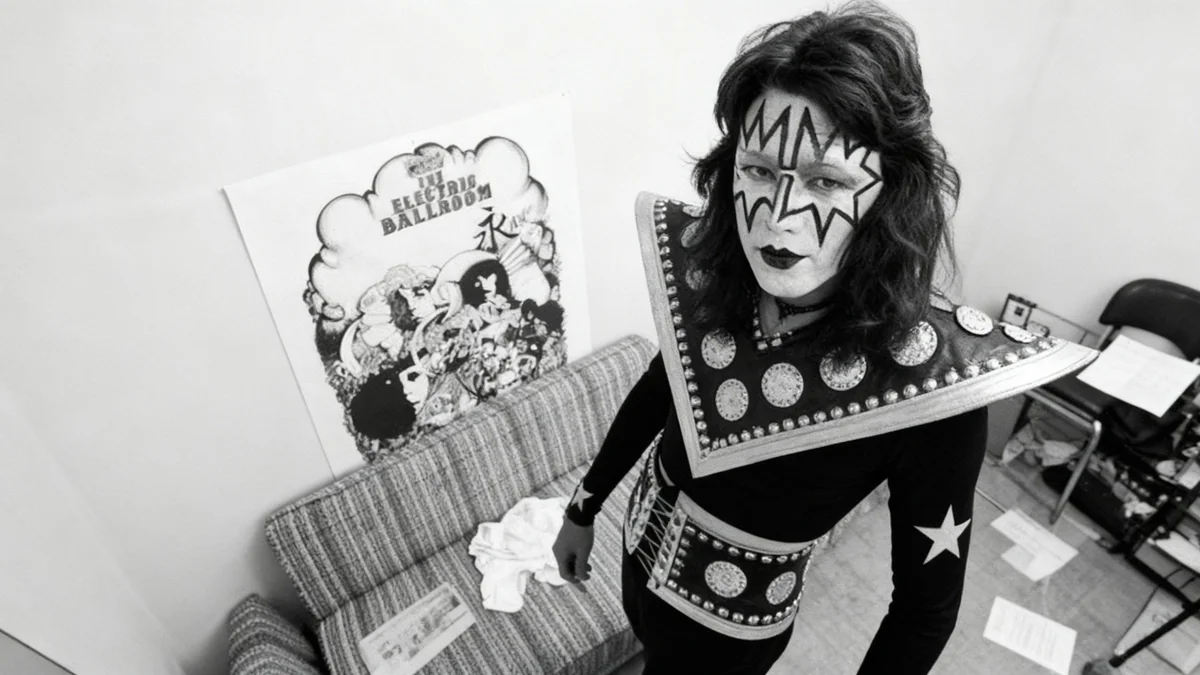
When the band decided to adopt on-stage personas complete with makeup and costumes, Frehley fully embraced the concept. He drew on his interests in science fiction and astronomy to develop his character: "The Spaceman." This otherworldly persona, supposedly from the planet Jendell, was a perfect fit for his electrifying, often unpredictable guitar solos.
The makeup, with its silver stars over his eyes, became instantly recognizable. It wasn't just a mask; it was a core part of the band's mythology. Each member's character—The Starchild, The Demon, The Catman, and The Spaceman—created a larger-than-life narrative that captivated fans. Frehley's contribution was essential to this dynamic, providing a futuristic and enigmatic element to the group's collective identity.
"I was always into art. When it came time to create a logo for the band, I just sat down and sketched it out. The lightning bolts seemed like a natural fit for our sound."
More Than a Musician: The Artist Behind the Logo
Perhaps Frehley's most enduring visual contribution was one he made before ever stepping on stage in makeup. Tapping into the artistic skills he had developed in high school, he took on the task of designing the band's logo. His design was simple, bold, and perfectly captured the band's electric energy.
He famously stylized the final two letters of "KISS" as sharp, jagged lightning bolts. This single design choice created one of the most iconic and enduring logos in the history of music. It was a visual representation of their high-voltage rock and roll, and it quickly became a symbol for millions of fans worldwide. The logo was more than just branding; it was a statement of intent.
A Controversial Design
The lightning bolt "SS" in the Kiss logo has caused controversy over the years due to its resemblance to the insignia of the Nazi SS. The band has consistently denied any intentional connection, and the logo is altered in Germany and other countries where the symbol is illegal.
The Strategy of Spectacle
For Kiss, the music was always intertwined with the spectacle. Ace Frehley's on-stage gimmicks, such as his smoking guitar solos where smoke would pour from the pickups, became legendary parts of their live shows. These theatrical moments were not accidents; they were a calculated part of the band's strategy to create an unforgettable concert experience.
Frehley's willingness to adopt and enhance these gimmicks demonstrated his keen understanding of what the band needed to do to achieve its goals. He wasn't just a guitarist playing his part; he was an active participant in building the Kiss empire. His visual and theatrical contributions helped elevate the band from a musical group to a full-fledged entertainment brand, complete with merchandise, movies, and a devoted fan army.
This commitment to the visual side of performance set Kiss apart from their contemporaries and laid the groundwork for their decades-long success. While other bands relied solely on their music, Kiss offered a multi-sensory experience that was impossible to replicate.
A Lasting Visual Legacy
While Ace Frehley's tenure with Kiss had its ups and downs, his foundational contributions are undeniable. His Spaceman persona and, most significantly, his design of the band's logo, are permanent fixtures in the rock and roll hall of fame. They are symbols of a time when rock music was audacious, theatrical, and unapologetically larger than life.
Frehley's story is a testament to the idea that in the world of entertainment, vision can be just as powerful as virtuosity. He saw that to become a legend, you needed more than just great riffs; you needed an identity. By painting his face and turning his band's name into a lightning storm, he helped create a legacy that continues to electrify audiences today.