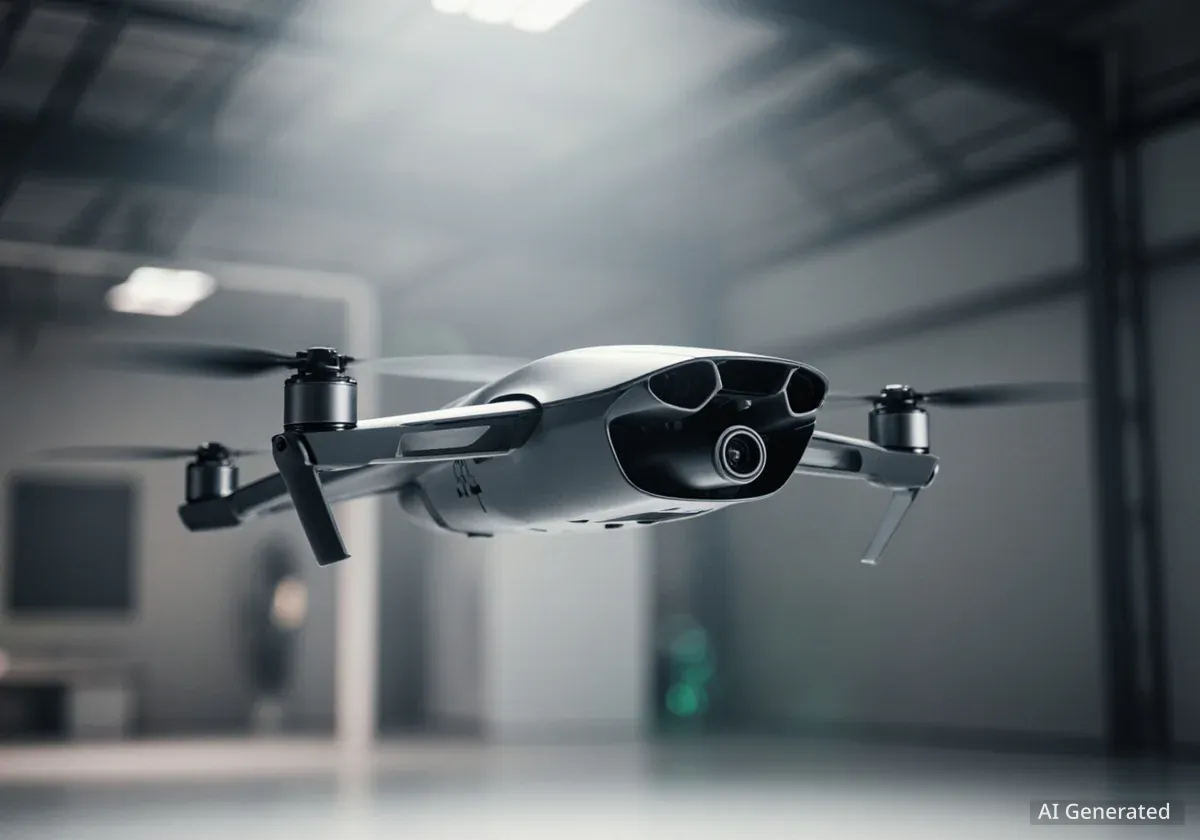


A novel tri-rotor drone design has emerged, showcasing a focus on agility and power. This innovative aircraft, developed by industrial designer Alberto Essesi, features a unique aerodynamic and organic form, marking a departure from conventional drone aesthetics. The design explores new boundaries for rotor-based unmanned aerial vehicles.
Key Takeaways
- New tri-rotor drone emphasizes agility and power.
- Designed by industrial designer Alberto Essesi.
- Features an aerodynamic, organic form.
- Capable of both gliding and hovering.
- Suggests a client willing to push design boundaries.
Pushing Design Boundaries in Drone Technology
The new tri-rotor drone concept, known as the Aurora Drone, represents a significant step in unmanned aerial vehicle (UAV) design. Industrial designer Alberto Essesi, based in Los Angeles, created this model for an aerospace client. The client sought to explore the limits of tri-rotor technology, with a particular emphasis on enhancing agility and raw power.
This initiative allowed Essesi considerable creative freedom. The result is a drone that defies typical expectations for rotor-based aircraft, which are rarely considered objects of high design. Essesi's work suggests a growing appreciation for aesthetic innovation within the aerospace sector.
Design Fact
The Aurora Drone's design prioritizes an aerodynamic and organic form, allowing it to move efficiently through the air while maintaining helicopter-like hovering capabilities.
Aerodynamic Form Meets Functional Power
Essesi describes the drone's form as "incredibly aerodynamic and organic." This design enables the aircraft to glide smoothly through the air. At the same time, it retains the crucial ability to hover, much like a traditional helicopter. This dual capability highlights the design's blend of aesthetic appeal and practical functionality.
Achieving both agility and power in a tri-rotor configuration presents specific engineering challenges. The interaction of three rotors, especially if all appear to turn in the same direction, typically creates torque reactions. Designers must address these forces to ensure stable and controlled flight.
"The result was an incredibly aerodynamic and organic form that is able to glide through the air while also being able to hover like a helicopter," Essesi stated regarding his design. This quote emphasizes the core capabilities of the Aurora Drone.
Addressing Engineering Challenges for Stability
One of the primary considerations for a tri-rotor design involves managing torque reaction. If all three rotors were to spin in the same direction, the drone would experience a rotational force, making stable flight difficult. Engineers typically counteract this by mounting rotors off-axis or by employing differential thrust mechanisms.
This counter-rotational thrust component is essential for maintaining control and stability during flight. The Aurora Drone's design implicitly accounts for these principles, ensuring its ability to perform agile maneuvers and stable hovering. The integration of advanced design with fundamental physics is crucial for such an innovative aircraft.
Drone Design Context
Industrial designers often collaborate with aerospace engineers to create UAVs that are not only functional but also visually distinctive. This collaboration can lead to significant advancements in both performance and aesthetic appeal, pushing the boundaries of what drones can look like and achieve.
The Role of Industrial Design in Aerospace
The Aurora Drone project underscores the increasing importance of industrial design in the aerospace industry. Traditionally, drone development has focused heavily on engineering and utility. However, Essesi's work demonstrates a shift towards integrating sophisticated aesthetics with high-performance requirements.
This approach can lead to drones that are not only efficient but also visually striking. Such designs can enhance public perception of drone technology and open new possibilities for its application. The collaboration between designers and engineers is key to this evolution.
- Aerodynamic Efficiency: The sleek form reduces drag, improving flight endurance and speed.
- Organic Aesthetics: A departure from rigid, utilitarian drone shapes, offering a more visually pleasing appearance.
- Hovering Capability: Essential for precision tasks, surveillance, and stable aerial photography.
- Agility Focus: Critical for navigating complex environments and performing dynamic flight patterns.
Potential Client and Future Implications
While the specific client remains undisclosed, Essesi's portfolio refers to the project as the Aurora Drone. This name has led to speculation that the client could be Aurora Flight Sciences, a Boeing subsidiary known for its work on unmanned aircraft. However, this remains unconfirmed conjecture.
Regardless of the client's identity, this design showcases a future where drones are not just tools but also examples of advanced industrial art. The emphasis on agility and power, combined with a unique form, could set new standards for drone development. It highlights a trend towards more integrated design processes in aerospace, where form and function are equally prioritized.
The Aurora Drone concept serves as a testament to the potential of design to transform technology. It demonstrates that even highly functional machines can embody elegance and innovation. This project could inspire further exploration into the aesthetic and performance capabilities of next-generation UAVs.