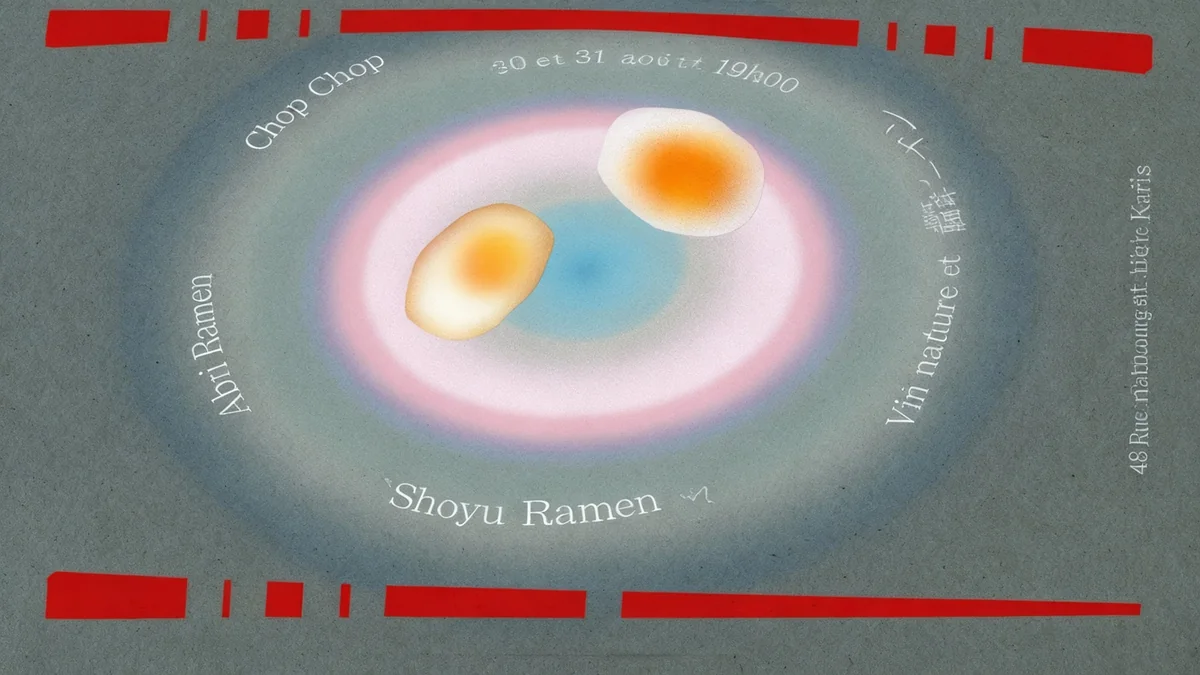



Parisian designer Louis Garella is redefining graphic design by blending digital tools with tangible, hands-on techniques. His studio, Studio Garella, based in Paris, creates visual identities that feel deeply connected to their subjects, moving beyond traditional flat or screen-based outputs. Garella's approach involves a continuous exchange between digital and print, resulting in expressive and tactile work.
Key Takeaways
- Louis Garella's design process is a hybrid of digital and physical methods.
- He focuses on creating tactile and expressive visual identities.
- Studio Garella develops visual languages connected to subject matter.
- His work incorporates elements like collage, printmaking, and digital manipulation.
A Blended Approach to Visual Storytelling
Garella's methodology is a distinct "hybrid practice" that merges visual arts, graphic design, and spatial design. This multi-faceted approach allows him to explore new avenues for each project. He began developing this fluid, multimedia style during his studies at the National Superior Diploma of Plastic Expression in Saint-Étienne.
Originally from Aix-en-Provence, Garella now operates his independent studio in Paris. His studio handles a wide range of creative tasks. These include developing sensitive visual identities and logos for various brands, intricate editorial design, and engaging photography, film, and motion graphics. He also incorporates 3D elements into his work.
Design Philosophy
Garella aims to develop visual languages that are "closely connected to the subject matter they address." This commitment to research-driven design ensures that each project has a strong conceptual foundation.
The Constant Dance Between Digital and Print
The core of Garella's creative process lies in a dynamic interplay between digital and print. He describes this as a "constant back-and-forth" between the two mediums. This fluid movement allows for unexpected textures and forms to emerge in his final designs.
One technique involves collecting and scanning graphic elements. For example, in his identity work for Sonata Electronica, he utilized the effect of low xerox ink. This created a sense of movement, making the logo scans appear to shift or dance, adding a unique, almost ephemeral quality.
"My creative process is a constant back-and-forth between digital and print," Louis Garella explains, highlighting the iterative nature of his work.
Alternatively, Garella uses more hands-on methods. He employs physical collage, digital manipulation, and various printmaking techniques on different surfaces and textiles. These manual processes introduce imperfections that give designs a tactile feel. When digitized, these imperfections create a sense of ephemerality, such as the hazy smudges seen in his identity for Hermès' "une nuit d’été."
The Evolution of Graphic Design
While many graphic design works are experienced on screens or as flat prints, Garella's work reminds us that interactions with color, form, type, and composition can extend beyond the immaterial. He brings a physical dimension back into a largely digital field.
Achieving Creative Balance
Garella actively intervenes in an image's cycle. He stops the process when elements reach a desired balance. This precise timing ensures that all components work together harmoniously. He refers to this perfect unison as a "creative ratatouille," where all the flavors combine perfectly.
This approach allows him to infuse his designs with layers of impressions and interferences. These elements break the monotony often found in purely digital work, giving each project a distinctive character. The result is visual communication that is not only effective but also rich in texture and depth.
- Identity Design: Creating sensitive visual systems for brands.
- Editorial Work: Detailed design for publications and printed materials.
- Photography & Film: Incorporating visual media and motion graphics.
- 3D Integration: Adding spatial depth to designs.
Bridging Art and Function
Garella's work demonstrates that graphic design can be both a functional tool and an expressive art form. By embracing both digital precision and analog imperfections, he pushes the boundaries of how visual communication is perceived and experienced. His portfolio includes projects for various clients, showcasing his versatility and unique aesthetic.
His designs are not just visually appealing; they tell a story. They invite viewers to engage with the textures, forms, and compositions on a deeper level. This dedication to crafting meaningful visual experiences sets Studio Garella apart in the contemporary design landscape.
The studio's commitment to exploring new visual avenues means that no two projects look exactly alike. Each piece is a unique exploration, tailored to its specific context and subject matter, always reflecting Garella's distinctive hybrid design philosophy.