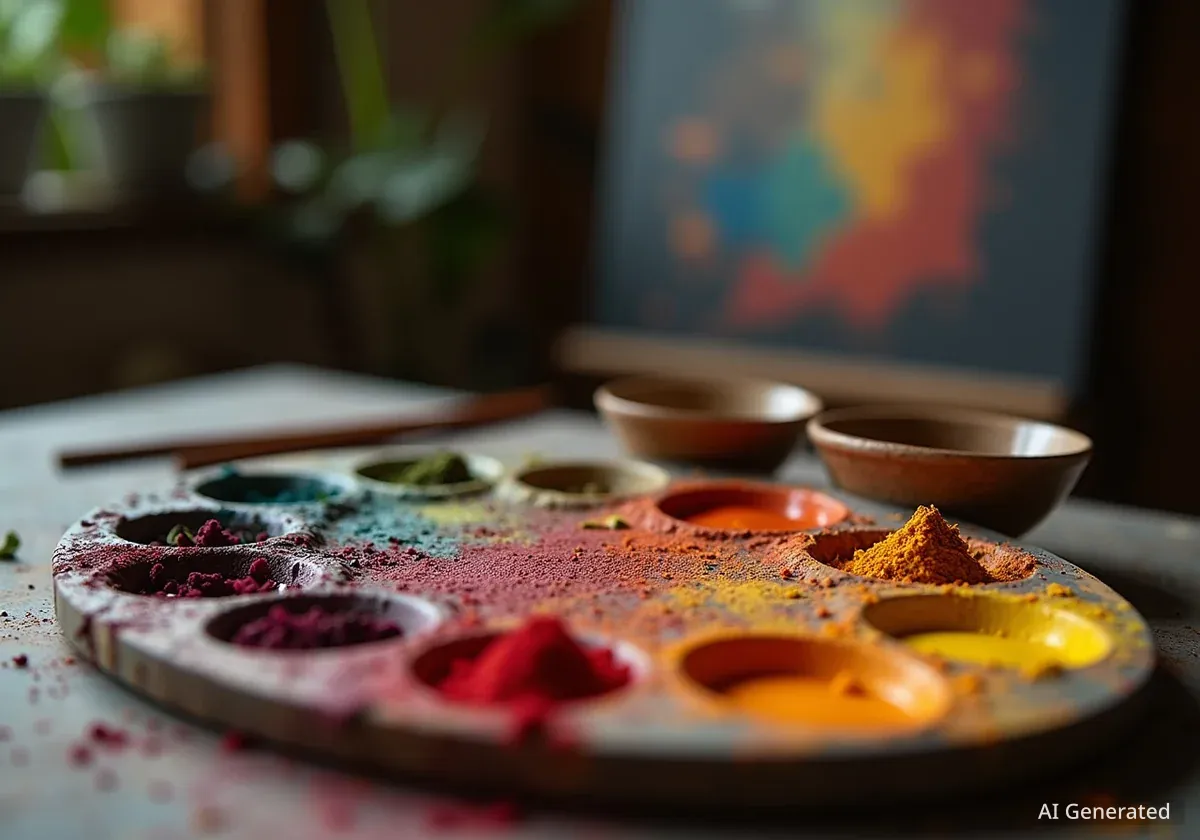




Mexico City-based artist Omar Mendoza is presenting a new series of paintings that draw on ancient Mesoamerican traditions. His exhibition, titled "Serpiente Solar Noche Obsidiana" (Solar Serpent Obsidian Night), features works created with natural pigments. These pigments come from plants, tree bark, and flowers. Mendoza gathers some materials from his father's hometown and sources others from local markets. The exhibition opens on October 4 in Chicago at Povos.
Mendoza's artistic approach revives ancestral knowledge. This knowledge involves extracting dyes from organic sources, a practice deeply rooted in historical Mesoamerican cultures. His works symbolize a form of cultural preservation and resistance, ensuring these traditional methods continue today.
Key Takeaways
- Artist Omar Mendoza uses natural pigments from native plants and materials.
- His new series, "Serpiente Solar Noche Obsidiana," opens on October 4 in Chicago.
- The art reflects ancient Mesoamerican traditions and ancestral knowledge.
- Mendoza's work connects cosmic and earthly forces through symbolic motifs.
- The exhibition highlights the persistence of cultural practices.
Ancestral Pigments and Artistic Process
For centuries, artists and craftspeople in the Mesoamerican region have used natural pigments. They learned to extract dyes from various organic sources. This process is an art form itself, requiring deep cultural understanding and skill. Many traditional practices, including pigment harvesting, have faced threats over time. Factors like colonialism impacted these age-old methods. However, artists like Mendoza actively work to keep these processes alive.
Mendoza's commitment to these traditional techniques is central to his art. He carefully selects and processes the raw materials. These materials include specific native plants, tree bark, and flowers. The sourcing of these materials is a vital part of his creative journey. It connects him directly to the land and his heritage.
Fact: Natural Pigments Used
- Mayan blue: A historical pigment known for its durability.
- Mayan green: Another vibrant color with ancient roots.
- Indigo blue: Derived from plants, a classic dye.
- Brazilian wood: Used for red and reddish-brown hues.
- Mexican honeysuckle: Provides yellow and orange tones.
- Jonote: A tree whose bark yields various colors.
- Zacatlaxcalli: A lichen that produces yellows.
- Kina: A bark used for reds and browns.
- Charcoal: Provides black and grey tones.
- Turmeric: A spice yielding bright yellow.
- Beet: Creates pinks and reds.
- Beeswax: Used as a binder or for texture.
Cosmic Themes and Cultural Resistance
Mendoza's paintings visually convey themes of cosmic power and sacred rhythms. He aims to connect celestial and earthly forces. His compositions often feature motifs like stars, planetary objects, snakes, and eagles. Vines also appear frequently in his work. These symbols represent intuition and insight, drawing from ancient indigenous worldviews.
The act of creating these works with natural, traditionally sourced pigments is a statement. It is a way to resist the fading of cultural practices. By using these methods, Mendoza reinforces their importance and ensures their visibility in contemporary art. This approach makes his art a form of cultural affirmation.
Victoria Rivers, the curator for the exhibition, shares her perspective: "Omar Mendoza creates these works from a cosmovision in which everything is alive and in relationship: water, stone, plants, fire, night. In that web of sacred correspondences, painting becomes an act of reciprocity with the earth and its cycles."
This quote highlights the artist's deep connection to his materials and subject matter. It emphasizes a worldview where all elements of nature are interconnected and sacred. Painting, for Mendoza, is not just creation but an act of giving back to the earth.
Symmetry and Harmony in Compositions
Many of Mendoza's paintings feature elements of symmetry. This symmetry often suggests a mirroring of two worlds, perhaps the earthly and the spiritual. He uses tactile washes of color, including pink, blue, violet, and yellow. These colors are applied to hand-prepared cotton surfaces. The interaction of these hues creates a transcendent sense of harmony.
The visual harmony in his works reinforces the cyclical energy that flows through them. This cyclical theme is a core concept in many indigenous cosmologies. It speaks to the continuous nature of life, death, and rebirth. The artworks become a visual representation of these profound cycles.
Background: Mesoamerican Pigment Traditions
Mesoamerica, a historical region spanning parts of modern-day Mexico and Central America, has a rich history of natural pigment use. Civilizations like the Maya and Aztec developed sophisticated techniques for extracting and applying colors from plants, insects, and minerals. These pigments were used in murals, codices, pottery, and textiles. Mayan blue, for example, is a famous pigment known for its remarkable resistance to weathering and chemicals. Its creation involved a complex process combining indigo dye with a clay mineral.
Featured Works and Exhibition Details
The exhibition includes several notable pieces from Mendoza's new series. These include "Noche obsidiana" (2025), "Espejo obsidiana" (2025), "Lluvia florida" (2025), "Serpiente de jade" (2025), "Eclipse" (2025), "Cantares" (2025), and "Cielo roto" (2025). Each painting uses a unique combination of natural pigments on a handmade cotton surface. The pigments vary, but common ones include mayan blue, mayan green, indigo blue, brazilian wood, and mexican honeysuckle.
For example, "Noche obsidiana" features mayan blue, mayan green, indigo blue, brazilian wood, mexican honeysuckle, jonote, zacatlaxcalli, kina, charcoal, turmeric, beet, and beeswax. This extensive list highlights the complexity and natural origin of his palette. Each ingredient contributes to the painting's final appearance and texture. The use of beeswax, for instance, can provide a unique finish and act as a binder for the pigments.
- "Noche obsidiana" (2025): Uses a wide array of pigments including beet and beeswax.
- "Espejo obsidiana" (2025): Features blue wood alongside traditional pigments.
- "Lluvia florida" (2025): Includes turmeric and beet, adding warm tones.
- "Serpiente de jade" (2025): Utilizes turmeric for its vibrant yellow.
- "Eclipse" (2025): Incorporates obsidian, a natural volcanic glass.
- "Cantares" (2025): Adds alder to the mix of natural materials.
- "Cielo roto" (2025): Also uses turmeric and beet for color.
The exhibition provides an opportunity to see these unique works firsthand. Viewers can observe the intricate details and the rich, subtle colors derived from nature. The gallery setting allows for a closer appreciation of Mendoza's dedication to ancestral techniques and his artistic vision.
The Significance of "Serpiente Solar Noche Obsidiana"
The title of the exhibition, "Serpiente Solar Noche Obsidiana," translates to "Solar Serpent Obsidian Night." This title itself is rich with symbolic meaning. The serpent is a powerful symbol in Mesoamerican cultures, often representing creation, fertility, and renewal. The solar aspect points to light, life, and cosmic energy. Obsidian night suggests themes of reflection, depth, and the mysteries of the cosmos.
Together, these elements create a framework for understanding Mendoza's artistic intent. His work is more than just aesthetically pleasing; it is a narrative. It tells a story of cultural continuity, ecological connection, and spiritual insight. The exhibition invites viewers to engage with these profound themes.
The opening in Chicago marks an important moment for showcasing Mendoza's work to a wider audience. It offers a chance for people to connect with traditional art forms that carry significant historical and cultural weight. The exhibition runs from October 4.