An immersive artwork by Sámi artist Máret Ánne Sara has transformed Tate Modern's Turbine Hall. The installation, which features a large-scale structure based on a reindeer's nasal passages and a towering display of reindeer hides, explores Sámi culture, the climate crisis, and Indigenous philosophy. It invites visitors to engage with themes of nature's dominance and the struggles faced by Europe's only Indigenous people.
Key Takeaways
- Máret Ánne Sara's installation at Tate Modern's Turbine Hall focuses on Sámi culture and the role of reindeer.
- The artwork includes a large structure resembling a reindeer's nasal passage and a 26-meter display of reindeer hides.
- It highlights the impact of climate change, particularly 'goavvi' winters, on reindeer herding and Sámi livelihoods.
- The artist uses scent and sound to create an immersive experience, challenging human perceptions of nature.
- The work brings global Indigenous issues and ecological justice conversations to a prominent European art venue.
Exploring the Reindeer's Nose: A Tribute to Nature
Visitors to the Turbine Hall often encounter unique artistic experiences. Máret Ánne Sara's new commission marks a significant departure. It invites gallerygoers to step inside a labyrinthine structure. This structure is a scaled-up representation of a reindeer's nasal passages. Inside, people can walk or rest on reindeer hides. They can also listen to Sámi elders sharing stories and knowledge through headphones.
The choice of the reindeer's nose is deliberate. Scientists have found that a reindeer's nose can warm inhaled air by 80 degrees Celsius in less than a second. This remarkable ability allows the animal to survive in the harsh Arctic environment. By making the nose larger than human size, Sara aims to create a feeling of human inferiority. She states,
"You as a human being are not dominant over nature."This perspective can encourage humility and a shift in viewpoint.
Did You Know?
The Sámi are Europe's only Indigenous people. They number around 100,000 individuals. They live across northern Norway, Finland, Sweden, and Russia's Kola Peninsula, an area they call Sápmi.
Sámi Culture and Climate Challenges
Sara's installation is part of a larger, immersive commission. It celebrates the culture, science, and philosophy of the Sámi. The Sámi have historically faced persecution, forced assimilation, and suppression of their language in all four Nordic nations. The reindeer is central to Sámi cosmology and creation stories. By focusing on this animal, the artwork draws attention to the community's ongoing struggles. These include the climate crisis, land dispossession, and colonialism.
An imposing, 26-meter-tall structure stands on the long entrance ramp. It consists of reindeer hides entangled by power and light cables. This element, titled Goavve-, can symbolize the political and economic systems that constrain the Sámi people. The term 'Goavve' refers to an extreme weather event. In this phenomenon, dense ice layers form as temperatures fluctuate. Snow melts and refreezes, trapping lichen, the reindeers' primary winter food source.
Climate Crisis in the Arctic
Goavvi is a direct result of global heating. The Arctic region is warming up to four times faster than other parts of the world. This rapid warming causes severe consequences for the local ecosystem and Indigenous communities.
Impact of 'Goavvi' Winters on Reindeer Herding
These 'goavvi' winters severely impact reindeer husbandry. Three years ago, during such a winter, Sámi herders in Guovdageaidnu, Norway, manually distributed food pellets to their herds. Reindeer struggled to find food, pawing at the icy ground in vain. This process is costly and labor-intensive, reducing the animals' self-sufficiency. Without intervention, starvation is a real threat.
As 'goavvi' winters become more common, reindeer populations suffer. Some die from lack of food. Others drown after falling through prematurely melting ice on lakes and rivers. Sara's sculpture acts as a monument to these animals. She explains,
"With the layering of materials, in a way I'm bringing the goavvi to London."This artistic choice visually represents the harsh reality of climate change in the Arctic.
Western Power vs. Sámi Energy Views
The sculpture also highlights a fundamental difference in how power is understood. Western cultures often see power as a resource to be exploited for profit and survival. In contrast, the Sámi worldview considers energy an inherent life force within animals, people, and land. Tate Modern's past as a coal and oil power station connects to this theme. The Sámi also perceive certain renewable energy projects by Scandinavian states as 'green colonialism.'
Nordic nations, aiming to lead in renewable energy, have clashed with the Sámi. They propose wind farms, hydroelectric dams, and mines on ancestral Sámi land. The Sámi argue these projects threaten their human rights, livelihoods, and traditional way of life. Sara notes,
"It's very difficult being such a small minority to defend yourself when the arguments are rooted in saving the world."She adds that extractivism often uses ecological language but still aims to continue consumption habits.
Art as a Platform for Sámi Voices
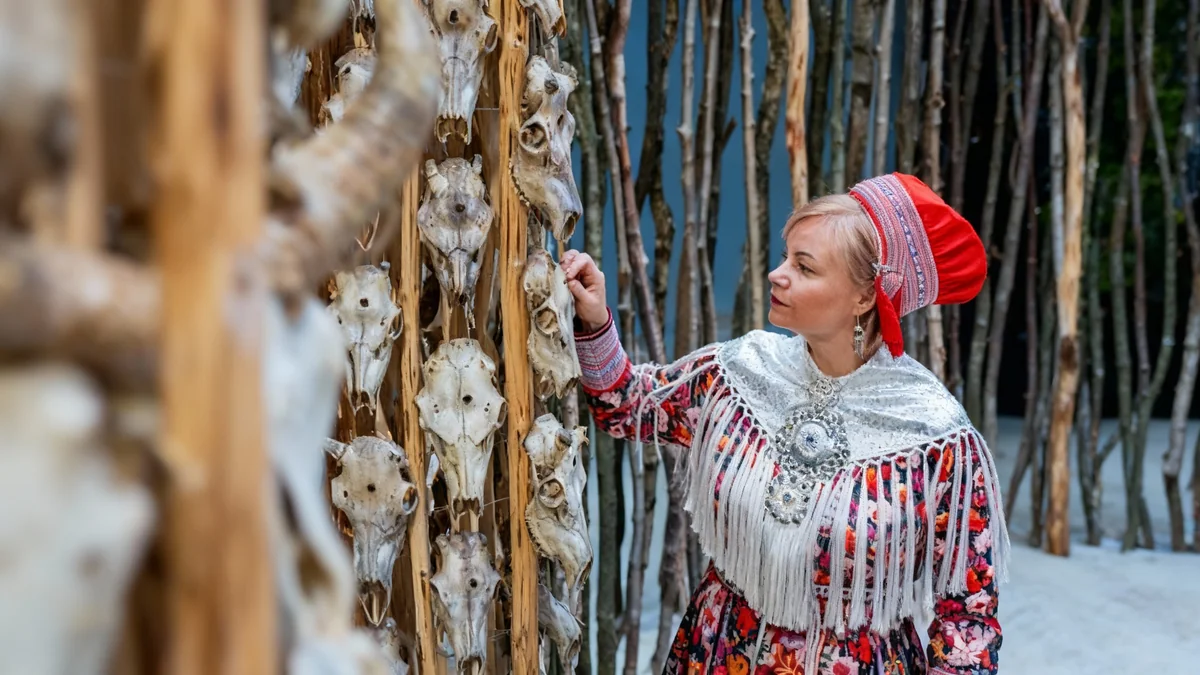
The artist and her family have faced disputes with the Norwegian government. In 2016, Sara's brother engaged in lawsuits against the forced culling of his herd. This was ostensibly to prevent overgrazing. In response, Sara created the four-year artwork series Pile O'Sápmi. This included a massive curtain made of 400 reindeer skulls. This piece was shown at Documenta 14 in 2017 and later acquired by the National Museum of Oslo, where it is now displayed.
For many Sámi, art provides a crucial platform to be heard by people in other nations. In 2022, Sara was one of three Indigenous artists representing Norway, Finland, and Sweden at the Venice Biennale. The Nordic Pavilion was temporarily renamed the Sámi Pavilion for this event. Her Turbine Hall commission therefore carries significant political weight for the Sámi community and for Indigenous peoples globally.
Global Indigenous Impact
Katya García-Antón, curator of the 2022 Sámi Pavilion, emphasized the broader impact of Sara's work. She stated,
"This has so much synergy for Indigenous people globally, and for so many people who are not Indigenous, but who also feel strongly about the importance of ecological justice."
Bridging Indigenous Knowledge and Western Science
Sara's message does not aim to create a divide between Western science and Indigenous knowledge. Instead, she highlights how crucial, life-sustaining information has been passed down through Sámi generations. This knowledge comes from being deeply connected to nature. Her use of materials like animal pelts, bones, wood, and power cables expresses this connection. The Turbine Hall also features a soundscape. It combines natural sounds of reindeer herds, mosquitoes, and birds with Sámi traditional songs, or joiks, and the hum of industrial machinery.
The structure modeled on a reindeer's nasal passages is named -Geabbil, which means "smartly adaptable" in Sámi. It reflects Sámi traditions of building makeshift homes. The wooden poles are carved with reindeer earmarks, historically used to distinguish family herds. Reindeer bones and skulls adorn the walls, referencing the Pile O'Sápmi series. For Western observers, using animal parts in art might seem cruel. However, for the Sámi, it embodies the concept of "duodji." This term, often simply translated as "craft," represents a philosophy of life. It emphasizes the interdependence of humans, animals, and nature, ensuring nothing is wasted when an animal is harvested. The Sámi do not believe in human supremacy; they believe animal wisdom can offer valuable lessons.
The Language of Scent and Hope
Sara recalls a childhood memory. Her father, usually strong, changed his posture, voice, and gaze when summoned to a police station. He was accused of letting his reindeer eat flowers. She remembers his sudden "uncomfortable" smell, which she later understood as fear. She realized reindeer also emit a warning scent when stressed.
"Looking at smell as a language, my memory started to make sense, understanding that we are linked with animals biologically and spiritually in every way,"Sara explains.
To deepen the immersive experience, Sara collaborated with Algerian perfumer Nadjib Achaibou. They created a scent capturing the reindeer's fear. This aroma is diffused around the 'goavvi' installation, linking it to negative associations with extractivism and climate breakdown. In contrast, a pleasant aroma is present at the entrance of the 'geabbil' nose structure. This scent evokes reindeer milk, Sara's breast milk, and natural sweetgrass. It is intended to symbolize hope. These scents elicit strong physical responses. Sara notes that the fear scent "blocks off my body," while the hopeful aroma makes her feel her "posture changing and my lungs and chest opening up."
Sara sees great potential in this Tate commission.
"There's something very hopeful about the potential of anyone sitting down to soak this in with openness in their bodies and perspectives,"she says. She views it as a futuristic project, inviting people to learn from and integrate Indigenous philosophy and knowledge into a global future. Máret Ánne Sara’s Hyundai commission will be on display at Tate Modern, London, until 6 April.