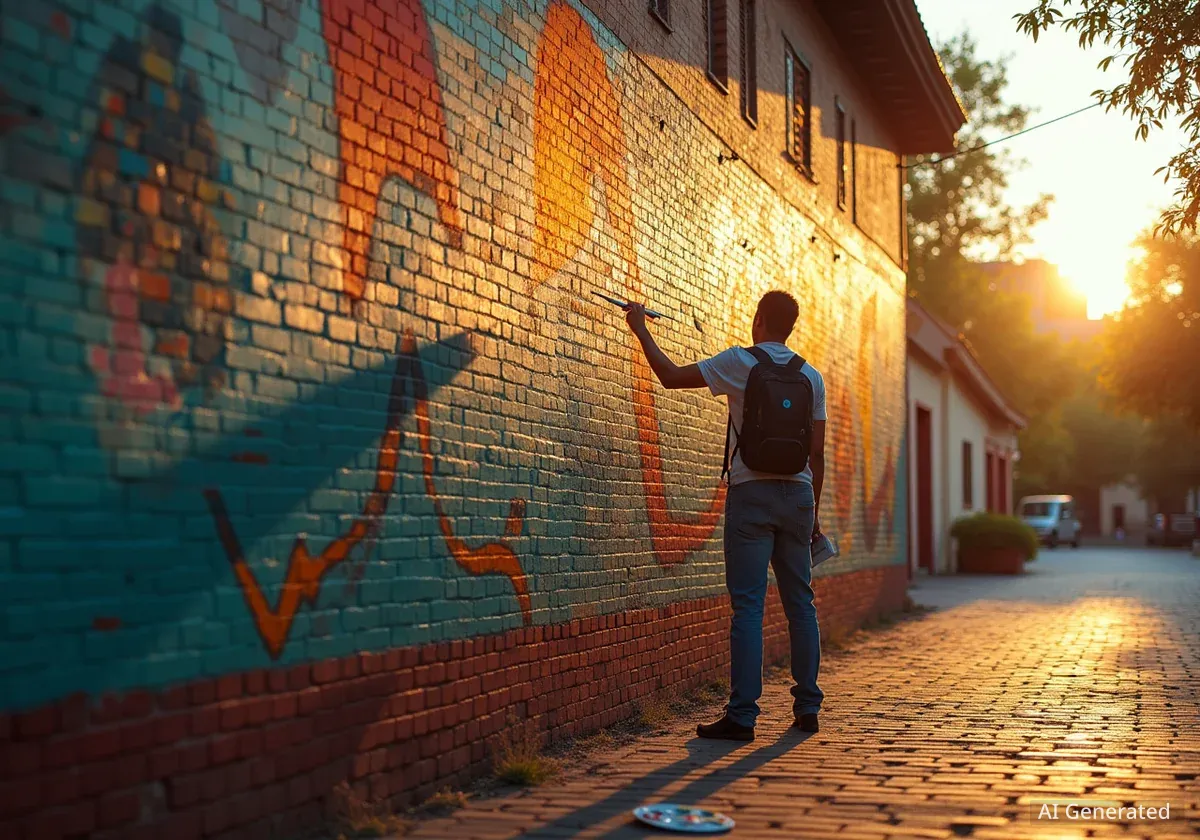
Jennifer Lofton, a former Abilene resident, recently returned to the city after a 33-hour drive from Kalispell, Montana, to complete a significant mural. The artwork honors victims of recent tragedies and includes a tribute to the late political commentator Charlie Kirk, reflecting Lofton's personal journey and artistic vision.
The mural project was deeply personal for Lofton. She stated that her faith heavily influenced her decision to create the artwork. Lofton aims to communicate important messages through her art, using her skills to express her beliefs and connect with the community.
Key Takeaways
- Jennifer Lofton drove 33 hours from Montana to paint a mural in Abilene.
- The mural honors victims of tragedies and includes Charlie Kirk.
- Lofton credits her faith and art for her positive life changes.
- The artwork took about three weeks to complete.
- Local reactions to the mural have been varied.
Artist's Journey and Inspiration
Jennifer Lofton grew up in Abilene, Texas. She later moved away after experiencing legal issues in the city. Lofton emphasized that she has maintained a positive path for over a decade. She attributes this change to her commitment to her art and her faith.
"I haven't been in trouble in 11 years… I think," Lofton stated. She added, "It's the art of Jesus that keeps me going on the right path." This personal transformation forms a core part of her motivation for creating public art.
Fact File
- Origin: Jennifer Lofton grew up in Abilene, Texas.
- Current Residence: Kalispell, Montana.
- Travel Time: 33-hour drive to Abilene for the project.
- Inspiration: Faith and a desire to communicate through art.
Artistic Background and Themes
Lofton has been painting for many years. Her artistic practice continued even during periods of incarceration. This long history with art highlights its central role in her life. Her work often addresses themes of resilience, memory, and spiritual guidance.
The recent mural features several notable elements. It includes images honoring victims of the Uvalde school shooting. It also remembers victims from Camp Mystic. Most recently, Lofton added a section dedicated to Charlie Kirk, a political commentator.
"I just felt that Jesus was leading me here to talk about Jesus through the Charlie Kirk mural," Lofton explained.
Background Information
The Uvalde school shooting occurred on May 24, 2022, at Robb Elementary School, resulting in the deaths of 19 children and two teachers. Camp Mystic is a well-known girls' summer camp in Texas. Charlie Kirk was a prominent conservative political commentator whose death prompted public discussion.
Mural Completion and Public Reaction
The entire mural project took approximately three weeks to complete. The final three nights before October 11 were dedicated to painting the section featuring Charlie Kirk. This concentrated effort underscores the importance Lofton placed on finishing the piece.
The artwork has generated various responses from local residents. Some community members have expressed strong support for the mural and its message. Others have voiced different opinions, particularly concerning the inclusion of Charlie Kirk.
Community Engagement and Support
Darla Avery, a participant in the project, shared her enthusiasm. "When I found out on Facebook that Jennifer was coming back to Abilene, I was elated," Avery said. She continued, "We love Charlie… Jennifer is playing a part in the revival that’s taking place after his assassination."
This quote shows a segment of the community's positive reception. It also indicates the strong feelings associated with Charlie Kirk's public persona and his followers' views.
- Mural Duration: Approximately three weeks from start to finish.
- Final Touches: Three nights spent on the Charlie Kirk section.
- Community Response: Mixed, with strong support from some residents.
Artist's Perspective on Controversial Elements
Lofton admitted she was not familiar with Charlie Kirk before his death. She began researching him afterward. She acknowledged that some of his past comments initially caused her discomfort. Several friends advised her against including him in the mural, citing concerns about his views, which they described as racist.
Despite these reservations and external advice, Lofton chose to proceed. She explained that she continued to listen to his commentary. She ultimately felt a spiritual compulsion to include him based on her own understanding and personal guidance. This highlights her independent decision-making process as an artist guided by faith.
Lofton's return to Abilene for this project was based on deep personal conviction. She stated that prayer was a key factor in her decision. This emphasizes the spiritual foundation of her artistic endeavors and her commitment to her hometown.
The mural stands as a testament to Lofton's personal journey, her artistic expression, and her desire to honor various individuals and experiences through her work. It also serves as a point of discussion within the Abilene community, reflecting diverse perspectives on public art and remembrance.
The artwork represents a blend of personal narrative, spiritual conviction, and public commentary. It invites viewers to consider the various elements and their meanings, fostering dialogue within the local area. Lofton's dedication to the project, despite the significant travel and potential for controversy, underscores her belief in the power of art to convey important messages.
The inclusion of different individuals, from tragedy victims to a political figure, shows the mural's broad scope. It aims to touch upon various aspects of public life and collective memory. Lofton’s work encourages reflection on how communities remember events and individuals.
Her story serves as an example of how personal experiences and artistic talent can converge to create meaningful public installations. The mural in Abilene is more than just paint on a wall; it is a narrative of faith, redemption, and artistic purpose.