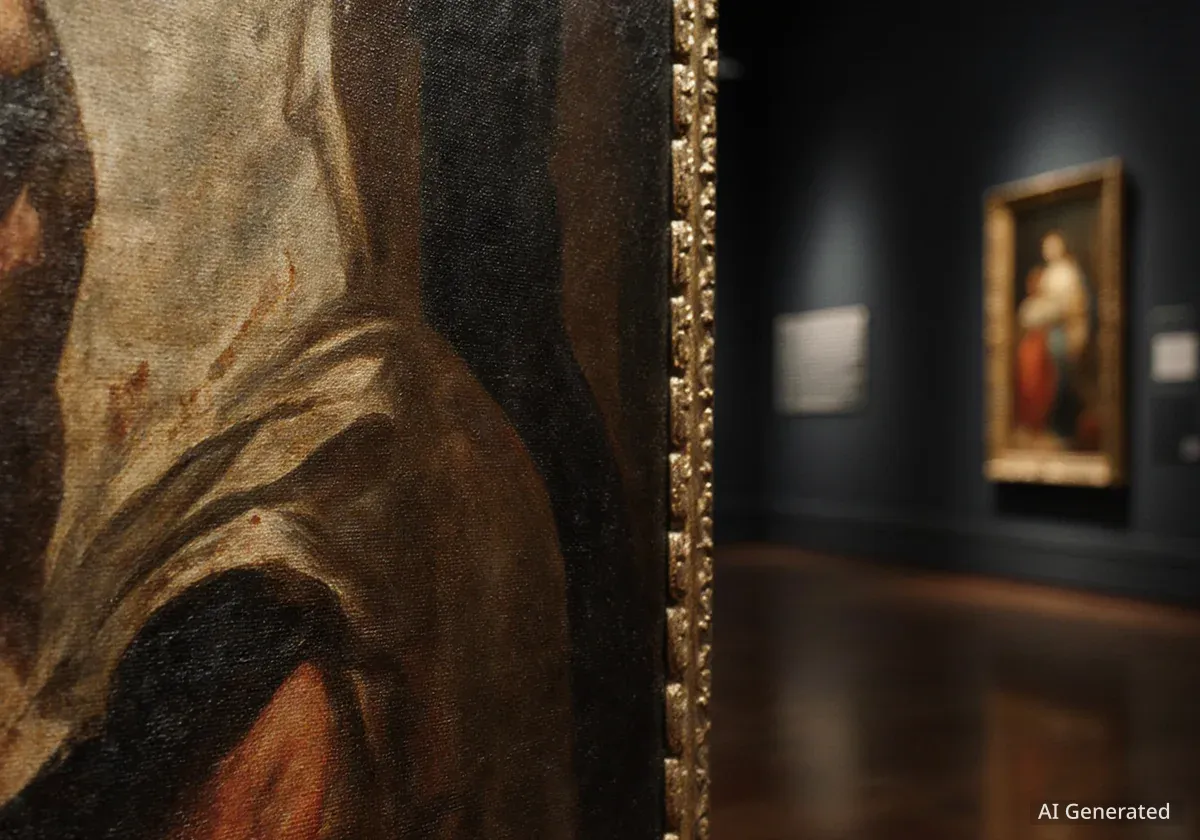



A painting once dismissed as a Rembrandt has now been officially recognized as a genuine work by the Dutch master. This confirmation comes after two years of intense scrutiny at the Rijksmuseum in Amsterdam, the city where the artist created the piece in 1633. The discovery adds a significant work to Rembrandt's known oeuvre.
The painting, titled "Vision of Zacharias in the Temple," was unveiled Monday, March 2, 2026, at the Netherlands’ national art and history museum. High-tech scans and meticulous analysis have conclusively proven its authenticity, highlighting the ongoing effort to verify historical artworks.
Key Takeaways
- "Vision of Zacharias in the Temple" is now confirmed as a Rembrandt.
- The Rijksmuseum undertook two years of detailed analysis.
- The painting was created in 1633 when Rembrandt was 27 years old.
- It has been out of public view for decades after being previously rejected.
- Advanced technology like macro X-ray fluorescence scans helped confirm its authenticity.
A Long Journey to Recognition
The painting has a complex history. It was bought by a private collector in 1961, just one year after art experts had deemed it *not* to be a Rembrandt. For decades, it remained largely out of the public eye, its true origins questioned and debated.
The Rijksmuseum's involvement began when the anonymous owner approached the institution. Initially, the owner simply wanted to know if the painting was Dutch. The journey from a general inquiry to a definitive Rembrandt confirmation underscores the painstaking process of art authentication.
"We always hope to find a new Rembrandt, but this happens rarely," stated Taco Dibbits, Director of the Rijksmuseum. "Making such a discovery is just like (finding) a needle in a haystack."
The surprise for the owner was immense. Dibbits noted, "He really didn’t know what he had. And then to discover that it’s a Rembrandt is something that’s amazing to experience." This sentiment highlights the emotional impact such a discovery can have on both collectors and the art world.
Painting Details
- Title: "Vision of Zacharias in the Temple"
- Artist: Rembrandt van Rijn
- Year Painted: 1633
- Artist's Age at Time of Painting: 27 years old
- Subject: Biblical story of Zacharias and Archangel Gabriel
The Scientific Process Behind the Confirmation
The confirmation of "Vision of Zacharias in the Temple" as a Rembrandt was not based on visual assessment alone. A rigorous scientific process, led by Jonathan Bikker, the museum's curator of 17th-century Dutch paintings, played a crucial role.
Researchers employed advanced techniques, including macro X-ray fluorescence scans. These scans allowed experts to analyze the chemical composition of the paint and the underlying layers, providing vital clues about the artist's working methods and materials.
Comparisons were also made with other authenticated works by Rembrandt. This comparative analysis helped to identify consistent patterns in his brushwork, use of pigments, and overall artistic style, strengthening the case for the painting's authenticity.
Evidence from Materials and Technique
Several key pieces of evidence emerged from the detailed study:
- Wood Panel Dating: The wood used for the painting's panel was definitively traced to a tree cut down before 1633. This date aligns perfectly with the year inscribed on the painting, confirming its historical context.
- Pigment Analysis: All the pigments identified in "Vision of Zacharias in the Temple" were consistent with those used by Rembrandt in other works from the same period. This indicates a match in his artistic palette.
- Layering and Brushwork: The way Rembrandt applied layers of paint and his distinctive brushwork were found to be identical to his techniques in other known masterpieces. This technical consistency is a strong indicator of authorship.
Rembrandt's Amsterdam Period
Rembrandt moved to Amsterdam as a young artist, establishing himself in the bustling capital. The year 1633 marks a significant period in his early career, where he began to gain recognition for his dramatic compositions and mastery of light and shadow. This painting reflects his growing expertise during this formative time.
The Biblical Narrative Depicted
The painting illustrates a significant biblical event. It portrays the high priest Zacharias within the temple, at the moment he receives a divine visitation.
The Archangel Gabriel appears before Zacharias, delivering a profound message: he and his wife, Elizabeth, will have a son. This son is destined to be John the Baptist, a pivotal figure in Christian tradition.
Rembrandt masterfully captures Zacharias's surprise and awe. The museum highlights how the artist uses light to emphasize the priest's startled expression, drawing the viewer's eye to the dramatic arrival of the Archangel Gabriel.
Impact on the Art World
The addition of "Vision of Zacharias in the Temple" brings the total number of known Rembrandt paintings to approximately 350. This discovery is a significant event for art historians, curators, and enthusiasts worldwide.
Curator Jonathan Bikker expressed optimism about future discoveries. "We’re not actively looking for new paintings by Rembrandt, but I think this gives us hope — not just us, but everyone who’s interested in Rembrandt," he remarked.
The painting will now be publicly displayed at the Rijksmuseum, where it is on long-term loan. Its inclusion among other masterpieces offers a unique opportunity for the public to appreciate a work that was nearly lost to history, now rightfully attributed to one of the greatest artists of the Dutch Golden Age.
This confirmation serves as a reminder that even after centuries, the art world can still yield astonishing discoveries, thanks to persistent research and evolving technological capabilities. It reignites the excitement of uncovering hidden gems from the past.