
The Louis Vuitton store in Cancún, Mexico, has revealed a significant architectural update, featuring a new facade designed by MATERIA + Gustavo Carmona. This renovation, coming twelve years after the boutique's initial transformation, uses precast concrete to reinterpret the brand's iconic flower motif. The design aims to create a dynamic exterior that changes with light and shadow, offering a fresh visual experience for visitors.
Key Takeaways
- Louis Vuitton Cancún store receives a new precast concrete facade.
- The design by MATERIA + Gustavo Carmona reinterprets the brand's iconic flower motif.
- A single modular unit creates a dynamic, light-sensitive surface.
- The facade acts as both a structural element and a vessel for light.
- This architectural change enhances the brand's identity and urban presence.
Reimagining an Iconic Brand Identity
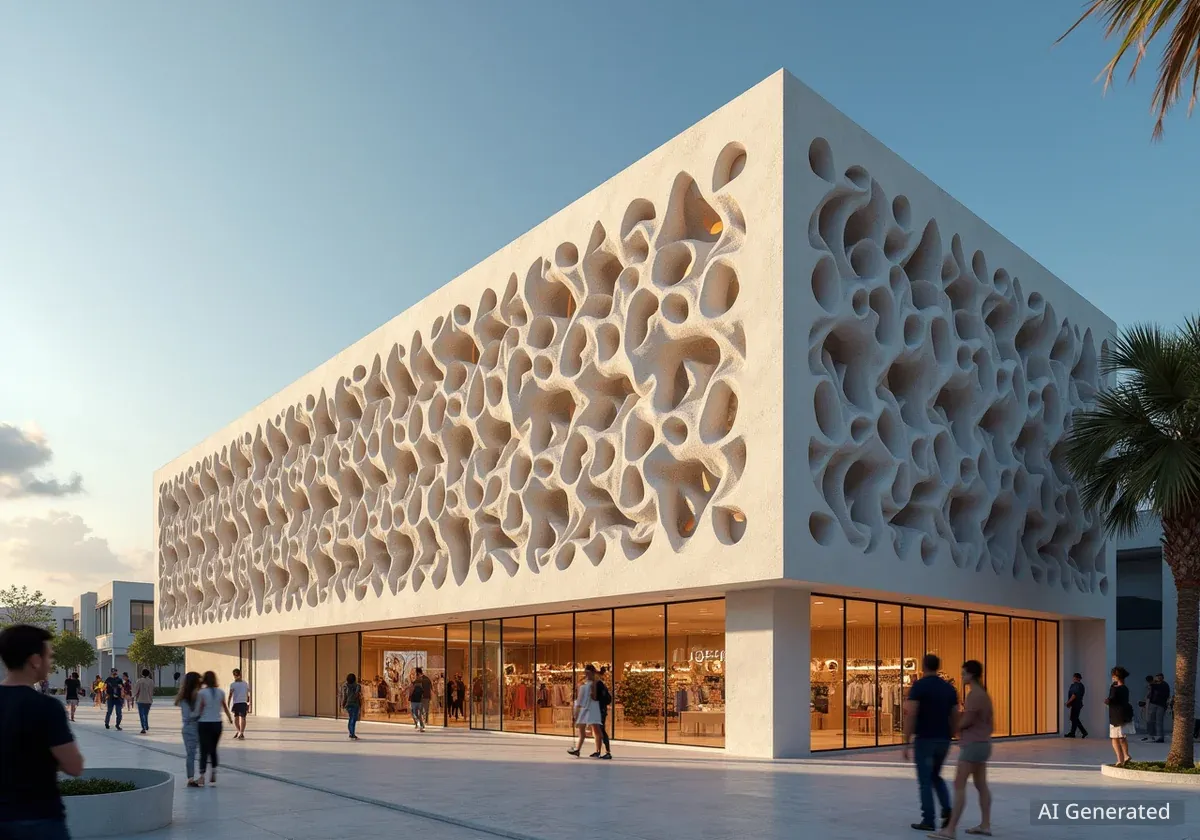
The new facade for the Louis Vuitton boutique in Cancún represents a sophisticated blend of design and material innovation. Architects MATERIA and Gustavo Carmona developed a system that uses precast concrete to sculpt a relief based on the famous Louis Vuitton flower. This artistic approach moves beyond a simple storefront, creating an architectural experience.
The previous wooden facade, installed over a decade ago, provided a different aesthetic. This current intervention evolves the material language, demonstrating how concrete can express intricate details and evoke emotion. The goal was to create a strong collective identity for the store.
"The design by MATERIA + Gustavo Carmona reinterprets the brand’s iconic flower motif as a sculpted relief that shifts constantly with the play of light and shadow, turning the exterior into a dynamic, sensorial surface."
The Modular Unit at the Core of the Design
Central to the facade's construction is a single, carefully designed modular unit. This unit is not merely decorative; it serves a dual purpose. It functions as a structural component, contributing to the facade's stability, and also as a vessel for light. Its precise engineering allows for a consistent and vibrant skin when repeated across the entire exterior.
Design Fact
- The facade's design relies on a singular, repeated modular unit.
- This unit integrates both structural support and light interaction.
- The repetition creates a continuous and rhythmic surface.
The Play of Light and Shadow
One of the most striking features of the new facade is its interaction with natural light. The sculpted reliefs are designed to catch and reflect sunlight, creating an ever-changing display of light and shadow throughout the day. This dynamic quality transforms the building's surface into a sensory experience for passersby.
According to the designers, this constant shift animates the boutique's exterior. The depth and variations in the concrete sculpture ensure that the facade appears different depending on the time of day and the angle of the sun. This enhances the visual interest and draws attention to the detailed craftsmanship.
Architectural Context
Precast concrete is a versatile material often used in modern architecture for its durability and ability to be molded into complex shapes. Its use in this project highlights its potential for both structural integrity and aesthetic expression, moving beyond its traditional industrial applications.
Elevating the Urban Fabric
The design team aimed for the facade to be more than just a branding element. They envisioned it as a living presence within Cancún's urban landscape. By engaging visitors through texture, depth, and atmosphere, the building becomes an active part of its environment.
This architectural approach seeks to create a memorable experience for anyone encountering the store. It adds a layer of sophistication and artistic expression to the commercial space, reinforcing Louis Vuitton's identity as a luxury brand that values design and craftsmanship.
Project Details and Collaborative Effort
The project, named "Louis Vuitton at La Isla," is located in Cancún, Mexico. The architectural firm MATERIA collaborated with Gustavo Carmona on the design. Jaime Navarro served as the photographer, capturing the intricate details and dynamic interplay of light on the new facade.
The successful execution of such a complex design relies heavily on precision manufacturing and installation of the precast concrete modules. The outcome is a testament to the collaborative efforts of the architects, engineers, and construction teams involved.
- Project Name: Louis Vuitton at La Isla
- Architects: MATERIA + Gustavo Carmona
- Location: Cancún, Mexico
- Photographer: Jaime Navarro
The transformation of the Louis Vuitton Cancún store underscores a trend in high-end retail architecture: using innovative materials and design techniques to create immersive brand experiences. This project exemplifies how a facade can become a focal point, drawing people in and communicating a brand's values through architectural form.
The new facade is expected to contribute positively to the aesthetic appeal of the retail area, providing a distinctive landmark. Its sensory qualities, driven by the interaction of light and shadow on the sculpted concrete, ensure that the building remains visually engaging throughout the day and night.