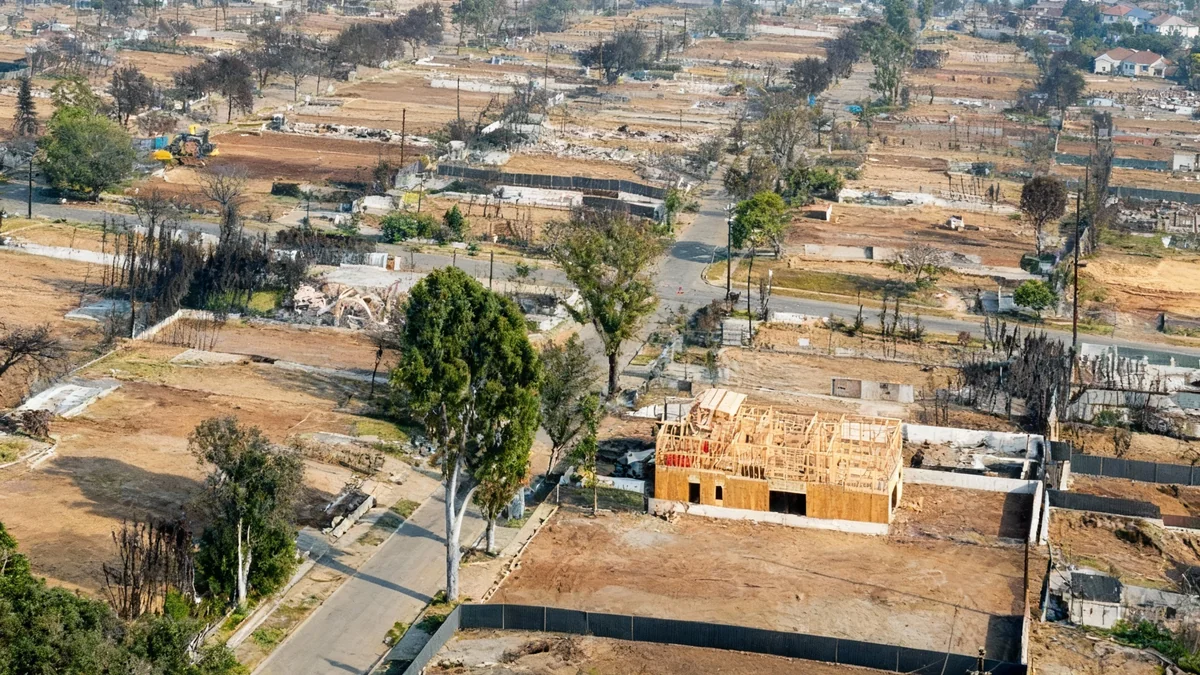
One year after devastating wildfires destroyed over 16,000 homes in Los Angeles, a rush to rebuild is creating deep concern among architects and safety experts. They warn that systemic issues, particularly restrictive insurance policies and a lack of cohesive planning, are forcing homeowners to reconstruct vulnerable timber-framed houses, effectively guaranteeing a future catastrophe.
Key Takeaways
- Architects on the ground in Los Angeles are raising alarms about the current wildfire rebuilding process.
- Insurance policies are a primary barrier, often requiring homeowners to replicate their previously destroyed, fire-vulnerable homes without upgrades.
- The city's guidelines for fire-resistant materials are recommendations, not mandates, leaving the choice to homeowners who may not be able to afford them.
- While some architects are pioneering resilient designs, experts say these isolated efforts are not enough to protect entire communities without systemic change.
The Insurance Trap
In the aftermath of the January 2025 fires that swept through areas like the Palisades and Altadena, the responsibility for rebuilding has fallen squarely on individual homeowners. Many have discovered their insurance policies are a significant obstacle to building safer homes.
According to local architect Zoltan Pali, insurance providers often stipulate that they will only pay to replace what was lost. This means if a homeowner had a timber-framed house, the policy may only cover the cost of another timber-framed house, even in a high-risk fire zone.
"You're not able to upgrade because they are saying 'we are only required to give you back what was there'," Pali explained. This policy creates a cycle of vulnerability, preventing the adoption of safer, more modern construction methods.
This insurance hurdle was identified by nearly every expert as the single largest barrier to creating a more fire-resilient Los Angeles. While the city is working to expedite permits, the fundamental financial constraints imposed by insurers leave many residents with no choice but to rebuild in a way that remains susceptible to fire.
City Measures and Their Limits
In response to the disaster, the Los Angeles Department of Building and Safety was directed to provide "recommendations to promote fire-resistant construction materials." However, these are not mandatory requirements. This makes the selection of materials like brick, concrete, or stucco a voluntary and often more expensive choice that many cannot afford, especially when combined with soaring construction costs.
A Fragmented Approach to Rebuilding
The rebuilding effort is largely characterized by individual projects rather than a unified, strategic plan. While the city and county have issued thousands of permits—1,236 in LA County and 1,494 in the city of Los Angeles—progress is slow, with only a handful of homes completed.
Architect Barbara Bestor, who is working on multiple rebuild projects, noted that economic pressures often dictate design. "You have to build with whoever can build it for you, for what you can afford," she said. "That can be a construction company where you choose one of three designs. I don't know what's governing those choices."
This disjointed approach means that while some innovative, fire-resistant homes are being built, they may be located next to structures built with conventional, flammable materials. Greg Kochanowski, another local architect, cautioned against this piecemeal strategy.
"Unfortunately, we have seen mostly isolated building proposals rather than systemic and holistic strategic thinking up to this point," Kochanowski stated. "A resilient house that is disconnected from infrastructure planning, code pathways, and insurance recognition risks remaining symbolic rather than systemic."
Ken Calligar, owner of a company that produces fire-resilient concrete building panels, was more direct. "They're absolutely guaranteeing the next catastrophe," he said, arguing that decades of prioritizing fast, cheap construction have left the region dangerously exposed.
By the Numbers: The LA Rebuild
- 16,000+ structures destroyed in the 2025 wildfires.
- 2,730 building permits issued across the city and county of LA for rebuilding.
- 130+ projects are now using a specific concrete-based, fire-resilient panel system, a significant increase from before the fires.
Pioneering Resilience on a Small Scale
Despite the systemic challenges, some architects and homeowners are pushing for change, one house at a time. These projects offer a glimpse of what a more resilient Los Angeles could look like.
Material Innovation
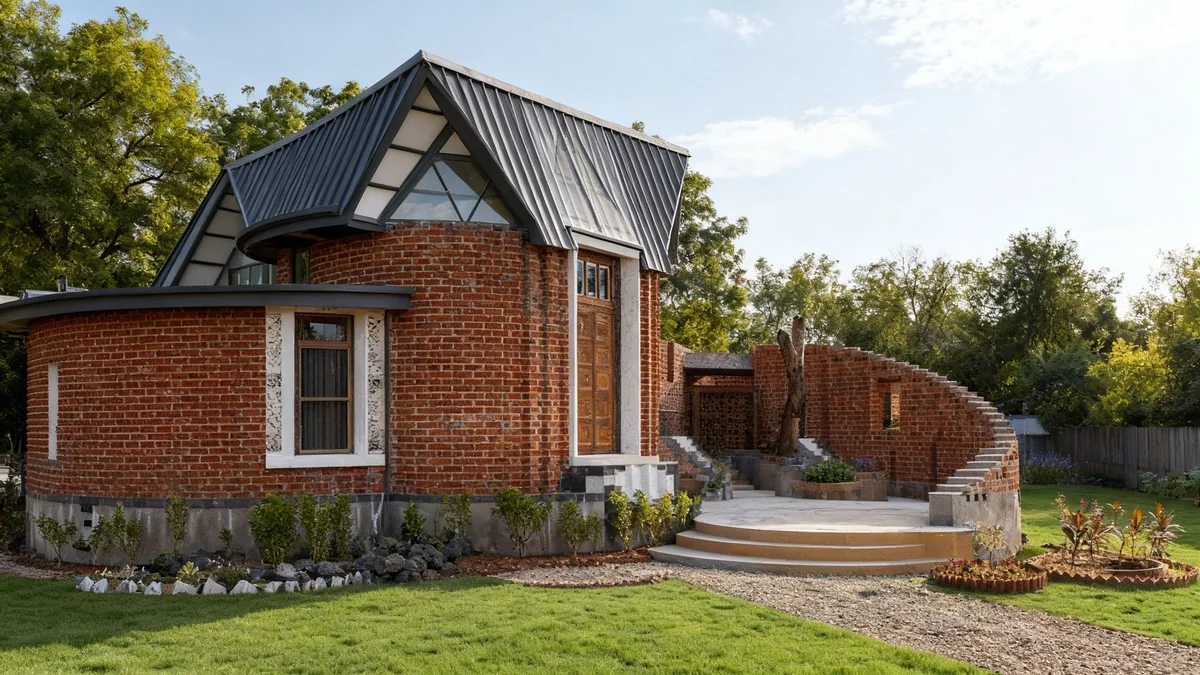
Some architects are actively moving away from the city's dominant wood-frame construction. Zoltan Pali is designing a home in the Pacific Palisades using brick for the entire structure, a notable choice for Southern California. Meanwhile, Ken Calligar’s firm has seen demand for its concrete panel system skyrocket, with over 130 projects underway in the fire-affected areas.
Low-Cost Design Strategies
Barbara Bestor is championing what she calls "low-cost resiliency"—small but impactful design choices that can dramatically improve a home's ability to survive a wildfire. These include:
- Eliminating Eaves: Removing overhangs where embers can collect.
- Clipping Rafters: Shortening the ends of roof beams.
- Using Spray Insulation: This allows for the elimination of roof vents, which are a primary entry point for embers.
- Strategic Cladding: One of her projects uses a wood frame but wraps it in fibreglass-faced gypsum board and stucco to create a fire-resistant shell.
"The houses explode from the inside, that's the issue," Bestor explained. "The embers get in, and then the house explodes." By sealing these entry points, the risk of ignition is significantly reduced.
The Need for a Broader Vision
While individual efforts are commendable, experts agree they are not sufficient. The larger conversation about neighborhood-level planning—such as creating defensible community spaces or parks as firebreaks—has yet to gain traction. There are no plans for managed retreat from the most high-risk areas.
The urgency for housing is a powerful force, with many residents' insurance-funded temporary housing benefits running out. This pressure often outweighs the desire for a slower, more thoughtful rebuilding process.
However, a potential silver lining has emerged. Both Pali and Bestor have observed a trend away from sprawling "McMansions." Homeowners are reconsidering their needs, opting for smaller, more efficient, and potentially safer homes.
"The best big-picture thing right now is a tilt away from McMansions," Bestor noted. This shift, born from necessity, could inadvertently lead to more manageable and defensible properties. But without changes to insurance regulations and a more unified city-wide strategy, Los Angeles may be rebuilding itself in the image of its last disaster.