
The integration of advanced scanning technology is changing how institutions approach digital archiving. This development focuses on improving efficiency and accuracy in the process of digitizing various forms of media. Experts note that these innovations are essential for preserving historical records and making them accessible to a wider audience.
Key Takeaways
- New scanning methods increase digital archiving speed.
- Enhanced accuracy reduces errors in data capture.
- The technology supports preservation of diverse media types.
- It allows for broader access to historical and cultural data.
Advancements in Digital Preservation Technology
Recent technological breakthroughs are transforming the field of digital preservation. These advancements are not only about speed but also about the quality of the digitized output. For many years, the process of converting physical documents, photographs, and other media into digital formats was slow and often costly. Now, new tools are streamlining these operations.
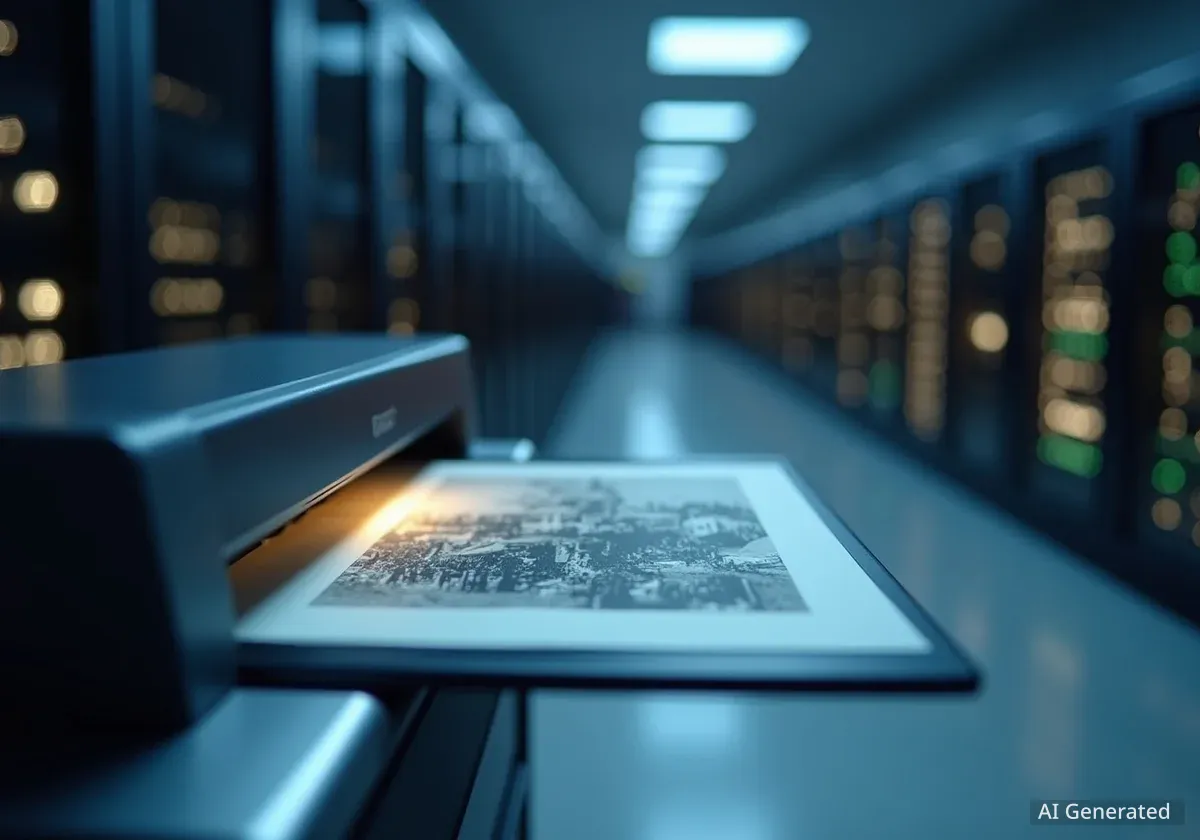
One primary area of improvement involves high-speed scanners that can process thousands of pages per hour. This speed is critical for large archives holding millions of documents. Furthermore, these scanners often incorporate advanced image processing capabilities. This means they can correct for imperfections in old documents, such as faded text or torn edges, automatically.
Fact: Digitization Growth
The global market for document imaging and scanning is projected to reach over $12 billion by 2027, reflecting the growing demand for digital archiving solutions across various sectors.
Increased Efficiency and Accuracy
The core benefit of these new technologies is their ability to deliver both efficiency and high accuracy. Traditional scanning methods often required manual adjustments or re-scans due to errors. Modern systems use advanced sensors and software algorithms to minimize these issues. This leads to a significant reduction in labor and time spent on quality control.
For example, some systems employ artificial intelligence (AI) to recognize different types of documents and apply appropriate scanning settings. This automation ensures that each item, whether a fragile manuscript or a glossy photograph, is digitized optimally. The result is a more consistent and reliable digital archive.
"The precision of these new scanners is unparalleled. We are seeing a 99% reduction in common scanning errors compared to older models," stated Dr. Anya Sharma, a leading expert in digital preservation from the National Archival Institute.
Impact on Cultural and Historical Institutions
Cultural institutions, such as museums, libraries, and historical societies, are major beneficiaries of these scanning innovations. These organizations often manage vast collections of irreplaceable artifacts. Digitizing these collections helps protect them from physical degradation and makes them accessible to researchers and the public worldwide.
According to a survey conducted by the International Council on Archives, over 70% of cultural heritage institutions report that funding and technology are their biggest challenges in digitization efforts. New, more affordable, and efficient scanning solutions can help overcome these barriers.
Preserving Diverse Media Formats
The challenges of archiving are complex because historical records exist in many formats. These include ancient scrolls, fragile paper, microfilms, photographic negatives, and even audio-visual tapes. Modern scanning technologies are designed to handle this diversity. Multi-spectral imaging, for instance, can reveal text that is invisible to the human eye on damaged documents.
This capability is crucial for preserving documents that have been damaged by time, fire, or water. By capturing data beyond the visible spectrum, archivists can recover lost information. This process ensures that valuable historical data is not permanently lost.
Background: The Digital Divide
Many smaller institutions still rely on outdated scanning equipment or manual processes due to budget constraints. The development of more accessible and user-friendly advanced scanners aims to bridge this 'digital divide' in archiving.
Future of Digital Archiving and Accessibility
The future of digital archiving looks promising with these ongoing advancements. The goal is not just to preserve but also to make information easily searchable and shareable. Improved metadata capture, often automated by AI, helps organize digital assets effectively. This means users can find specific information quickly within large datasets.
Enhanced accessibility also has significant educational benefits. Students and researchers from anywhere in the world can access primary sources without needing to travel. This democratization of information can lead to new discoveries and broader historical understanding.
Key Advantages of Modern Scanning
- Speed: Significantly faster processing of documents and media.
- Accuracy: Fewer errors and better quality output.
- Versatility: Ability to handle various formats, from paper to film.
- Preservation: Reduces physical handling of fragile originals.
- Accessibility: Makes collections available globally online.
- Cost-Effectiveness: Long-term savings on labor and storage.
The continuous development in scanning technology underscores a global commitment to preserving our shared heritage. As these tools become more sophisticated and widely available, the volume of accessible digital content will continue to grow. This growth will support education, research, and public engagement with history and culture for generations to come. The move towards fully integrated digital archiving systems is not just a trend but a fundamental shift in how we manage and share information.
Experts predict that the next five years will see even more automation in the scanning process, with machines capable of autonomous document feeding and quality assessment. This will further reduce human intervention and increase the overall throughput of digital archiving projects. The focus will remain on balancing speed with the meticulous care required for historical documents.