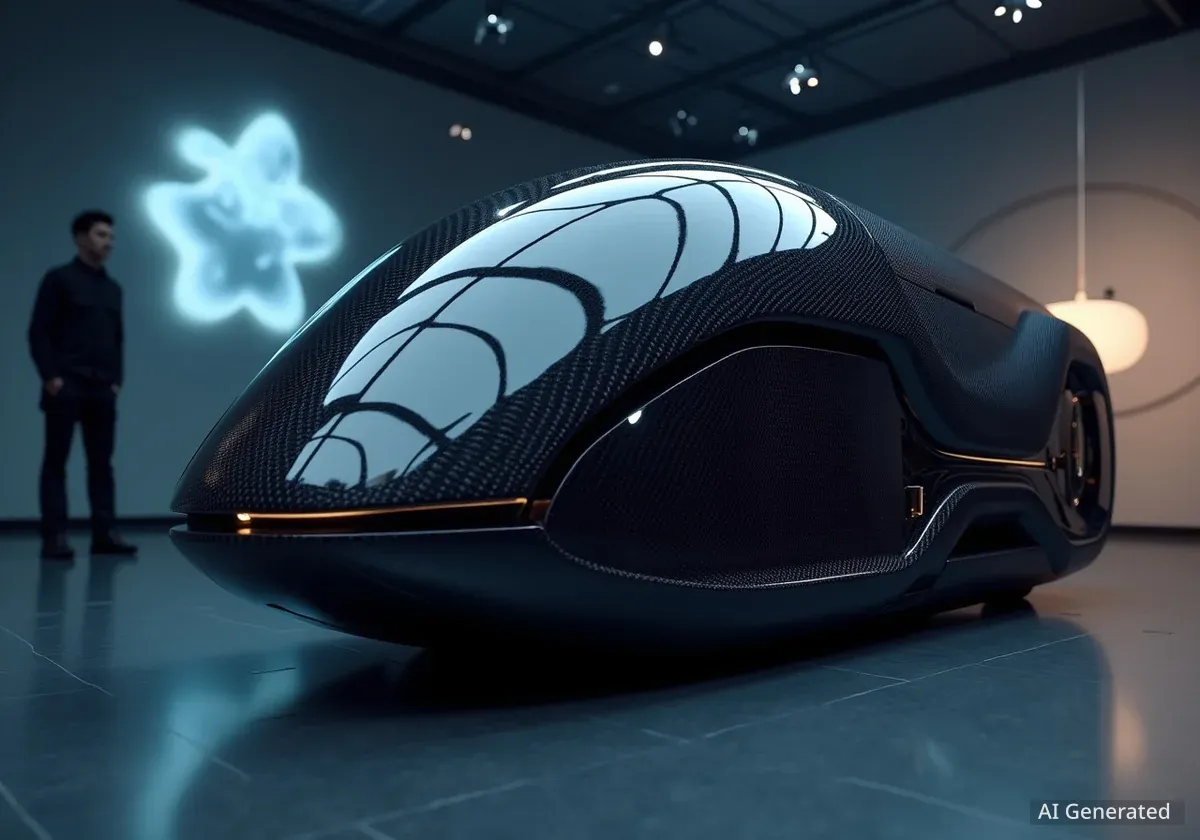




A Hungarian industrial design firm has unveiled a new concept for racing simulation that completely encloses the user in a dedicated pod. The design, which is slated for production, aims to provide an unprecedented level of immersion for gamers and professional drivers. The unit is scheduled for a 2026 market launch.
Developed by the design studio Flying Objects, the simulator features a lightweight shell constructed from advanced materials. Manufacturing will be handled by Kelako Engineering, another Hungarian company, marking a significant step forward in the evolution of high-end home and commercial simulation hardware.
Key Takeaways
- A fully enclosed racing simulator pod has been designed by Hungarian firm Flying Objects.
- The pod will be manufactured by Kelako Engineering, with a projected launch in 2026.
- Construction uses lightweight carbon fiber and fiberglass for the body, with a durable sheet metal frame.
- The design prioritizes total immersion, isolating the user from external distractions.
Pushing the Boundaries of Simulation
The world of racing simulation is constantly evolving, with hardware becoming more realistic and responsive. While high-fidelity steering wheels and pedal sets have become standard, the environment in which they are used often breaks the illusion. The new pod design from Flying Objects directly addresses this challenge.
By creating a fully enclosed cockpit, the system aims to eliminate external light and sound, allowing the user to focus entirely on the virtual racing experience. This approach moves beyond simple seat-and-frame rigs, creating a self-contained environment that mimics the isolating nature of a real race car cockpit.
The firm has also developed a variant that is not fully enclosed. However, the primary focus is on the immersive, encapsulated model, which represents the core innovation of the project.
The Growing Market for Sim Racing
Sim racing has expanded from a niche hobby into a global phenomenon, with professional esports leagues and training applications for real-world motorsports. Hardware manufacturers are continuously innovating to meet the demand for more realistic and immersive experiences, with products ranging from entry-level wheel stands to multi-thousand-dollar motion-platform rigs.
Advanced Materials and Engineering
To achieve its design goals, Flying Objects specified high-performance materials typically found in actual motorsports. The body panels of the pod are made from a combination of carbon fiber and fiberglass.
These materials were chosen for their exceptional strength-to-weight ratio. Using them ensures the pod is light enough for practical home use while remaining rigid and durable under the stress of intense gameplay. This composite construction provides a premium feel and contributes to the overall aesthetic of a professional-grade piece of equipment.
Material Profile
- Body Panels: Carbon Fiber & Fiberglass (Lightweight and strong)
- Frame & Rails: Folded Sheet Metal (Provides durability and a solid foundation)
The underlying structure relies on a frame and rails made from folded sheet metal. This provides the necessary stability for mounting high-torque steering wheels and load-cell pedals, ensuring the entire unit feels solid and flex-free during use. The combination of a composite shell and a metal frame balances weight, durability, and manufacturing feasibility.
The Path to Production
The transition from a design concept to a commercial product is being managed through a partnership with Kelako Engineering. This Hungarian manufacturing company will be responsible for producing the simulator pods for their planned 2026 launch.
This collaboration keeps the entire project—from initial design to final production—within Hungary. The two-year timeline until launch suggests a period of refinement, testing, and scaling up manufacturing capabilities to meet anticipated demand.
"The body parts are made of lightweight carbon fiber and fiberglass, while the frame and rails are made of folded sheet metal for durability."
Details regarding pricing and distribution channels have not yet been released. However, given the materials and design complexity, the product is expected to be positioned at the premium end of the consumer and commercial simulator market.
The Future of Immersive Gaming
This enclosed pod represents a clear direction for the future of simulation. As virtual reality (VR) headsets become more advanced and accessible, combining them with a physically isolating pod could deliver a near-perfect sensory experience.
Industry experts speculate on further enhancements that could be integrated into such platforms. Potential future developments could include:
- Haptic Feedback: Transducers integrated into the chassis to simulate engine vibration and road texture.
- Environmental Simulation: High-velocity fans to replicate airflow at speed or even misters to simulate rain.
- Modular Controls: The ability to swap the steering wheel assembly for other control interfaces, such as a flight yoke for flight simulators or specialized panels for heavy machinery or mech games.
As technology progresses, the line between virtual simulation and reality continues to blur. Fully enclosed systems like the one designed by Flying Objects are a significant milestone in that journey, promising an experience that is more engaging and believable than ever before.