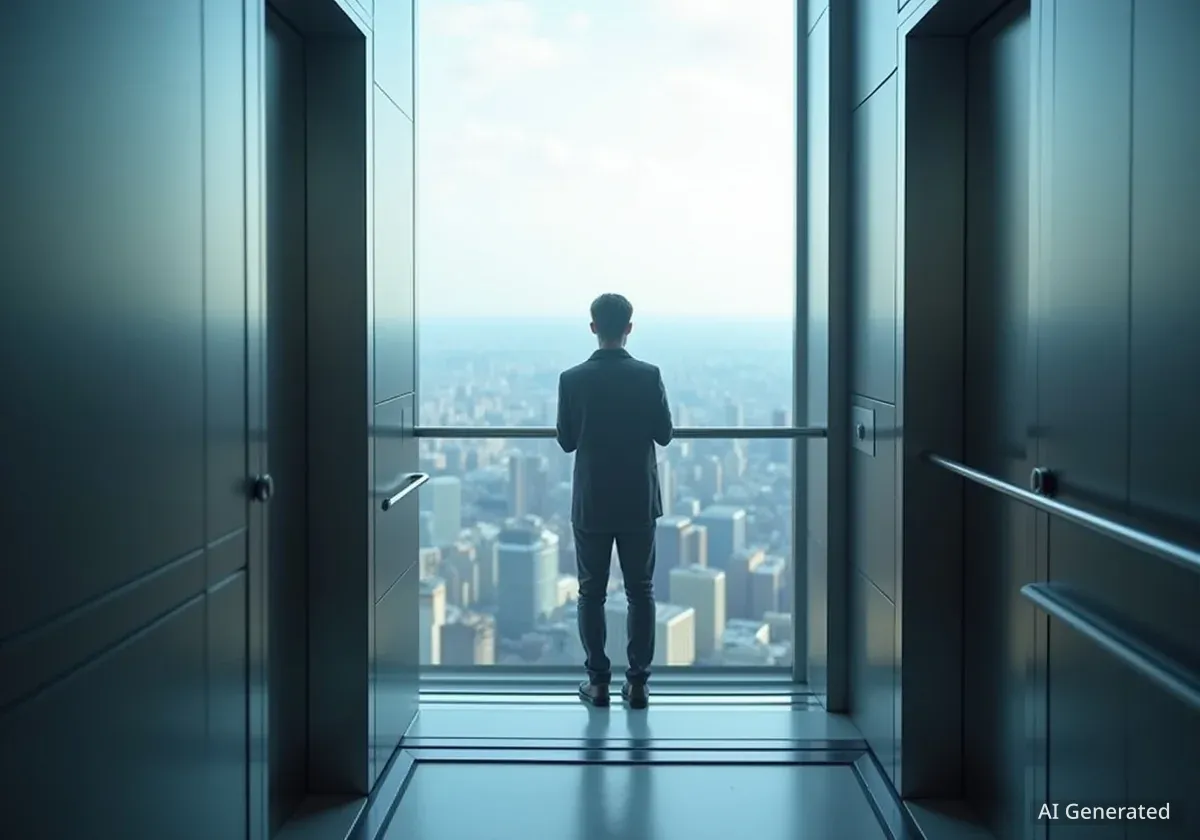




Saudi Arabia's Jeddah Tower is set to become the world's tallest building. Its elevators are also breaking records, designed to transport visitors over 630 meters to an observation deck. This journey is made possible by advanced engineering, specifically KONE’s UltraRope technology, which uses carbon-fiber ropes instead of traditional steel cables. This innovation makes the vertical transport system lighter, faster, and more energy-efficient, pushing the boundaries of skyscraper design and functionality.
Key Takeaways
- Jeddah Tower will be the world's tallest building.
- It will feature the world's highest elevator ride, reaching over 630 meters.
- KONE's UltraRope technology uses carbon-fiber ropes for elevators.
- This technology offers increased speed, efficiency, and reduced maintenance.
- The tower includes a 30-meter-wide circular sky terrace for public viewing.
Revolutionary Elevator Technology
The record-setting elevator journey within the Jeddah Tower relies on KONE's UltraRope system. This technology represents a significant change from standard elevator designs. It replaces heavy steel cables with lightweight carbon-fiber ropes. This shift has major benefits for very tall buildings.
The carbon-fiber ropes significantly reduce the overall weight of the elevator system. This reduction in moving mass leads to smoother rides for passengers. It also results in notable energy savings, which is crucial for a building of this scale.
Energy Efficiency
According to KONE's internal data, UltraRope technology can reduce energy consumption by approximately 15 percent on rides of 500 meters. For even longer journeys, reaching 800 meters, the energy savings can exceed 40 percent. This highlights the environmental and operational advantages of the new material.
Overcoming Challenges of Height
Traditional steel ropes face limitations in very tall structures. They are heavy, stretch over long distances, and require lubrication. These issues can lead to increased maintenance, slower speeds, and problems caused by building sway.
"UltraRope eliminates the disadvantages of existing steel ropes," KONE states, emphasizing its role in enabling elevator travel heights of up to 1,000 meters.
The carbon-fiber ropes used in UltraRope do not stretch. They also do not require lubrication. This means less maintenance and fewer operational problems. The technology helps maintain elevator performance even when the building sways due to wind or other factors.
The World's Highest Observation Deck
The Jeddah Tower will feature an observation deck located at roughly 630 meters above the ground. This deck, known as the sky terrace, is on Level 157. Once completed, it will be the highest public observatory in the world.
The sky terrace is a circular outdoor platform. It measures about 30 meters wide. Visitors to this platform will experience unparalleled views of the Red Sea coast and the surrounding Jeddah Economic City.
Previous Record Holder
Currently, the highest observation deck is in the Burj Khalifa. The Jeddah Tower's sky terrace will surpass this record, offering an even more elevated experience. The design aims to provide a distinct and memorable visit for all.
Fast and Efficient Ascent
To reach the sky terrace, visitors will use double-deck shuttle elevators. These elevators are designed for speed and efficiency, moving at up to 10 meters per second. This speed ensures a rapid ascent to the high observation point.
- Double-deck shuttles: These elevators carry passengers on two levels at once, increasing capacity.
- Smart destination grouping: This system reduces the number of stops each elevator makes. It groups passengers going to similar floors together.
- Reduced waiting times: The efficient system aims to minimize passenger wait times, offering a smoother experience than existing high-rise elevators, including those in the Burj Khalifa.
Architectural Vision and Design
The Jeddah Tower was designed by Adrian Smith + Gordon Gill Architecture. Thornton Tomasetti provided the structural engineering. This team also worked on the Burj Khalifa, but the Jeddah Tower represents an even more ambitious project.
The tower's design draws inspiration from desert plant growth. Its three-petal form tapers as it rises. This shape helps to reduce the effects of wind vortices. It also optimizes the building's structural performance, making it stable at extreme heights.
The facade of the tower features a high-performance curtain wall system. Carefully sculpted notches create self-shading pockets. These pockets also provide outdoor terraces at various levels, adding to the building's unique aesthetic and functionality.
A City within a Tower
The Jeddah Tower will have over 530,000 square meters of floor area. This vast space will house a variety of functions, creating a mixed-use environment. The building will include:
- Hotel rooms
- Office spaces
- Serviced apartments
- Condominiums
- Retail areas
- The record-breaking observation deck
Vertical transportation throughout the building will be handled by a total of 59 elevators and 12 escalators. This includes seven double-deck systems. During construction, two JumpLift elevators were used. These elevators moved people and materials inside the permanent shaft, saving months of construction time.
Jeddah Tower and Vision 2030
The Jeddah Tower is a central part of the 5.3-million-square-meter Jeddah Economic City development. This larger project aligns with Saudi Arabia's Vision 2030 plan. Vision 2030 aims to diversify the country's economy and reduce its reliance on oil.
After several years of delays, construction on the tower has restarted. New management teams and updated engineering contracts are now in place. This renewed momentum reflects the project's importance to the kingdom's future.
When finished, the Jeddah Tower will not only be the tallest building ever built. It will also showcase significant advancements in engineering and design. The smooth, carbon-fiber-powered elevator journey to its sky terrace will set new global standards for vertical transport in skyscrapers. Saudi Arabia is pushing the limits of architectural innovation with this ambitious project.