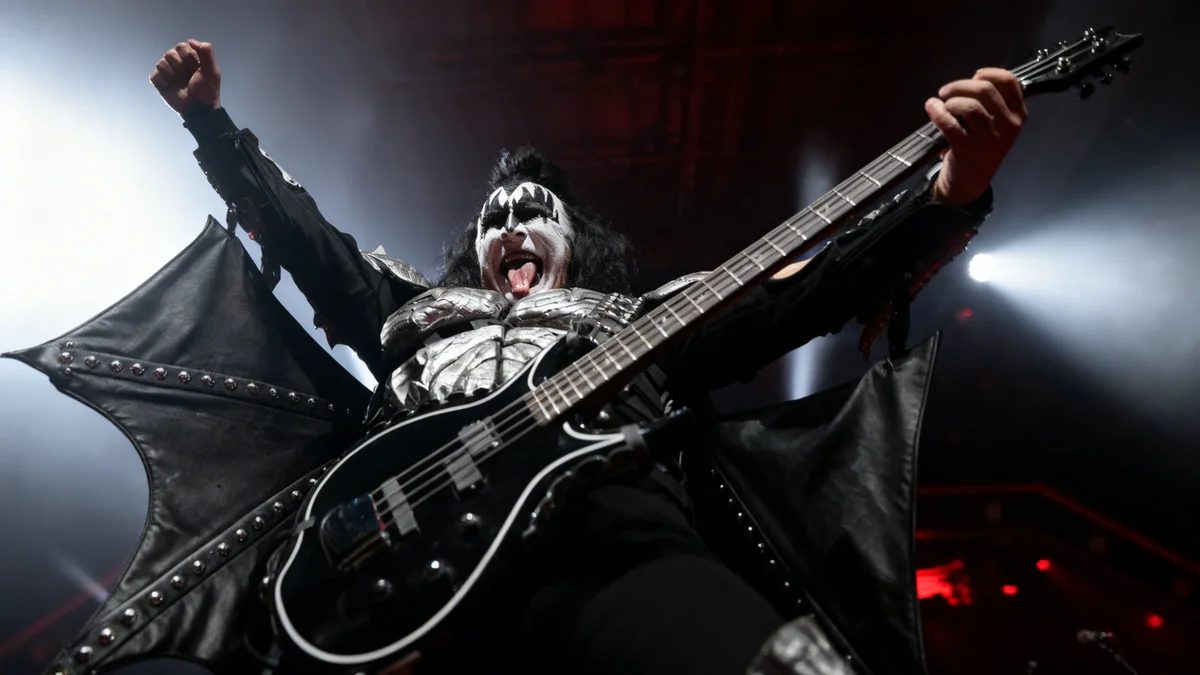



Gene Simmons, the iconic co-founder of Kiss, has once again sparked debate with his recent comments regarding rap music and its place in the Rock and Roll Hall of Fame. Simmons doubled down on earlier statements, emphasizing his view that hip-hop, along with genres like opera and symphony orchestras, does not belong in the institution dedicated to rock and roll.
His remarks, particularly the use of the word "ghetto," have drawn significant criticism. Simmons addressed the backlash, stating his words were misunderstood and that the term itself has Jewish origins.
Key Takeaways
- Gene Simmons reiterated his stance that rap music should not be in the Rock and Roll Hall of Fame.
- He defended his use of the word "ghetto," citing its Jewish origins and denying racist intent.
- Simmons highlighted rock and roll's roots in Black music.
- His comments follow a history of controversial statements regarding the Hall of Fame and other artists.
- Many prominent rock musicians, including Simmons himself, have Jewish heritage.
The Ongoing Rock Hall Debate
Simmons made his initial comments during a podcast appearance on February 7. He expressed frustration that bands like Iron Maiden, known for selling out stadiums, have not been inducted into the Rock and Roll Hall of Fame. He contrasted this with the inclusion of hip-hop artists, such as Grandmaster Flash.
"Ice Cube and I had a back and forth [about this]," Simmons stated. "He's a bright guy and I respect what he's done. It’s not my music. I don’t come from the ghetto. It doesn’t speak my language, and I said in print many times hip-hop does not belong in the rock and roll hall of fame nor does opera symphony orchestras."
Fact Check
Kiss was inducted into the Rock and Roll Hall of Fame in 2019. However, only the four original members were honored, a decision that caused friction within the band.
The line about the "ghetto" quickly drew widespread attention. While that specific segment appears to have been edited from the original online video, the sentiment remained. Simmons has faced similar situations before, notably after the deaths of Prince in 2016 and his former bandmate Ace Frehley in 2025, where he later offered apologies. This time, however, he remains steadfast.
"I stand by my words," Simmons told People magazine. "Let's cut to the chase. The word 'ghetto,' it originated with Jews. It was borrowed by African-Americans in particular and respectfully, not in a bad way.”
Denying Racist Undertones
Simmons firmly denied any racist intent behind his language. He emphasized the Jewish origin of the word "ghetto." He also pointed out the fundamental connection between rock and roll and Black music, stating that rock owes everything to its Black roots.
"Ghetto is a Jewish term," he explained. "How could you be [racist], when rock is Black music? It's just a different Black music than hip-hop, which is also Black music. Rock 'n' roll owes everything to Black music, statement of fact, period."
A History of Disagreement
Gene Simmons has a long and often contentious relationship with the Rock and Roll Hall of Fame. In 2012, he called the institution "a joke." His band, Kiss, was inducted in 2019, but the process was not without controversy, as only the original lineup was recognized, leaving out other significant members like Bruce Kulick and Eric Carr.
Kiss co-founder Paul Stanley also spoke about their induction, stating they were "treated like crap" that night. Despite the personal feelings, Stanley noted he accepted the induction primarily as a thank you to the band's dedicated fanbase.
Jewish Influence in Rock Music
Simmons's comments about the origins of the word "ghetto" highlight a less discussed aspect of rock and roll: the significant Jewish heritage of many of its most influential figures. From pioneers to modern stars, Jewish artists have played a crucial role in shaping the genre.
Prominent Jewish Rock Stars
- Bob Dylan: Born Robert Zimmerman, Dylan has a complex relationship with his Jewish heritage, which deeply influenced his early music.
- David Lee Roth: The charismatic Van Halen frontman was raised Jewish and often spoke about how his background influenced his showmanship.
- Gene Simmons: Born Chaim Witz in Haifa, Israel, Simmons's mother was a Holocaust survivor. He changed his name for his career but maintains reverence for his heritage.
- Paul Stanley: Born Stanley Harvey Eisen, his Jewish mother and her family fled Nazi Germany. Stanley emphasizes the importance of his heritage to his children.
- Lou Reed: The Velvet Underground frontman, born in Brooklyn, grew up with strict conservative Jewish parents, though he later found his "God" in rock and roll.
- Neil Diamond: Often called the "Jewish Elvis," Diamond is the son of Jewish immigrants and has sold over 100 million albums.
- Billy Joel: While not observant, Joel is Jewish by birth, with family history shaped by the Holocaust.
- Steven Adler: The former Guns N' Roses drummer, born Michael Coletti, is the son of a Jewish American mother.
- Paul Simon: Born to Hungarian-Jewish parents, Simon initially considered a legal career before music called him.
- Art Garfunkel: His singing career began at his family’s synagogue in Queens, New York.
- Geddy Lee: The Rush co-founder's parents were Jewish refugees who survived concentration camps during World War II.
- Perry Farrell: Born Peretz Bernstein, the Jane's Addiction frontman now studies Kabbalah and Torah daily.
- Leslie West: The Mountain co-founder, born Leslie Weinstein, saw music as his "church."
- Joey Ramone: Born Jeffrey Ross Hyman, he was one of two Jewish members of The Ramones, who often played at the Jewish-owned CBGB's.
- Marc Bolan: The T-Rex lead singer, born Mark Feld, was proud of his Polish-Russian Jewish heritage.
- Peter Green: Co-founder of Fleetwood Mac, born Peter Allen Greenbaum.
- Daryl Hall: Converted to Judaism in 1969 and maintains a connection to the faith.
- Mick Jones: The Clash guitarist is half-Jewish, with his maternal grandmother having fled Russian pogroms.
- Mark Knopfler: The Dire Straits frontman is half-Jewish, born to a Hungarian Jewish father.
- Robbie Robertson: The Band's guitarist discovered his biological father was Jewish.
- Adam Lambert: Raised in a mixed-faith household, celebrating Hanukkah and Passover.
- Mickey Hart: The Grateful Dead drummer, born Michael Hartman, celebrated communal Seders on tour.
- Lenny Kravitz: His father was of Russian Jewish ancestry, instilling respect for his heritage.
- Rick Rubin: The legendary producer was raised in an upper-class Jewish family on Long Island.
- Donald Fagen: The Steely Dan co-founder's Jewish upbringing influenced his diverse musical tastes.
- Jeff Tweedy: The Wilco frontman converted to Judaism in 2013, attending Hebrew school with his son.
- Max Weinberg: The E Street Band drummer spent significant time at the synagogue in his youth.
- Chris Stein: The Blondie co-founder's parents were Jewish, though they were atheistic.
- Bruce Kulick: A former Kiss guitarist, he attended Hebrew school in Brooklyn.
- Bob Kulick: Bruce's brother also contributed to several Kiss albums and other projects.
- Pat Smear: The Germs, Nirvana, and Foo Fighters guitarist is half-Jewish through his German immigrant father.
- Randy Newman: Grew up in a Jewish household, though he identifies as an atheist.
- Trevor Rabin: The Yes guitarist had a rich Jewish upbringing in South Africa.
- Robby Krieger: The Doors guitarist was born and raised in a Jewish family.
- Marty Balin: The Jefferson Airplane co-founder, born Martin Jerel Buchwald, was the son of a Jewish immigrant.
- Scott Ian: The Anthrax guitarist, born into a Jewish family, celebrates both Christmas and Passover.
- Buzz Osborne: The Melvins frontman has English, Italian, and Jewish lineage but doesn't subscribe to any single sect.
- Al Kooper: The Rock and Roll Hall of Famer, born Alan Peter Kuperschmidt, was a member of Blood, Sweat & Tears.
- Mike Bloomfield: Hailed as one of rock's greatest guitarists, he was a leader of Chicago blues.
- Josh Silver: The Type O Negative keyboardist was raised Jewish but identifies as an atheist.
These artists represent a diverse range of genres and eras, showcasing the enduring impact of Jewish culture and talent within rock and roll. Simmons's comments have inadvertently highlighted this rich history, adding another layer to the ongoing discussion about genre boundaries and cultural identity in music.