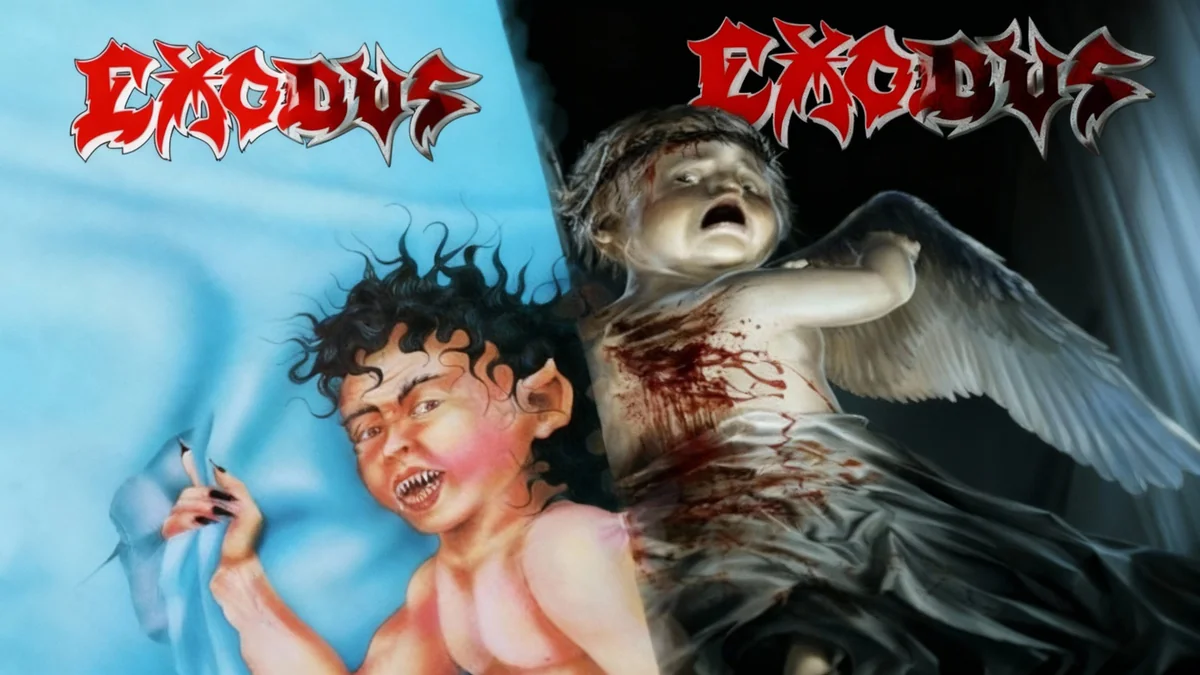




In 1985, the thrash metal band Exodus released "Bonded by Blood," an album that would become a cornerstone of the genre. Known for its raw energy and the unhinged vocals of Paul Baloff, it is widely considered a classic. However, in 2008, the band made a decision that continues to divide fans: they re-recorded the entire album with then-vocalist Rob Dukes, releasing it as "Let There Be Blood."
This move sparked a debate about artistic integrity, the legacy of classic albums, and the role of modern production. Years later, the controversy remains relevant, particularly as streaming services sometimes feature the newer version over the original, reigniting the discussion among a new generation of listeners.
Key Takeaways
- Exodus's 1985 debut, "Bonded by Blood," is a landmark album in thrash metal history, celebrated for its raw sound and Paul Baloff's iconic vocals.
- In 2008, the band released "Let There Be Blood," a complete re-recording of the classic album featuring vocalist Rob Dukes and modern production techniques.
- The re-recording was met with significant criticism from fans who felt it lacked the original's character, intensity, and historical authenticity.
- The debate persists today as some music streaming platforms occasionally play the 2008 version, frustrating purists who seek the original 1985 recording.
The Original's Unmistakable Legacy
When "Bonded by Blood" was released in 1985, it stood out even in a burgeoning thrash metal scene. Its aggression and speed were on par with contemporaries like Slayer and Metallica, but it possessed a unique, violent edge that felt genuinely dangerous to many listeners at the time.
A significant part of that identity was the performance of vocalist Paul Baloff. His style was not technically polished, but it was filled with a raw, chaotic energy that perfectly matched the frenzied guitar riffs of Gary Holt and Rick Hunolt. Baloff's snarling delivery made tracks like "Piranha" and "Strike of the Beast" sound like anthems from the edge of sanity.
The Voice of an Era
Paul Baloff's tenure with Exodus was brief. He was replaced by Steve "Zetro" Souza before the band's second album. Despite his short time with the band, Baloff's performance on "Bonded by Blood" cemented his status as a legendary figure in thrash metal. His unpredictable, aggressive vocal style is considered by many to be inimitable and essential to the album's classic status.
This combination of groundbreaking riffs and a one-of-a-kind vocal performance made "Bonded by Blood" a special moment in metal history. It was a product of its time, capturing a specific energy that many fans believe can never be replicated.
The Decision to Revisit a Classic
More than two decades after the original's release, Exodus, led by guitarist Gary Holt, entered the studio to re-record their debut. By 2008, the band's lineup had changed significantly. Rob Dukes, who had joined in 2005, was handling vocal duties. The band's stated intention was to give the classic songs the benefit of modern recording technology.
The result was "Let There Be Blood." The album featured the same songs, but with a polished, powerful production sound, tighter performances, and the vocals of Rob Dukes. Dukes, a competent vocalist with a more hardcore-influenced style, delivered a performance that was markedly different from Baloff's unhinged original.
A Tale of Two Vocalists
- Paul Baloff (1985): Known for a chaotic, high-pitched, and manic vocal delivery that was unpredictable and raw.
- Rob Dukes (2008): Employed a more controlled, lower-register, shouting style common in modern metal and hardcore crossover acts.
While technically proficient, the new recording was immediately met with resistance from a large portion of the fanbase. Critics argued that the very elements that made the original special—its rawness, its slightly chaotic feel, and Baloff's unique voice—were erased by the clean production and different vocal approach. The slick sound, they claimed, stripped the music of its intimidating and dangerous atmosphere.
The Fan Reaction and Ongoing Debate
The release of "Let There Be Blood" created a clear line in the sand for many Exodus fans. Purists saw it as an unnecessary, and even disrespectful, alteration of a masterpiece. They felt that re-recording a classic with a different singer was an attempt to overwrite history, comparing it to other controversial re-recordings in the metal world.
Others were more open to the project, viewing it as an interesting experiment or a way for the then-current lineup to pay homage to their own history. However, the dominant sentiment among longtime fans was one of disappointment. The new version, for all its sonic clarity, was seen as lacking the soul of the original.
The core issue for many is the idea that a classic album is a historical document. It captures a specific band, at a specific time, with a specific energy. Attempting to update it with modern tools and different personnel is seen by some as fundamentally missing the point of what made it a classic in the first place.
This debate has found new life in the age of digital streaming. Listeners on platforms like Stingray Music have reported that the service sometimes defaults to playing tracks from the 2008 re-recording instead of the 1985 original on its classic metal channels. This has become a point of frustration for fans who expect to hear the version they grew up with, only to be met with the Dukes-fronted recording. It serves as a constant reminder of the controversy and keeps the debate alive years after the album's release.
The Precedent of Re-Recordings in Music
Exodus is not the first band to re-record its own material, nor will it be the last. The practice is common across many genres for various reasons, including:
- Legal Issues: Bands sometimes re-record material to regain control of their master recordings from record labels.
- Technological Advances: Artists may feel their early work was hampered by poor production and want to present it with a better sound.
- Lineup Changes: A new lineup may want to put its own stamp on the band's classic songs.
However, when the original work is as beloved as "Bonded by Blood," such projects are almost always met with skepticism. Fans often form a deep emotional connection to the original recordings, and any deviation can feel like a betrayal of that memory. While the band's intentions may have been to honor the songs, the execution of "Let There Be Blood" ultimately proved that for many, you simply can't recapture lightning in a bottle.