

As the calendar turns to 2026, many are looking back at 2016, a year that marked a significant turning point for global events. Social media platforms are filled with ten-year-old photographs, prompting a collective reflection on a period now viewed with a complex mix of nostalgia and apprehension. This retrospective reveals a widespread sentiment that 2016 was not just a year of change, but a precursor to the instability that followed.
Key Takeaways
- 2016 is widely seen as a pivotal year, marking a shift towards global instability.
- The US presidential election of 2016 signaled rising far-right extremism and its potential impact.
- Many observers at the time expressed concerns that proved remarkably accurate about future events.
- A sense of lost normalcy and impending challenges defined the public mood even a decade ago.
The Unsettling Nostalgia of 2016
The act of revisiting old photos is a common New Year's tradition. However, the current wave of reflection on 2016 carries a unique weight. People are sharing images from a decade ago, often with captions suggesting a lost innocence or a premonition of difficult times ahead. This phenomenon highlights a collective memory of 2016 as a year when things started to change dramatically.
Many online users describe 2016 as the "last gasp of normality." This perspective suggests that the challenges of the subsequent years, including political upheaval and global health crises, were already subtly present. The contrast between personal memories and the broader geopolitical shifts is stark.
Did You Know?
The phrase "the worst year ever" was commonly used to describe 2016, even as people braced for more significant challenges ahead. This sentiment underscores a widespread feeling of unease.
Political Shifts and Global Impact
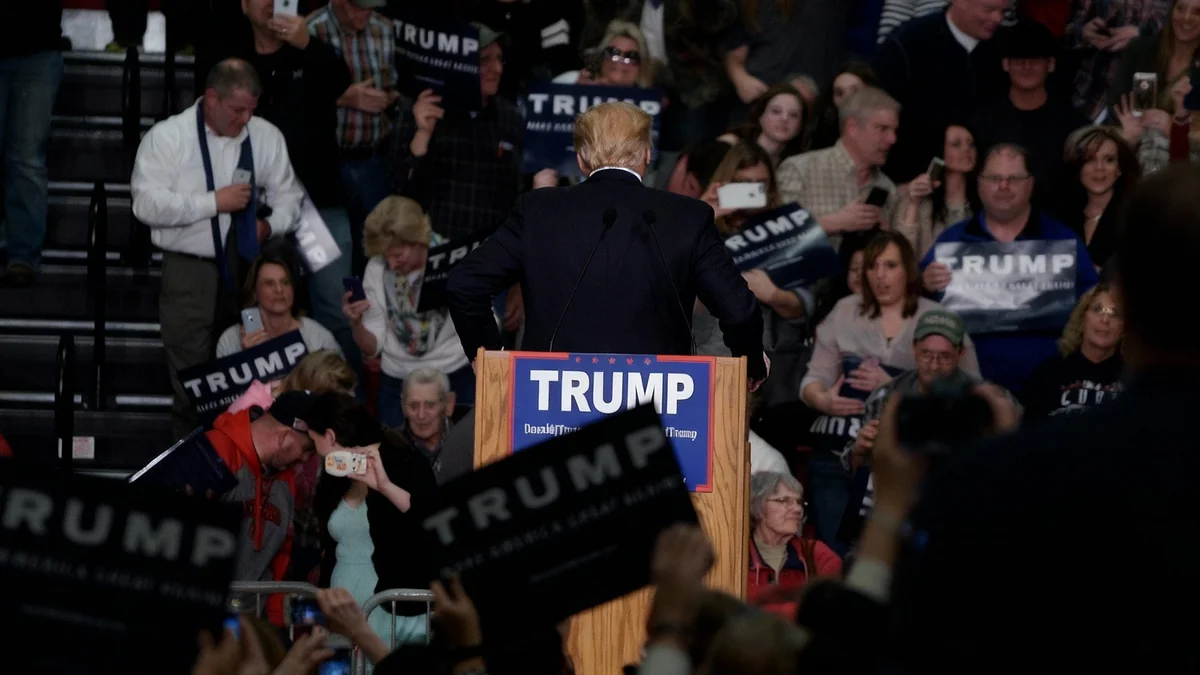
For the United States, the 2016 presidential election stands out as a critical moment. The rise of a candidate like Donald Trump, fueled by a growing wave of far-right extremism, was seen by many as a harbinger of geopolitical instability and economic uncertainty. Concerns were voiced about potential impacts on international relations and humanitarian policies.
Even before the election results, the viability of such a candidate was considered a troubling sign. Commentators and political leaders, including some within the Republican party, issued warnings about the potential consequences of a Trump presidency. These predictions, made in 2016, have proven to be remarkably accurate in the years that followed.
"I think there’s so much attention on looking back at 2016 because things lowkey fell off a cliff in this country there after," one X user recently wrote, echoing a widely held belief.
Early Warnings and Prescient Observations
The public discourse in 2016 showed a clear awareness of the potential trajectory. Hillary Clinton's campaign, for instance, struggled to connect with voters, while Donald Trump's populist rhetoric gained traction. Many recognized Trump, a figure known in tabloid circles since the 1970s, as a character whose actions could be anticipated.
While few could have predicted events like the Covid-19 pandemic, many other concerns materialized. These included significant changes to federal institutions, increased political polarization, and a shift in international alliances. The anxieties expressed a decade ago were not unfounded.
A Society Grappling with Reality
The year 2016 also marked a turning point in how society engaged with information. Concepts like "fake news" and "viral misinformation" began to gain prominence. These early tremors eventually paved the way for more complex issues like QAnon conspiracies, election denial, deepfakes, and state-sponsored AI-generated content.
Many who reflect on their younger selves from 2016 recall a time when there was a stronger belief in shared facts and objective truth. While anxiety was present, there was an underlying hope that reason would prevail. This hope feels weaker today, making the memories from 2016 particularly poignant.
The Broader Context
The societal shifts observed in 2016 were not isolated events. They were part of a larger global trend of rising nationalism, economic anxieties, and rapid technological change, all contributing to a sense of unpredictability.
Personal Narratives and Collective Experience
Beyond the political landscape, 2016 was a year of personal upheaval for many. The sense of things coming apart at the seams was not just abstract; it was felt in everyday life. Encounters that once seemed normal began to feel charged with new meaning, reflecting the broader societal divisions emerging.
The election night of 2016, for example, is remembered by many as a moment of profound shock and disillusionment. Conversations with strangers revealed the nascent stages of conspiratorial thinking that would become more widespread in later years. This personal experience mirrored the collective anxiety.
- The feeling of being "on the brink" was common.
- Many personal challenges coincided with national instability.
- The rise of conspiracist ideas was observed firsthand by individuals.
Looking Forward from a Decade Past
The reflections on 2016 are not just about lamenting a lost past. They also offer a chance to understand how much was already known or sensed about the future. The anxieties of a decade ago were a clear indication of the path society was taking.
While the hope for a reversal of some of the negative trends from 2016 may be diminished, the clear-eyed perspective of that time offers a potential source of strength. Remembering that people were aware of impending challenges suggests an inherent capacity to navigate difficult times.
The journey from 2016 to 2026 has been complex. The ability to look back and recognize the early signs of current realities means that society has, in some way, prepared itself. This historical perspective can inform efforts to build a more stable future.
Key Data Point
A significant percentage of online discussions about 2016 highlight a feeling that political and social norms began to erode rapidly after that year, marking it as a critical inflection point.