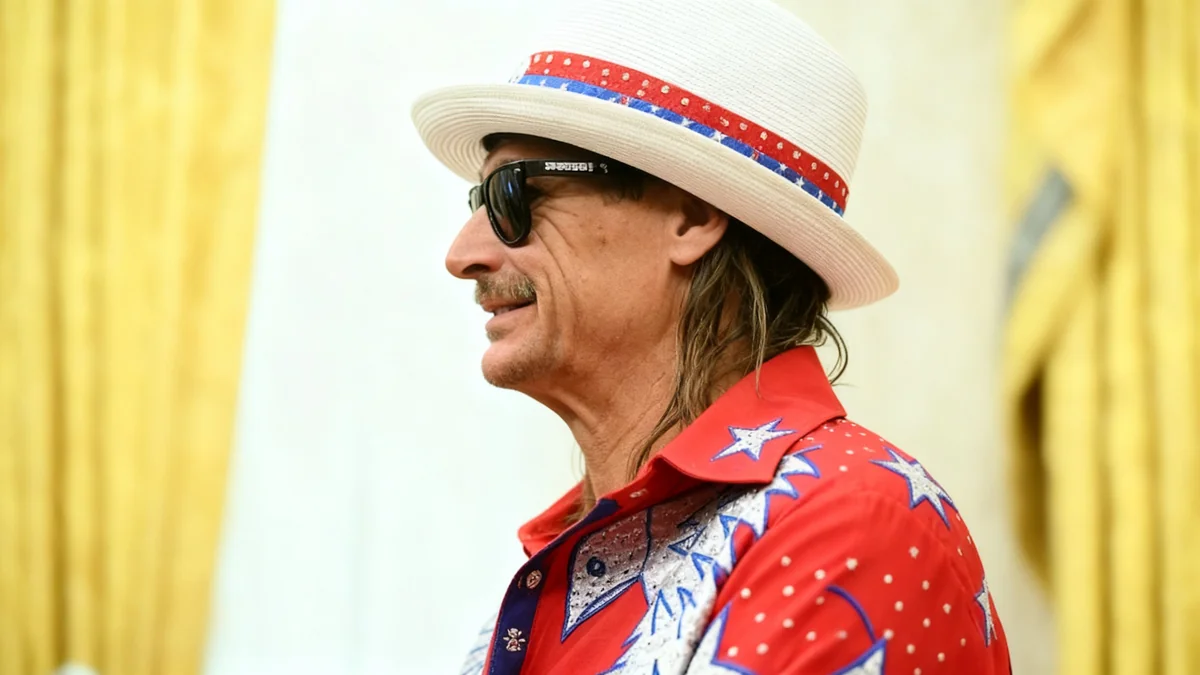

Controversy surrounds musician Kid Rock as lyrics from his 2001 song, "Cool Daddy Cool," have resurfaced ahead of his scheduled performance at Turning Point USA's All-American Halftime Show. The lyrics in question have drawn significant criticism on social media platforms.
Key Takeaways
- Kid Rock's 2001 song "Cool Daddy Cool" lyrics are causing controversy.
- The musician is scheduled to perform at Turning Point USA's alternate Super Bowl LX halftime show.
- Social media users have widely criticized the lyrics, questioning their content.
- Kid Rock responded indirectly with a quote attributed to Kobe Bryant about "loving the hate."
- Turning Point USA announced Kid Rock as a headliner for their event, which aims to "celebrate faith, family and freedom."
Lyrics Draw Public Scrutiny
The lyrics causing a stir come from Kid Rock's track "Cool Daddy Cool," released in 2001. A specific passage from the song has garnered renewed attention from the public and critics alike.
The lines include:
"On my cellphone I’m paid, G, can’t call me, just page me. Young ladies, young ladies, I like ’em underage, see. Some say that’s statutory / But I say it’s mandatory / My story ain’t that complex, two forties and a Rolex."These lyrics are now at the center of a heated online discussion.
Fact Check
Kid Rock's song "Cool Daddy Cool" was released in 2001, making the lyrics over two decades old. Despite their age, their re-emergence has ignited a contemporary debate.
Artist's Response to Criticism
In the wake of the growing backlash, Kid Rock addressed the situation, though not by directly discussing the specific lyrics. Instead, he chose an indirect approach, posting a quote on social media.
The quote, attributed to basketball legend Kobe Bryant, stated:
"learning to love the hate."This response has itself become a focal point of discussion, with many social media users interpreting it as a deflection rather than a direct explanation or apology.
Broader Context
The controversy unfolds as Kid Rock prepares for a high-profile performance. The choice of an indirect response has left many critics unsatisfied, leading to further online commentary and debate about accountability and artistic expression.
Social Media Reaction Intensifies
Public reaction on social media has been swift and largely critical. Users have expressed strong disapproval of the lyrics and questioned Kid Rock's decision to perform them or allow them to remain in his catalog.
One user commented, "Whats up Kiddie Rock! You like them young? Is your name in the files too?" This direct question highlights the serious nature of the allegations being raised by the public.
Another user criticized the artist's use of a Kobe Bryant quote: "Using Kobe’s name is crazy work smh so what’s up with those underage lyrics??" This indicates a perceived disrespect for Bryant's legacy while simultaneously demanding an explanation for the controversial song content.
The online conversation reflects a broader societal concern regarding the themes present in the song. Many users are calling for a more direct and transparent response from the musician.
Turning Point USA Halftime Show Details
Kid Rock's performance is set to take place at Turning Point USA's All-American Halftime Show. This event is positioned as an alternative to the traditional Super Bowl LX halftime show, which will feature Bad Bunny.
Turning Point USA, a conservative organization founded by Charlie Kirk, announced Kid Rock as one of the headliners earlier this week. The organization stated that the event aims to "celebrate faith, family and freedom."
The inclusion of Kid Rock as a headliner for an event promoting these values has drawn additional scrutiny given the nature of the resurfaced lyrics. The juxtaposition of the organization's stated mission with the artist's controversial past has fueled further debate.
Comparison to Super Bowl LX Halftime
The All-American Halftime Show offers an alternative viewing experience to the official Super Bowl LX halftime performance. While Bad Bunny is slated to perform at the main event, Turning Point USA has opted for artists like Kid Rock.
This provides a contrast in musical styles and cultural messages presented to audiences. The choice of performers reflects different ideological stances and target demographics.
Ongoing Public Discussion
The debate surrounding Kid Rock's lyrics and his upcoming performance continues to evolve. Public discourse online remains active, with many weighing in on artistic freedom versus social responsibility.
The incident underscores how past works by public figures can resurface and impact their current engagements, especially in a rapidly evolving digital landscape where content is easily accessible and scrutinized. The conversation is likely to persist as the date of the Turning Point USA event approaches.