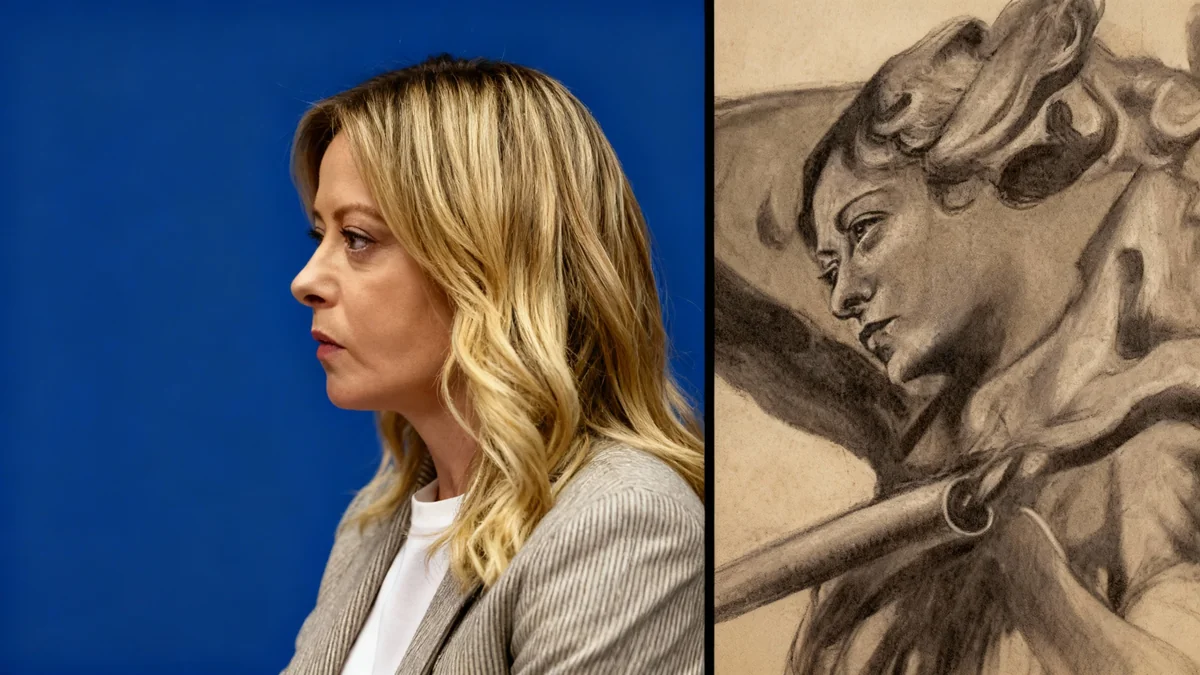
An investigation is underway in Rome after claims emerged that an angel in a restored fresco now bears a striking resemblance to Italian Prime Minister Giorgia Meloni. The artwork is located in a chapel within the Basilica of St Lawrence in Lucina. This development has prompted responses from both Italy's culture ministry and the Diocese of Rome.
The controversy began after a national newspaper published images of the fresco, highlighting a perceived change in the angel's features during its recent restoration. This has led to an official inspection and public statements from various parties involved.
Key Takeaways
- An angel in a Rome fresco now reportedly resembles Italian Prime Minister Giorgia Meloni.
- Italy's culture ministry has launched an official inspection into the restoration.
- The Diocese of Rome has expressed disappointment and is investigating who was responsible.
- The artist, Bruno Valentinetti, denies modeling the angel after the prime minister, stating he restored his original work.
- Opposition parties have called for a full investigation, citing concerns about propaganda.
Official Investigations Launched by Cultural and Religious Authorities
Italy's culture ministry has dispatched officials to the Basilica of St Lawrence in Lucina. Their task is to examine the fresco in question. The inspection aims to determine the exact nature of the restoration work performed.
Meanwhile, the Diocese of Rome has also reacted strongly to the claims. It released a statement expressing its "disappointment" regarding the situation. The Diocese confirmed it would conduct its own inquiry to identify those responsible for any unauthorized alterations.
Fresco Details
- Location: Chapel within the Basilica of St Lawrence in Lucina, Rome.
- Artist: Bruno Valentinetti.
- Original Painting Year: 2000.
- Recent Work: Described as a restoration following water damage.
Artist Denies Allegations of Modeling
Bruno Valentinetti, the 83-year-old artist responsible for the fresco, has publicly denied the accusations. He insists that the restored face is identical to the one he painted 25 years ago. Valentinetti stated that he merely touched up his original work, not creating a new likeness.
The artist's remarks were reported by news agency AGI. He questioned the basis of the claims, asking, "Who says it resembles Meloni?"
Prime Minister Meloni Responds to the Controversy
Prime Minister Giorgia Meloni herself commented on the unfolding story. She took to Instagram to address the alleged resemblance. Meloni posted a message saying she was "definitely not like an angel," accompanied by a laughing emoji.
Her lighthearted response comes amid a serious investigation into the artwork. The incident has quickly become a topic of national discussion, highlighting the intersection of art, politics, and public perception.
Background on Church Art and Patronage
Historically, artists often included portraits of patrons, prominent figures, or even themselves in religious artworks. This practice, while common in past centuries, is generally not expected in modern church restorations, especially without explicit approval from ecclesiastical authorities. The current controversy touches upon the delicate balance between artistic freedom and the sanctity of religious art.
Concerns Raised by Opposition Parties
Opposition parties in Italy have swiftly called for a thorough investigation into the fresco. They view the situation with concern, suggesting potential misuse of art for political purposes.
Irene Manzi of the Democratic Party described the situation as "unacceptable."
The Five Star Movement also weighed in, stating that art should not become "a tool for propaganda." These parties emphasize the importance of maintaining the integrity of cultural heritage, regardless of whether the depiction truly resembles the prime minister.
Culture Minister Orders Technical Inspection
Culture Minister Alessandro Giuli has taken direct action. He ordered "technical officials" to inspect the painting. The goal is to ascertain the precise nature of the intervention. This step will help determine any necessary next actions, potentially including further restoration or disciplinary measures.
The ministry's involvement underscores the cultural significance of the basilica and its artworks. Any unauthorized modification to such a site is a matter of public interest and regulatory concern.
Diocese Expresses Disappointment and Investigates
The Diocese of Rome confirmed it had been aware of the restoration work. However, it stated that it had been assured no additions or changes would be made to the original artwork. The Diocese's statement, shared by news agency Ansa, indicated that the modification of the cherub's face was the decorator's initiative.
Crucially, the Diocese clarified that this initiative was "not communicated to the competent authorities." This suggests a potential breach of protocol or agreement during the restoration process.
Cardinal Baldo Reina, the Pope's Vicar for the Diocese of Rome, will lead an immediate investigation. The aim is to determine any possible responsibilities of those involved. The Cardinal has also distanced himself from earlier statements made by Monsignor Daniele Micheletti, the parish priest.
Monsignor Micheletti had downplayed the controversy, noting that "Painters used to put all sorts of things in frescoes." The Diocese's firm stance indicates a more serious view of the matter.
The Diocese reiterated its "commitment to the protection of its artistic and spiritual heritage" against misuse or exploitation. This commitment highlights the importance placed on preserving the historical and religious authenticity of its artworks.
The unfolding investigation will likely provide more clarity on how the alleged changes occurred and what consequences might follow for those responsible. The incident serves as a reminder of the careful stewardship required for historical and religious art.