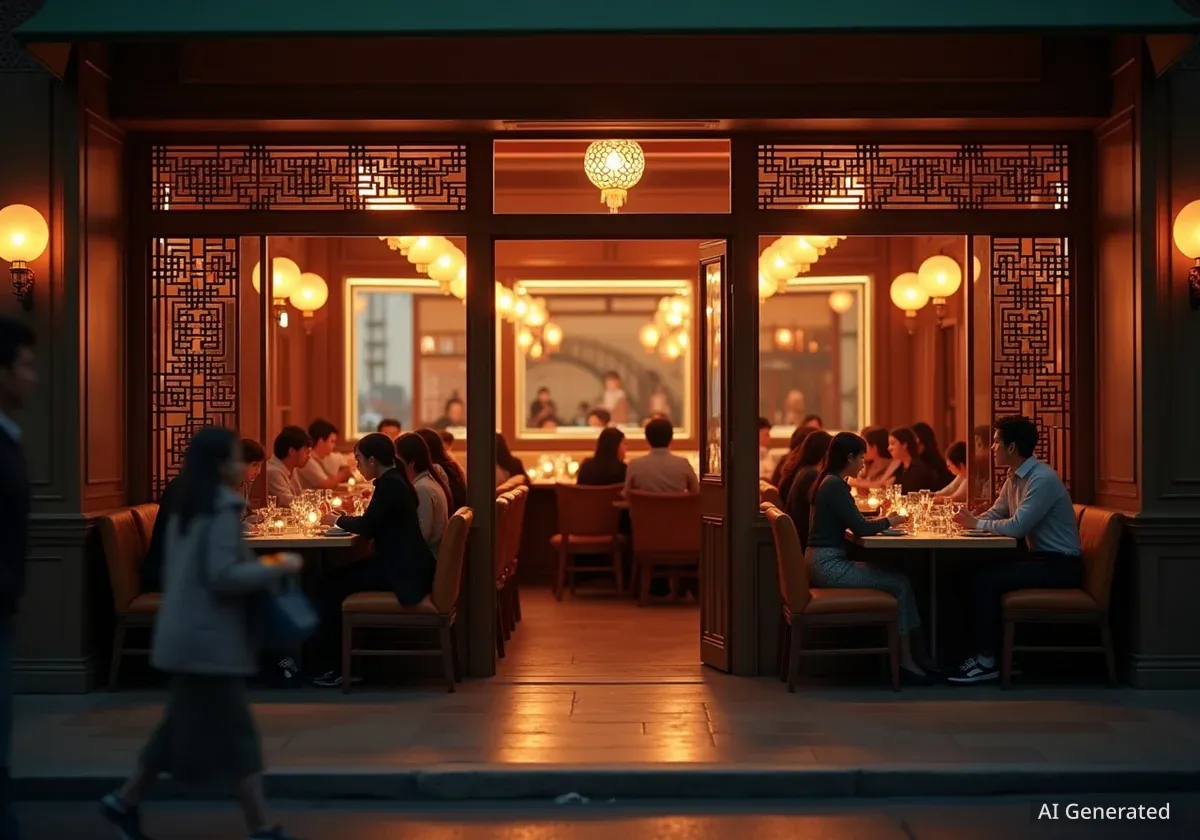



Wo Hop, a nearly 90-year-old Chinese restaurant in New York City's Chinatown, has opened a new street-level dining room. This expansion marks the first time in its history that the establishment has moved beyond its traditional basement location. Spaced Agency, a US architectural studio, handled the design, approaching the project as an "architectural archaeology" by drawing inspiration from the building's existing character and materials.
Key Takeaways
- Wo Hop, established in 1938, has expanded to street level for the first time.
- Spaced Agency designed the new space, referring to it as "architectural archaeology."
- The design incorporates elements from the original basement and facade, such as red tiles and an illuminated awning.
- The expansion aims to preserve the restaurant's legacy while offering a new dining experience.
- Structural upgrades and facade restoration were part of the project.
A New Chapter for a Historic Eatery
Wo Hop has been a cornerstone of New York City's Chinatown since it first opened its doors in 1938. For decades, it has served classic Chinese-American dishes like chow mein and egg foo young from its distinctive basement dining room. This lower-level space is known for its vibrant tables and walls covered with memorabilia left by generations of diners.
The new street-level dining room, named Wo Hop Upstairs, represents a significant development for the restaurant. It allows more patrons to experience the eatery's unique atmosphere and food, bringing its presence directly to Mott Street.
Restaurant History
- Opened: 1938
- Original Location: Basement off Mott Street
- Known For: "No frills" dining, traditional Chinese-American dishes
- New Expansion: First street-level dining room in nearly 90 years
Design Inspired by Legacy
Justin Ng, director at Spaced Agency, explained the design philosophy behind Wo Hop Upstairs. He stated that the project was deeply informed by the building's existing character and materials. The studio aimed to extend what was already present, rather than introducing entirely new elements.
"Spaced Agency approached the expansion as an act of architectural archaeology," the studio said. "Rather than introducing new elements, the design emerged by extending what was already there."
This approach ensured that the new space feels connected to the restaurant's long history. It respects the visual language that Wo Hop has maintained for almost nine decades.
Key Design Elements
Several design choices directly reference the original basement space and the building's exterior. A line of bright-red tiled booths runs along one wall, echoing the red guardrails of the basement entrance. Above these booths, an illuminated shelving unit acts as an interior extension of the distinctive boxed awning that hangs over the original basement entry.
A thin strip of the same red tile used for the booths also runs along the bottom of a large picture window facing the street. This creates a visual connection between the interior and exterior. The color red is prominent, reflecting its importance in Chinese culture and its existing use on the building.
Chinatown's Cultural Significance
New York City's Chinatown is one of the oldest and largest Chinese communities outside of Asia. It is a vital cultural and economic hub. Restaurants like Wo Hop play a significant role in preserving the neighborhood's heritage and attracting visitors. Efforts to maintain the Chinese American roots of the area are ongoing, especially amidst new development projects.
Preserving Atmosphere and Function
Other design details contribute to the new dining room's unique yet familiar feel. A red-and-white rope divides bright red wainscoting from white walls, adding a traditional touch. Underneath the booths, a teal and white-checked floor provides a subtle contrast.
The walls of Wo Hop Upstairs were deliberately left blank. This decision was made to allow future diners to contribute memorabilia, continuing the tradition seen in the basement. This invites the restaurant's legacy to grow above ground, incorporating new stories and memories.
The owners have already started filling the shelving unit with various items. Towards the front, 'lucky cat' figurines are displayed. Framed photographs of staff members are placed in the middle. Personal collectibles belonging to the owners fill the back sections.
Operationally, diners can move between the two spaces using the street-facing entrances. Restaurant staff, however, utilize a back-of-house staircase and a dumbwaiter to efficiently navigate between the two levels. The single kitchen remains located in the basement, streamlining food preparation for both dining areas.
Structural Upgrades and Facade Restoration
Beyond the aesthetic changes, the project included crucial structural upgrades to the basement. The restaurant's 1900s brick facade also underwent restoration. These improvements ensure the building's longevity and safety while preserving its historic appearance.
According to Spaced Agency, Wo Hop maintained operations for most of the renovation period. This allowed the restaurant to uphold its long-standing tradition of nearly round-the-clock service, minimizing disruption to its loyal customer base.
The expansion of Wo Hop contributes to the ongoing efforts to preserve the cultural identity of Chinatown. Spaced Agency also recently completed a community center in the neighborhood, further demonstrating their commitment to the area's unique character. Residents continue to advocate for the protection of their Chinese American roots, particularly as large development projects, such as a nearly 300-foot-tall jail, are underway nearby.