

A small red chalk drawing, no larger than a hand, depicting a single foot, has sold for an astounding $27.2 million at a Christie's auction in New York. The drawing was identified as a preparatory sketch by Renaissance master Michelangelo for his iconic frescoes on the Sistine Chapel ceiling.
The significant sale highlights the enduring appeal and rarity of works by the legendary artist, especially those offering a direct glimpse into his creative process. This particular sketch provides a unique connection to one of art history's most celebrated masterpieces.
Key Takeaways
- A small Michelangelo sketch sold for $27.2 million, including fees.
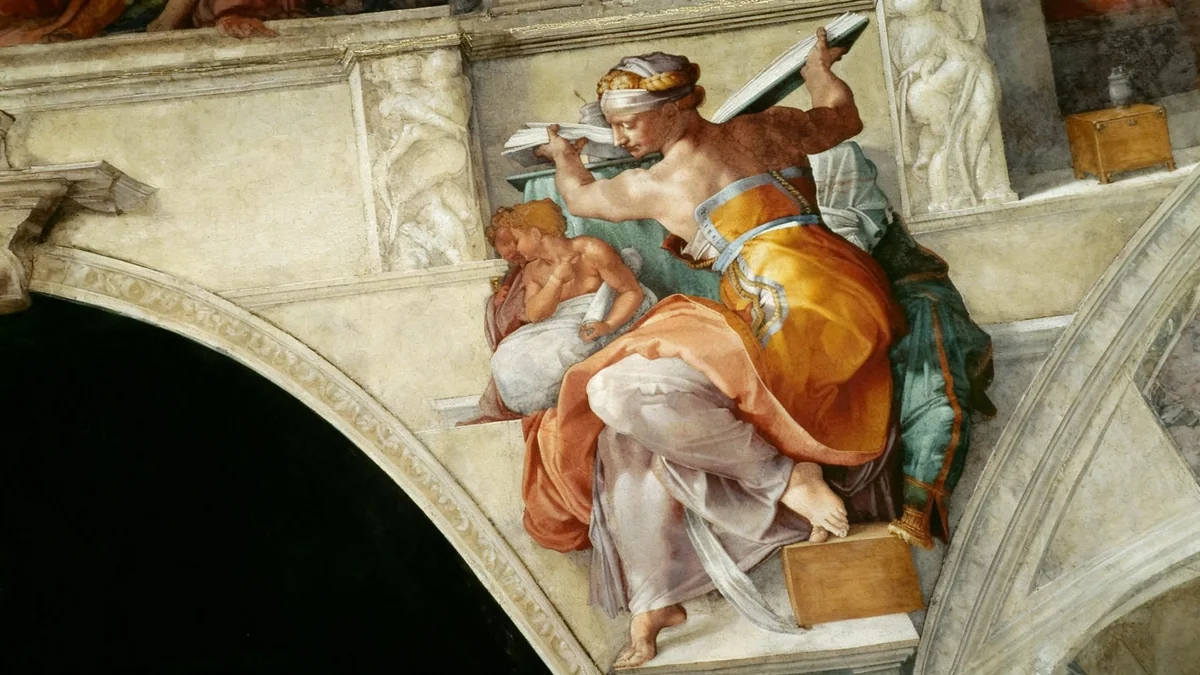
- The drawing is a preparatory study for the Libyan Sibyl figure on the Sistine Chapel ceiling.
- It was owned by the same family for over 200 years.
- Only about 50 Sistine Chapel-related sketches remain, with no others ever coming to auction.
Rare Glimpse into a Master's Mind
The drawing, created with red chalk, shows a foot with its heel slightly lifted and a subtle shadow beneath. This precise detail corresponds directly to the foot of the Libyan Sibyl, one of the monumental figures adorning the Sistine Chapel ceiling, painted by Michelangelo between 1508 and 1512.
Art specialists at Christie's meticulously identified the drawing's origin after its owner submitted a photograph through their online valuation portal. The discovery marks a significant event in the art world, given the scarcity of Michelangelo's surviving preparatory works.
"Standing in front of this drawing, one can grasp the full power of Michelangelo’s creative force; we can almost feel the physical energy with which he rendered the form of the foot, pressing the red chalk vigorously onto the paper," stated Giada Damen, a specialist in Christie’s Old Master Drawings Department who was instrumental in identifying the sketch.
Quick Fact
Michelangelo famously painted the Sistine Chapel ceiling over four years, between 1508 and 1512, under commission from Pope Julius II.
The Libyan Sibyl Connection
The Libyan Sibyl is one of 12 figures, including prophets and sibyls, that frame the central frescoes depicting nine scenes from the Book of Genesis. Her imposing figure, shown turning to place a book behind her, features the distinct foot captured in the recently sold sketch. The toes are slightly scrunched, the heel raised, and the shadow perfectly aligns with the drawing.
This direct correlation provides invaluable insight into Michelangelo's artistic process. It shows how he meticulously planned even the smallest details of his grand compositions, refining individual elements before transferring them to the vast ceiling.
A History of Loss and Preservation
The majority of Michelangelo's sketches have been lost over centuries. Many were intentionally destroyed by the artist himself, perhaps to maintain an aura of effortless genius or to prevent others from studying his techniques too closely. Early collectors also contributed to the destruction, and countless others simply succumbed to the ravages of time and the demands of the artistic process.
Christie's reports that only approximately 50 sketches related to the Sistine Chapel ceiling still exist today. Of these, only two other sketches specifically linked to the Libyan Sibyl are known: one housed at the Ashmolean Museum in Oxford, England, and another at the Metropolitan Museum of Art in New York.
Historical Context
The Sistine Chapel ceiling is a cornerstone of High Renaissance art, depicting complex theological narratives through a monumental artistic vision. Michelangelo's work transformed the chapel into one of the world's most revered sacred spaces.
The extreme rarity of such preparatory drawings makes this recent discovery exceptionally significant. It is reported that no other Sistine Chapel-related sketch has ever appeared at auction before this event, underscoring the drawing's unique market position.
From Unknown to Record-Breaking Sale
The sketch, previously unknown to art scholars, sparked a fierce bidding war. It ultimately sold for nearly 20 times its initial estimate, establishing it as the most expensive Michelangelo work ever sold at auction. The final price reflects not only the artist's immense legacy but also the drawing's impeccable provenance and confirmed authenticity.
Despite its obscurity, the drawing contained clues to its origin. Michelangelo's name was inscribed on the bottom left, in handwriting consistent with another authenticated sketch at the Met. After months of thorough investigation by Ms. Damen and other leading experts, a unanimous consensus confirmed the drawing's attribution to the Renaissance master.
Sale Statistics
- Final Price: $27.2 million (including fees)
- Original Estimate: Approximately $1.4 million
- Sale Factor: Nearly 20 times the estimate
A Family's Hidden Treasure
The drawing remained within the same family for more than two centuries. Its journey began in the 18th century when Armand Francois Louis de Mestral de Saint-Saphorin, a Swiss diplomat serving the King of Denmark, acquired it during his extensive travels across Europe. He later passed it down to his nephew, and subsequent generations of his family carefully preserved the artwork.
The decision by the family to finally bring the drawing to auction has now brought this remarkable piece of art history into public view and established a new benchmark for Michelangelo's works in the market. Christie's has not disclosed the identity of the buyer.
The Significance of Preparatory Drawings
Preparatory drawings like this foot sketch are crucial for understanding an artist's creative process. They reveal the initial thoughts, anatomical studies, and compositional experiments that precede a final masterpiece. For an artist of Michelangelo's stature, whose completed works are often seen as divine, these drawings humanize his genius, showing the effort and study behind his seemingly effortless creations.
Each line and shade in such a drawing represents a decision, a moment of artistic problem-solving. This small foot sketch, therefore, is more than just a drawing; it is a direct connection to the hand and mind of one of history's greatest artists, offering a rare window into the meticulous craftsmanship that defined the Renaissance.