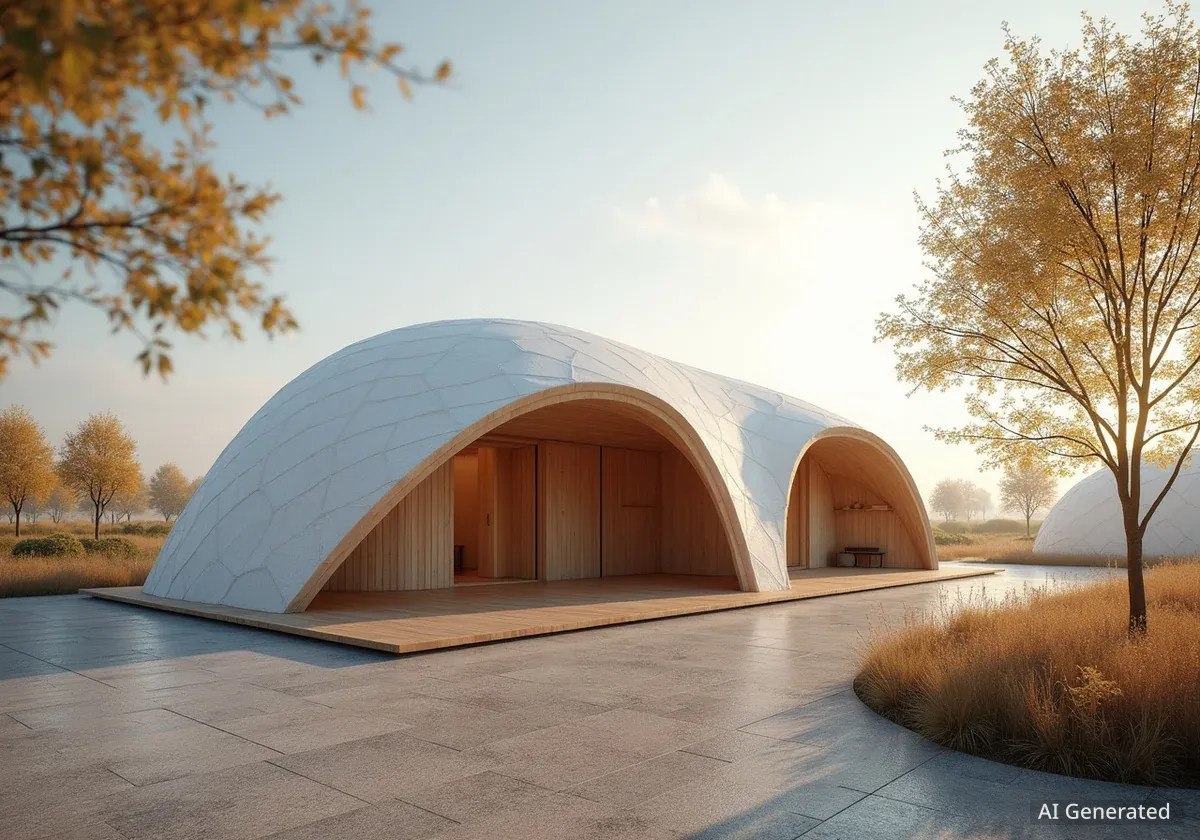
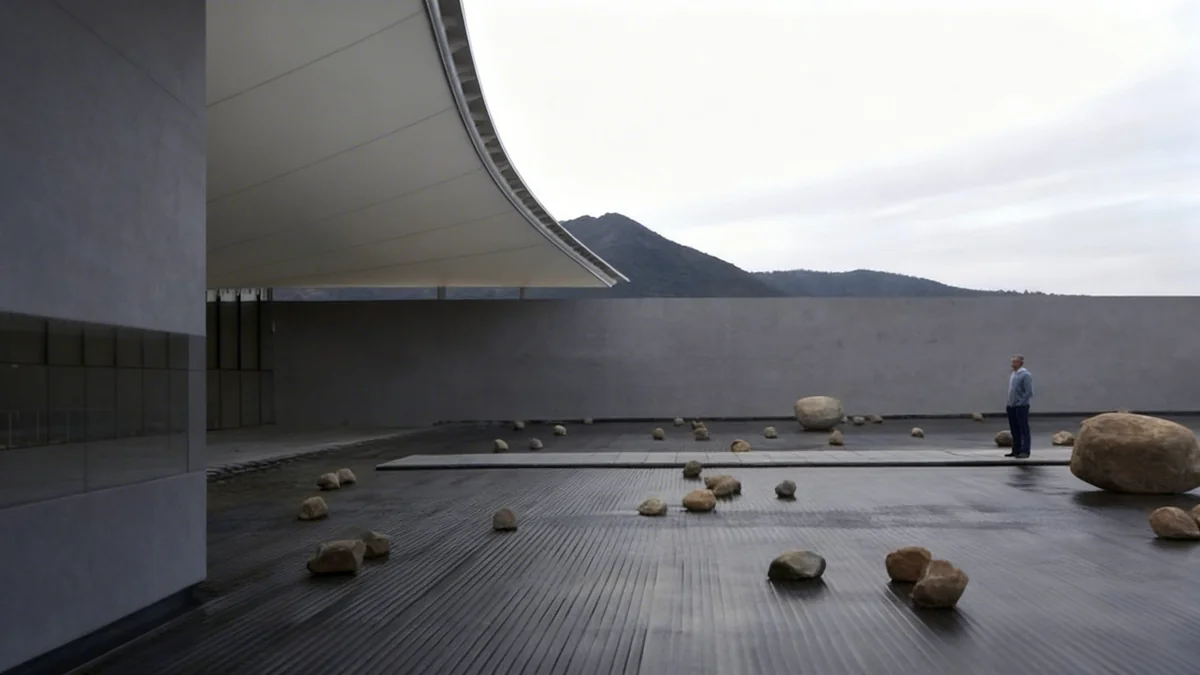
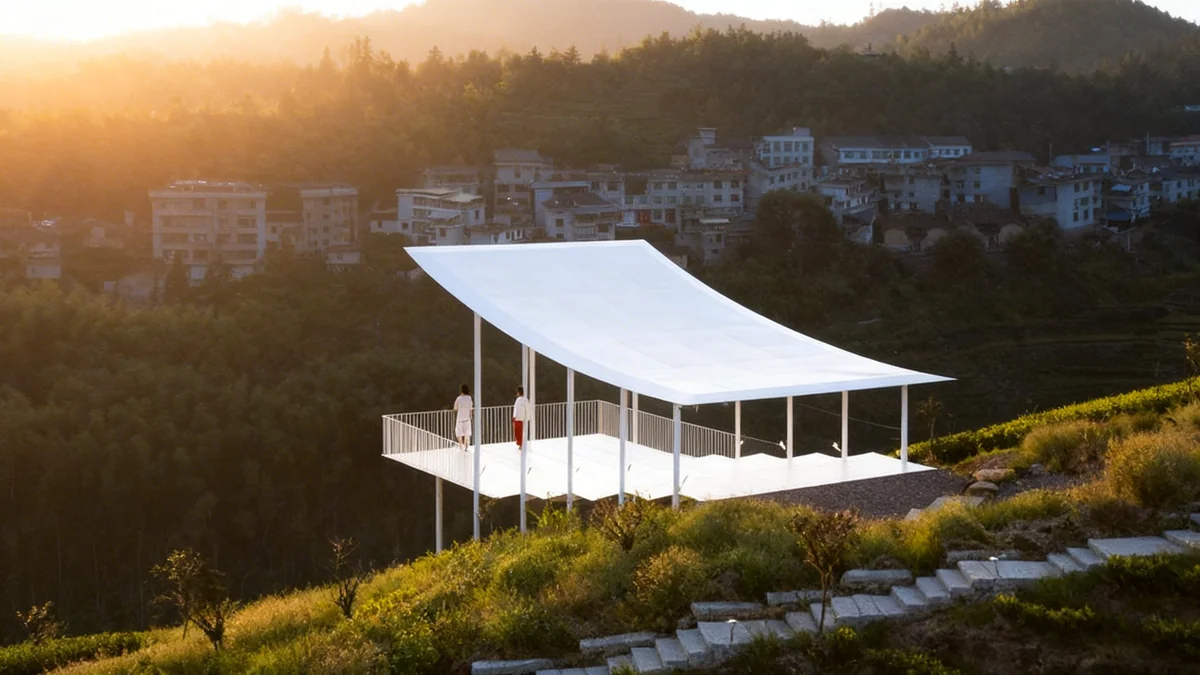
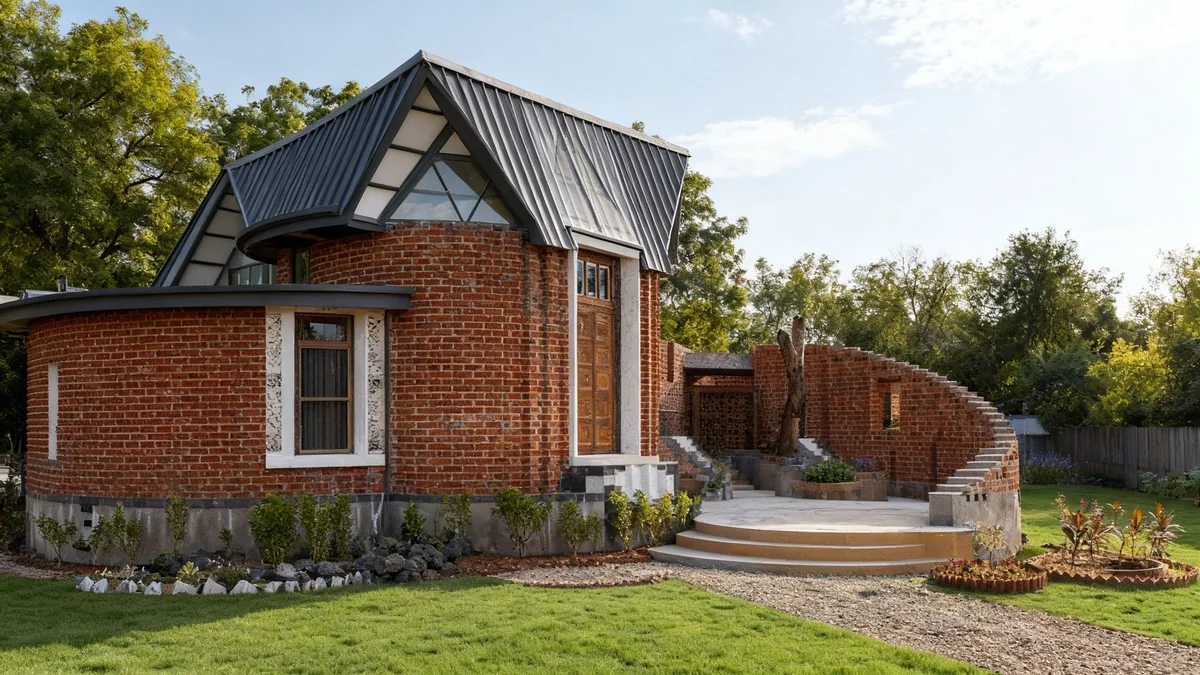
A new architectural installation in Chifeng, China, offers a contemporary interpretation of the traditional Mongolian ger. Completed in 2024 by Ger Atelier, this project aims to blend nomadic cultural wisdom with modern design principles. It creates a unique dialogue between the natural landscape of the Ulanhad volcanic cluster and a flexible human dwelling space.
Key Takeaways
- The project reinterprets the traditional Mongolian ger near the Ulanhad volcanic cluster.
- It combines the circular plan and prefabricated structure of the ger with modern design.
- The installation uses geometric abstraction to connect volcanic shapes with ger forms.
- Passive climate regulation systems are integrated for environmental comfort.
- Dynamic colored acrylic panels create evolving light projections within the space.
Reimagining Nomadic Architecture for Today
The traditional Mongolian ger is a key symbol of nomadic civilization. It represents a unique approach to living, characterized by its circular shape, pre-built structure, and harmony with nature. However, in global architectural discussions, expressions of grassland culture often face challenges of becoming too similar.
This new installation, located in Inner Mongolia, seeks to address this issue. It provides a fresh perspective on how nomadic culture can be translated into modern architecture. The project is situated close to the Ulanhad volcanic cluster, a significant geological landmark.
Project Details
- Project Name: Modern Mongolian Ger Installation
- Architects: Ger Atelier
- Completion Year: 2024
- Location: Chifeng, China (near Ulanhad volcanic cluster)
- Category: Installations & Structures, Pavilion
The volcano cluster signifies Earth's powerful, ancient forces. The ger, in contrast, represents humanity's ability to adapt to nature. The interaction between these two elements forms a distinctive architectural story. This design explores how traditional nomadic living can inform contemporary building practices.
Connecting Landscape and Structure
A core aspect of the design is its response to the site. The Ulanhad volcanic cones have a geometric shape that shares similarities with the curves of a ger's cross-section. The architects used this natural connection as a starting point.
"The geometric morphology of Ulanhad volcanic cones shares topological similarities with ger sectional curves," stated the architects from Ger Atelier. "Through geometric abstraction and recombination of volcanic and ger forms, the installation becomes a microcosmic reflection of the geological landscape."
By abstracting and combining the forms of the volcanoes and the ger, the installation becomes a miniature reflection of the surrounding geology. This method reinvents the traditional ger's spatial expression. It creates a poetic link between natural landforms and architectural language.
Cultural Wisdom in Modern Design
The project also focuses on translating nomadic wisdom into contemporary elements. The design team studied the ger's ecological adaptability, particularly its passive climate control systems. These systems are crucial for comfort in harsh environments. The insights gained were then applied to the new structure's spatial design.
For example, strategically placed openings at the top and bottom of the installation guide small airflows. This helps maintain a comfortable temperature inside. This approach ensures that the cultural essence of nomadic living is preserved while meeting modern needs for comfort and efficiency. It demonstrates a deep understanding of sustainable design principles inherent in traditional structures.
About the Mongolian Ger
A ger, often called a yurt, is a portable, round tent covered with skins or felt. It is traditionally used by nomads in Central Asia. Its design is highly efficient for mobile living and provides excellent insulation against extreme weather. The circular shape is structurally strong and minimizes wind resistance.
Creating Dynamic Spatial Experiences
The design goes beyond structural and cultural translation. It also focuses on creating a dynamic experience for visitors. The installation uses geometric spatial configurations combined with alternating colored and dark acrylic panels. These panels are key to the experience.
As daylight changes and clouds move across the sky, these panels create evolving chromatic projections. These projections transform the interior space. The space shifts from being static to feeling like a "breathing" organism with a sense of time. This interaction of light and color adds an engaging, immersive quality to the structure.
The project explores how light can be used as a design element. It shows how a space can respond to its environment in real-time. This provides a constantly changing visual and emotional experience for those inside.
Inspiration for Future Architecture
This innovative translation of the ger offers more than just a site-specific architectural solution. It also explores a broader "nomadic" design philosophy. This philosophy focuses on creating adaptive spaces that can thrive in dynamic and changing environments.
The flexible and responsive nature of nomadic civilization's spatial wisdom could provide significant inspiration for future architectural designs. As global challenges like climate change and urbanization continue, adaptive and sustainable building solutions become increasingly important. The principles demonstrated in this project could inform how future human settlements are designed.
The project highlights the value of looking to traditional knowledge for modern solutions. It suggests that ancient wisdom, when reinterpreted with contemporary tools, can offer profound insights for building a more resilient future.
Construction Unit
The construction of this modern ger installation was carried out by Hainan Baixintu Investment Co., Ltd. This collaboration brought the vision of Ger Atelier to life, ensuring the precise execution of the intricate design elements.
The Ger Atelier's work in Chifeng serves as a prototype for integrating cultural heritage with cutting-edge architectural thought. It shows that even ancient forms can be revitalized to offer new answers to contemporary design questions. This project contributes to a broader discussion about how architecture can honor tradition while innovating for the future.