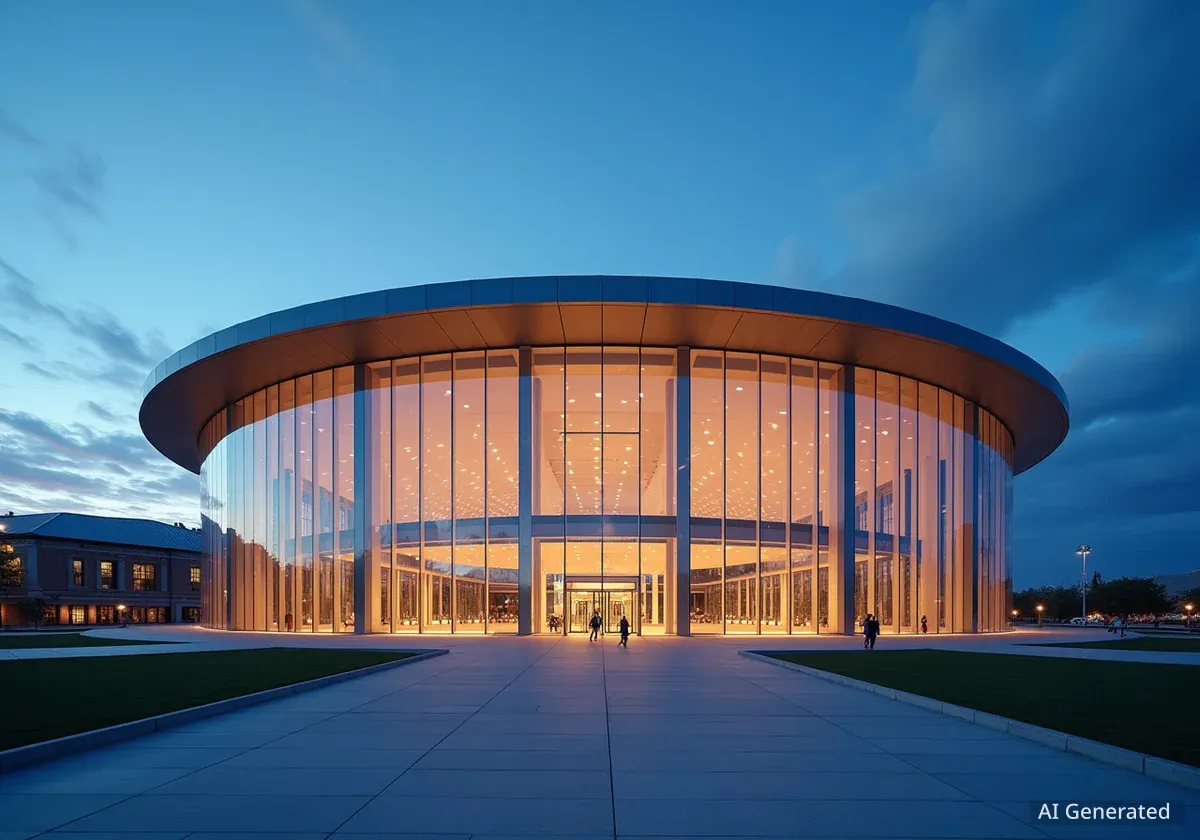

The China National Convention Center Phase II (CNCC II) in Beijing is set to open in 2025. This significant architectural project will serve as a major venue for international conferences and state summits. Designed by 2Portzamparc, the facility features a distinctive curved shape and a facade with numerous openings, which the architects describe as a poetic representation of birds in flight.
Key Takeaways
- CNCC Phase II scheduled for official inauguration in 2025.
- Designed by 2Portzamparc, featuring a unique curved shape.
- Will host international conferences and state summits.
- Location marks the northern end of Beijing's central axis.
- Expands upon the existing Phase I facilities.
A New Landmark on Beijing's Central Axis
Beijing's urban landscape is defined by its central axis. This historic line starts at the Forbidden City and extends north, encompassing significant modern developments. The China National Convention Center Phase II positions itself as a critical point along this axis. It symbolizes both continuity with the city's past and a vision for its future.
The project is not only an expansion of the existing Phase I but also a renewal for the area. Its strategic location aims to reinforce Beijing's role as an international hub for diplomacy and business. The design team focused on creating a structure that complements its surroundings while standing out as a modern landmark.
Historical Context of Beijing's Central Axis
Beijing's central axis has deep historical roots. It is a north-south line that has structured the city for centuries. Key landmarks like the Forbidden City, Tiananmen Square, and the Olympic Green are all aligned along this axis. This makes the CNCC II's placement significant.
Architectural Vision and Design Elements
The design for CNCC II comes from the firm 2Portzamparc, with Christian de Portzamparc as the principal architect. Elizabeth de Portzamparc also played a key role in the design. The building's vast area spans approximately 418,680 square meters. This makes it one of the largest convention centers in the region.
One of the most striking features is its sweeping curved form. This shape gives the building a dynamic appearance. The facade incorporates multiple openings. These openings are not just functional; they contribute to the building's aesthetic, creating a visual rhythm. The architects intended this design to evoke the image of birds taking flight, adding a poetic dimension to the massive structure.
"The vast building is characterized by its sweeping curved shape and a facade with multiple openings, a poetic evocation of birds taking flight," stated the architects.
Collaborative Design and Engineering
The project involved a large team of specialists. Beijing Institute of Architectural Design (BIAD) Co., Ltd. served as the cooperative design institute in China. This collaboration ensured that local expertise was integrated into the international design vision. The client for the project is Beijing North Star Convention and Exhibition Investment Co., Ltd.
Several consultants contributed to specific aspects of the design. Florence Mercier Paysagiste handled the landscape design. WSP Norge and WSP provided MEP (Mechanical, Electrical, and Plumbing) consulting. Facade consultants included TESS and RFR Shanghai, ensuring the complex facade design was structurally sound and visually appealing. Toryo International Lighting Design Center and Lighting Planners Associates Inc. managed the lighting design, while Hara Design Institute was responsible for signage and wayfinding.
Project Scale and Timeline
- Area: 418,680 m²
- Completion Year: 2025
- Principal Architect: Christian de Portzamparc
- Associate Design Director: Rex Bombardelli
- Project Director: Léa Xu
- Project Manager: Lei Qiao
Functional Expansion and Future Role
CNCC II is designed to be a comprehensive convention facility. It includes extensive exhibition spaces and reception halls. These areas are specifically built to host large-scale international events. The center will be capable of accommodating future international conferences and summits involving heads of state.
This expansion significantly increases Beijing's capacity to host global events. It strengthens the city's position in the international convention market. The new facility offers modern amenities and advanced infrastructure required for high-profile gatherings.
Impact on International Relations and Local Economy
The completion of CNCC II is expected to have a notable impact on Beijing's economy. Hosting major international events often brings significant revenue through tourism, hospitality, and related services. It also enhances Beijing's image as a global city.
According to economic analysts, large convention centers can generate millions in local spending. The increased capacity for high-level meetings could also foster stronger international diplomatic and trade relations. This project represents a long-term investment in the city's global standing.
- Economic Boost: Expected to attract more international visitors and business.
- Global Profile: Enhances Beijing's reputation as a host city for major events.
- Job Creation: Construction and operation create numerous employment opportunities.
Architectural Details and Materials
The building's facade is a complex element of the design. It combines aesthetic appeal with functional requirements. The multiple openings allow natural light into the vast interior spaces. This design choice also helps to break up the building's mass, making it appear lighter and more integrated with the sky. The materials used in the facade construction are modern and durable, ensuring the building's longevity and performance.
The interior spaces are designed for flexibility and efficiency. They can be reconfigured to suit different types of events, from large-scale exhibitions to intimate diplomatic meetings. Advanced technology is integrated throughout the facility to support complex presentations and communications.
Overall, the China National Convention Center Phase II represents a significant addition to Beijing's architectural landscape and its capacity for international engagement. Its innovative design and extensive facilities prepare it to play a crucial role in future global events.